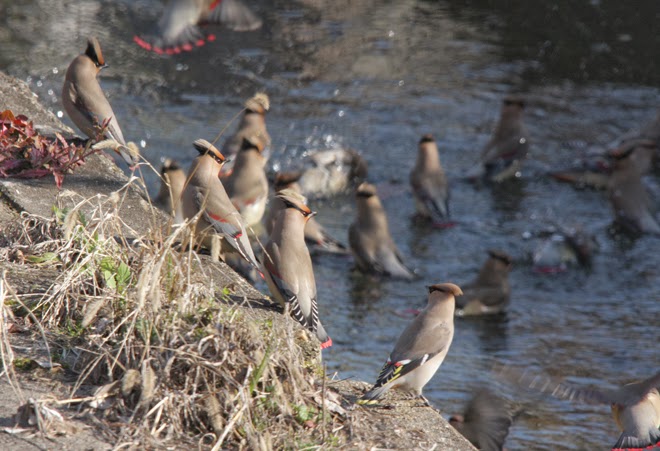
Large-billed and Carrion Crows are both common in Kyoto and throughout the region.
Jay is common on the surrounding hills and in forests throughout the region, an easy place to see them in Kyoto is Takaragaiike.
Two species that don't quite make it into Kansai are Azure-winged Magpie and Spotted Nutcracker, though the latter can wander into Shiga in winter. The nearest place I regularly see Azure-winged is along the Ishikawa coast.
 The glaring-eyed japonicus Jay can be found in the hills around Kyoto but is more numerous in winter, this one at Takaragaiike, Kyoto, 24 November 2012. It's likely this will be split from the continental forms including brandtii found in Hokkaido.
 Brandtii, he race found in Hokkaido, is an altogether softer, more gentle looking bird.
 Nutcracker does wander into the mountains of northern Kansai, just. I've never seen one there, but I have been looking in the wrong direction when one came by! These birds are in Akita, August 2013.

 Daurian Jackdaws in northern Shiga, December 2013.
 Rook at Ogura, 8 January 2011.
 Adult Rook, the bill shape may be distinctive but the darker base is perhaps odd to European eyes. Shiga, December 2013.
 Immature Rook, they can look very much like Carrion Crow. Shiga, December 2013.
 Immature Rook in moult, Tsushima, 30 April 2012.
 Carrion Crow on the Katsura River, Kyoto city, 1 March 2012.
 Carrion Crow on the Katsura River, 6 February 2009.
 Large-billed Crow on the Katsura River, Kyoto city, 7 October 2010.
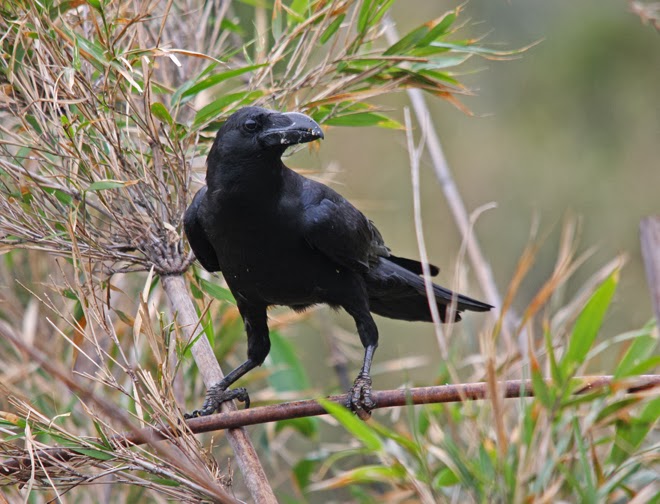 Large-billed Crow on Mishima, Yamaguchi, 4 May 2009. This bill is bordering on the ridiculous.
Subspecies Osai on Ishikagi, April 2014. An awful shot but with limited time there are bigger fish to fry down there.

Subspecies connectens in Okinawa, August 2011.
Northern Raven is a Hokkaido winter speciality. Probably the best place to see them has always been the Shiretoko Peninsular but apparently more birds are stopping off in central Hokkaido nowadays due to an increase in food courtesy of hunters. The Peninsular is still likely to be the best place to try despite the lower numbers.


 This Northern Raven dropped down to the river mouth very briefly in Rausu before heading back into the hills. 29 December 2012.