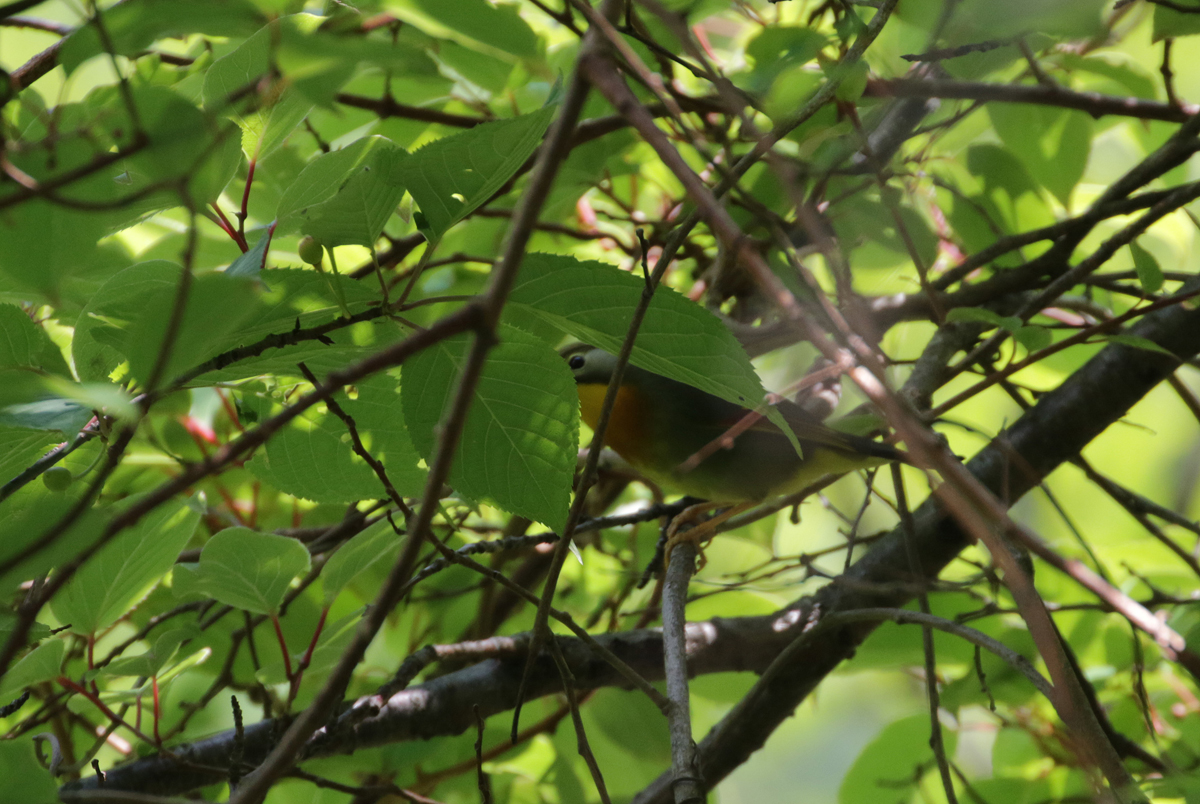
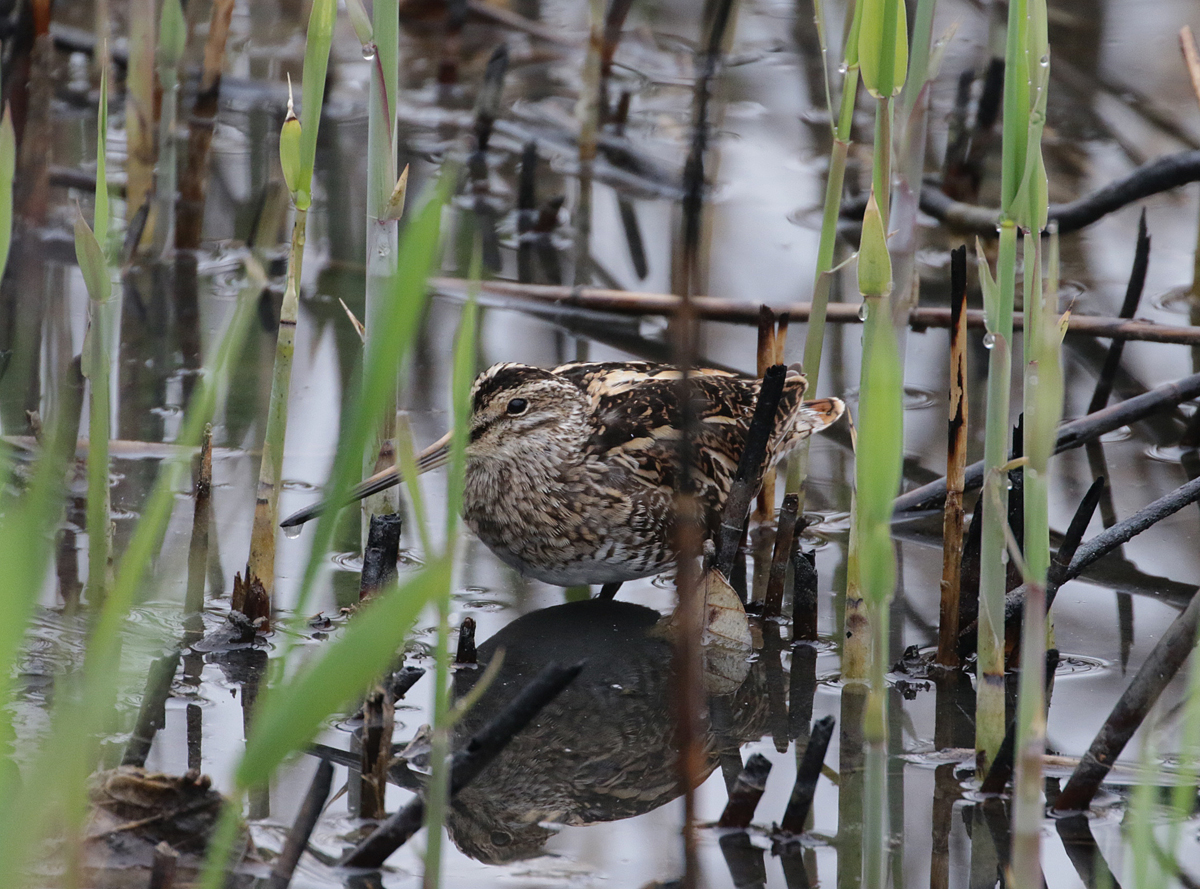
My Final day out with Jack Krohn took us south down the Kii Peninsula, aiming to see Pleske's Warbler. The Warbler was easy enough but the big surprise was hundreds of Short-tailed Shearwaters streaming by. How often do you see hundreds of Short-tailed Shearwater and Pleske's Warbler without leaving dry land?
I've often suspected seawatching off the Kii Peninsula could be great in the right conditions but it's quite a trek to go on spec. Particularly as even, with the aid of google maps, it's difficult to know where the best watch point would be under different conditions. On top of that if there weren't seabirds moving there wouldn't be much chance of anything else in compensation.
On this occasion the forecast had predicted the same fine weather we'd experienced all week, so we were a bit concerned that the sky wasn't beginning to pale as we neared our destination. The hills are normally clearly shilouetted long before the sun rises. So it was disappointing but hardly surprising that when daylight did break the sky was heavily overcast. The strong onshore wind was a different matter.
We got great views of several Pleske's, there was even a hidden Oriental Reed Warbler singing from somewhere within the dense, dark copse and before heading for the hills I wanted a quick look at the sea. With that wind I was expecting shearwaters to be passing but I was taken aback, and delighted, to find that they were Short-tailed rather than the usual Streaked. Hundreds of them streaming by, the closest were just over the rocks but numbers increased with distance and far more were no more than specks arcing above the grey horizon.
And of course there were the Pleske's...
Other coastal birds we picked up were Jack's only Temminck's Cormorant of the trip and better views of Black Kite than we'd had so far.
Delayed by Shearwaters and breakfast we were a little late getting up into the hills, early morning activity was over and woodland species harder to find. The target was Siberian Blue Robin and though we eventually heard a couple we weren't any singing close to the road. The same could be said of Ruddy Kingfisher... but the same could always be said of Ruddy Kingfisher.
The commoner woodland birds were easier to find and Jack finally caught up with Eastern Crowned Warbler here. Coal and Varied Tits were everywhere and Red-billed Leiothrix even put in an appearance though these two birds seemed a subdued breeding pair rather than the typically encountered babbling flock.
The total list of species recorded with Jack:-
Copper Pheasant
Green Pheasant
Gadwall
Falcated Duck
Eurasian Wigeon
Mallard
Eastern Spot-billed Duck
Northern Pintail
Common Pochard
Tufted Duck
Greater Scaup
Streaked Shearwater
Short-tailed Shearwater
Little Grebe
Oriental White Stork
Cattle Egret
Grey Heron
Great White Egret
Intermediate Egret
Little Egret
Pacific Reef Heron
Great Cormorant
Temminck's Cormorant
Osprey
Black Kite
Grey-faced Buzzard
Common Moorhen
Common Coot
Eurasian Oystercatcher
Grey-headed Lapwing
Grey Plover
Little Ringed Plover
Kentish Plover
Lesser Sand Plover
Common Snipe
Bar-tailed Godwit
Whimbrel
Far Eastern Curlew
Spotted Redshank
Common Greenshank
Wood Sandpiper
Grey-tailed Tattler
Terek Sandpiper
Common Sandpiper
Ruddy Turnstone
Great Knot (Jack only)
Red-necked Stint
Dunlin
Black-tailed Gull
Little Tern
Rock Dove
Oriental Turtle Dove
White-bellied Green Pigeon
Northern Hawk Cuckoo
Eurasian Cuckoo
Oriental Cuckoo
Lesser Cuckoo
Japanese Scops Owl
Oriental Scops Owl (me only)
Brown Hawk Owl
Grey Nightjar
Ruddy Kingfisher
Japanese Pygmy Woodpecker
White-backed Woodpecker
Japanese Woodpecker
Ashy Minivet
Bull-headed Shrike
Eurasian Jay
Carrion Crow
Large-billed Crow
Japanese Tit
Coal Tit
Varied Tit
Willow Tit
Barn Swallow
Asian House Martin
Red-rumped Swallow
Long-tailed Tit
Japanese Skylark
Zitting Cisticola
Brown-eared Bulbul
Japanese Bush Warbler
Pleske's Warbler
Oriental Reed Warbler
Eastern Crowned Warbler
Japanese White-eye
Eurasian (Winter) Wren
Eurasian Nuthatch
White-cheeked Starling
Japanese Thrush
Siberian Blue Robin
Blue Rock Thrush
Narcissus Flycatcher
Blue and White Flycatcher
Brown Dipper
Eurasian Tree Sparrow
Grey Wagtail
White Wagtail
Japanese Wagtail
Oriental Greenfinch
Japanese Grosbeak
Meadow Bunting
Showing posts with label Kite Black. Show all posts
Friday, 27 May 2016
Tuesday, 5 April 2016
Spring is really here
Yesterday I went up into the Shiga prefecture forest then down to Lake Biwa just to see how the season is changing; and it is.
My first frogs were singing in both forest and fields, Barn Swallows have even reached northern Shiga and evening bats are out in force. On the down side, Lake Biwa is looking relatively birdless and big finch flocks have all but disappeared from the forest.
I didn't arrive until after daybreak and unsurprisingly I was too late for the pre-dawn scops owl chorus so I was amazed to hear one briefly at 08:05. Equally unexpected I didn't hear my first displaying Copper Pheasant until 08:25. I had already seen a female by then but a bird flushed unseen against the low sun through thick vegetation was my only other encounter.
Another very close Japanese serow was impossible to photograph as it bolted down hill (how do they do that?) and a White's Thrush also managed to thwart my best efforts to get a single shot of it. White's is a species I come across from time to time around Lake Biwa in winter but this is the first I can recall finding in the hills in spring. This Varied Tit on the other hand was far more confiding...
Once down from the hills another thrush was the first bird of interest, a female Dusky x Naumann's intergrade. This was an obvious intergrade and the first I've seen for some time, years in fact, so it was unfortunate that a farmer chose that moment to drive up behind me on a single track road and by the time I got back to the spot the bird had gone. Another good bird with no photographic evidence!
The narrow valley between the hills did provide a few good opportunities though. Two flocks of Rooks were grubbing around on the fields and an Eastern Buzzards was reasonably approachable.
Unlike in Kyoto where it's often necessary to stake out your cherry blossom picknick spot from first thing in the morning this family had it all to themselves. My Copper Pheasant hills are in the background and the fields in the foreground were full of buntings, Common Snipe and popular with fly-over Eastern Marsh Harriers and another Eastern Buzzard. There were also a couple of Green Pheasants - it's always nice to see both species in a day.
I spent a lot of time looking at Reed Buntings here, the variation intrigued me when I came to Japan many years ago and it was good to see a number of birds feeding in the open. But more of that another time. Further south along the lake I spotted a tractor ploughing a field. This is usually a good chance to sift through wagtails and pipits but on this occasion the field was full of Black Kites.
Before heading home, or rather before joining an endless queue of traffic heading for Kyoto, I couldn't resist this Little Grebe bathing in the late afternoon sunshine.
List of species recorded:-
Copper Pheasant 1 female, a male heard and another bird flushed
Green Pheasant 1 plus 1 heard
Eurasian Wigeon 100s
Mallard widespread in low numbers
Eastern Spot-billed Duck common
Northern Shoveler 30-40
Eurasian Teal c20
Tufted Duck 20-30
Little Grebe 2-3
Great Crested Grebe several displaying pairs
Grey Heron common
Great White Egret c20
Little Egret 3
Great Cormorant c10
Black Kite common
Eastern Marsh Harrier 3
Hen Harrier 1
Eastern Buzzard 2
Common Coot 1000s
Grey-headed Lapwing 4
Common Snipe c25
Common Gull 7
Black-headed Gull c15
Rock Dove several
Oriental Turtle Dove widespread
Japanese Scops Owl 1 heard
Japanese Pygmy Woodpecker 2 heard
dendrocopos sp 2-3 heard
Japanese Woodpecker 1 plus 2 drumming and 2 calling
Jay c10
Rook 2 flocks totalling c80
Carrion Crow common
Large-billed Crow common
Great Tit fairly common in the forest
Coal Tit several, numbers way down compared to previous trip
Varied Tit common in the forest
Willow Tit surprisingly none!
Barn Swallow several
Long-tailed Tit common
Skylark common
Brown-eared Bulbul common
Japanese Bush Warbler several singing
Japanese White-eye common in the forest whereas it has been scarce recently, the reverse of Coal and Willow Tits.
Wren 3 heard
White-cheeked Starling several
White's Thrush 1
Pale Thrush 8
Dusky Thrush common
Dusky x Naumann's intergrade 1
Red-flanked Bluetail 1
Daurian Redstart 1 heard
Eurasian Tree Sparrow common
White Wagtail several
Japanese Wagtail 1 heard
Buff-bellied Pipit 1 heard
Oriental Greenfinch common
Eurasian Siskin 2 flocks heard
Eurasian Bullfinch 2-3 heard
Japanese Grosbeak c150 plus smaller numbers here and there overhead
Meadow Bunting common
Rustic Bunting c10
Reed Bunting common
Japanese serow 1
sika deer 1 plus c8 heard
My first frogs were singing in both forest and fields, Barn Swallows have even reached northern Shiga and evening bats are out in force. On the down side, Lake Biwa is looking relatively birdless and big finch flocks have all but disappeared from the forest.
I didn't arrive until after daybreak and unsurprisingly I was too late for the pre-dawn scops owl chorus so I was amazed to hear one briefly at 08:05. Equally unexpected I didn't hear my first displaying Copper Pheasant until 08:25. I had already seen a female by then but a bird flushed unseen against the low sun through thick vegetation was my only other encounter.
Another very close Japanese serow was impossible to photograph as it bolted down hill (how do they do that?) and a White's Thrush also managed to thwart my best efforts to get a single shot of it. White's is a species I come across from time to time around Lake Biwa in winter but this is the first I can recall finding in the hills in spring. This Varied Tit on the other hand was far more confiding...
Once down from the hills another thrush was the first bird of interest, a female Dusky x Naumann's intergrade. This was an obvious intergrade and the first I've seen for some time, years in fact, so it was unfortunate that a farmer chose that moment to drive up behind me on a single track road and by the time I got back to the spot the bird had gone. Another good bird with no photographic evidence!
The narrow valley between the hills did provide a few good opportunities though. Two flocks of Rooks were grubbing around on the fields and an Eastern Buzzards was reasonably approachable.
Unlike in Kyoto where it's often necessary to stake out your cherry blossom picknick spot from first thing in the morning this family had it all to themselves. My Copper Pheasant hills are in the background and the fields in the foreground were full of buntings, Common Snipe and popular with fly-over Eastern Marsh Harriers and another Eastern Buzzard. There were also a couple of Green Pheasants - it's always nice to see both species in a day.I spent a lot of time looking at Reed Buntings here, the variation intrigued me when I came to Japan many years ago and it was good to see a number of birds feeding in the open. But more of that another time. Further south along the lake I spotted a tractor ploughing a field. This is usually a good chance to sift through wagtails and pipits but on this occasion the field was full of Black Kites.
Before heading home, or rather before joining an endless queue of traffic heading for Kyoto, I couldn't resist this Little Grebe bathing in the late afternoon sunshine.
List of species recorded:-
Copper Pheasant 1 female, a male heard and another bird flushed
Green Pheasant 1 plus 1 heard
Eurasian Wigeon 100s
Mallard widespread in low numbers
Eastern Spot-billed Duck common
Northern Shoveler 30-40
Eurasian Teal c20
Tufted Duck 20-30
Little Grebe 2-3
Great Crested Grebe several displaying pairs
Grey Heron common
Great White Egret c20
Little Egret 3
Great Cormorant c10
Black Kite common
Eastern Marsh Harrier 3
Hen Harrier 1
Eastern Buzzard 2
Common Coot 1000s
Grey-headed Lapwing 4
Common Snipe c25
Common Gull 7
Black-headed Gull c15
Rock Dove several
Oriental Turtle Dove widespread
Japanese Scops Owl 1 heard
Japanese Pygmy Woodpecker 2 heard
dendrocopos sp 2-3 heard
Japanese Woodpecker 1 plus 2 drumming and 2 calling
Jay c10
Rook 2 flocks totalling c80
Carrion Crow common
Large-billed Crow common
Great Tit fairly common in the forest
Coal Tit several, numbers way down compared to previous trip
Varied Tit common in the forest
Willow Tit surprisingly none!
Barn Swallow several
Long-tailed Tit common
Skylark common
Brown-eared Bulbul common
Japanese Bush Warbler several singing
Japanese White-eye common in the forest whereas it has been scarce recently, the reverse of Coal and Willow Tits.
Wren 3 heard
White-cheeked Starling several
White's Thrush 1
Pale Thrush 8
Dusky Thrush common
Dusky x Naumann's intergrade 1
Red-flanked Bluetail 1
Daurian Redstart 1 heard
Eurasian Tree Sparrow common
White Wagtail several
Japanese Wagtail 1 heard
Buff-bellied Pipit 1 heard
Oriental Greenfinch common
Eurasian Siskin 2 flocks heard
Eurasian Bullfinch 2-3 heard
Japanese Grosbeak c150 plus smaller numbers here and there overhead
Meadow Bunting common
Rustic Bunting c10
Reed Bunting common
Japanese serow 1
sika deer 1 plus c8 heard
Thursday, 5 November 2015
Mie Nov 3 - the other birds
What a great place for birding this is. There's always somewhere else to check, it's impossible to even visit all the good spots in a day let alone give them adequate coverage. There's always a sense of anticipation. Of course on the day the two tropical seabirds I wrote about in the previous post stole the show, both are very rare in Japan with Red-footed Booby just creeping in as a summer visitor to the southernmost islands - I've only seen them around Io-to (Iwojima). However I never cease to wonder about what I must be missing in this area, whether it might be birds passing through, there can be a rapid turnover, or those that remain undiscovered because of the wealth of habitat. No two visits ever seem quite the same.
Admittedly I wasn't especially looking for waders this time but the difference in totals between this visit and four days earlier is notable. Take plovers for example, the first figure given is Friday, the second Tuesday :-
Grey-headed Lapwing 3 - 0
Northern Lapwing 50-60 - 0
Pacific Golden Plover 9 - 0
Grey Plover 2 - 39
Dunlin numbers were much higher this time (up by 100s), along with that Grey Plover increase, but most others were down and I only saw 14 species compared to 21 four days earlier. It wasn't just waders that differed markedly from the previous visit, there were no Greater Crested Terns this time (and I was definitely looking at the sea!) and on the fields there was a huge jump in the number of Buff-bellied Pipits - with a Red-throated thrown in for good measure! Rapid turnover, simply not connecting with the same birds or a combination of the two, it doesn't really matter from the birding experience perspective; I always feel I'm guaranteed a good day in the field whenever I come this terrific area... I wonder if I can get a job with the Mie board of tourism.
Grey Plover, along with Dunlin, were the only waders to show a marked increase in numbers on this visit.
Birds of prey can be quite good here too, Though I never think of the area as having the potential for 10 species in a day which some Kansai locations certainly do have. A couple of Peregrines tumbling together was entertaining, there was a Kestrel but no Merlin as yet. An Eastern Buzzard was new this week. Ospreys and Black Kites are always common but both Eurasian Sparrowhawk and Northern Goshawk which we saw well last Friday weren't to be seen at all this week.
The other raptor of interest was an immature Black Kite with an abraded tail creating on odd silhouette. I often see frazzled-looking, square- even round-tailed birds in late April or early May but not at this time of year and its mainly whitish head and foreparts (Black usually gets paler towards the vent) gave it a slightly immature Brahminy feel. Just a Black though.
List of birds recorded over the two days :-
Gadwall
Falcated Duck
Eurasian Wigeon
Mallard
Eastern Spot-billed Duck
Northern Shoveler
Northern Pintail
Eurasian Teal
Common Pochard
Tufted Duck
Greater Scaup
Little Grebe
Great Crested Grebe
Black-necked Grebe
Grey Heron
Great White Egret
Little Egret
Great (?) Frigatebird
Red-footed Booby
Great Cormorant
Eurasian Kestrel
Peregrine
Osprey
Black Kite
Eurasian Sparrowhawk
Northern Goshawk
Eastern Buzzard
Moorhen
Common Coot
Eurasian Oystercatcher
Black-winged Stilt
Northern Lapwing
Grey-headed Lapwing
Pacific Golden Plover
Grey Plover
Kentish Plover
Common Snipe
Long-billed Dowitcher
Bar-tailed Godwit
Eurasian Curlew
Far Eastern Curlew
Common Greenshank
Green Sandpiper
Wood Sandpiper
Terek Sandpiper
Common Sandpiper
Ruddy Turnstone
Sanderling
Red-necked Stint
Dunlin
Black-tailed Gull
Common Gull - It's worth mentioning that there were none!
Vega Gull
Slaty-backed Gull
Taimyr Gull
Black-headed Gull
Greater Crested Tern
Feral Rock Dove
Oriental Turtle Dove
Common Kingfisher
Japanese Pygmy Woodpecker
Bull-headed Shrike
Carrion Crow
Large-billed Crow
Skylark
Brown-eared Bulbul
Japanese Bush Warbler
White-cheeked Starling
Daurian Redstart
Blue Rock Thrush
Eurasian Tree Sparrow
White Wagtail
Japanese Wagtail
Red-throated Pipit
Buff-bellied Pipit
Oriental Greenfinch
Meadow Bunting
Reed Bunting
Admittedly I wasn't especially looking for waders this time but the difference in totals between this visit and four days earlier is notable. Take plovers for example, the first figure given is Friday, the second Tuesday :-
Grey-headed Lapwing 3 - 0
Northern Lapwing 50-60 - 0
Pacific Golden Plover 9 - 0
Grey Plover 2 - 39
Dunlin numbers were much higher this time (up by 100s), along with that Grey Plover increase, but most others were down and I only saw 14 species compared to 21 four days earlier. It wasn't just waders that differed markedly from the previous visit, there were no Greater Crested Terns this time (and I was definitely looking at the sea!) and on the fields there was a huge jump in the number of Buff-bellied Pipits - with a Red-throated thrown in for good measure! Rapid turnover, simply not connecting with the same birds or a combination of the two, it doesn't really matter from the birding experience perspective; I always feel I'm guaranteed a good day in the field whenever I come this terrific area... I wonder if I can get a job with the Mie board of tourism.
Grey Plover, along with Dunlin, were the only waders to show a marked increase in numbers on this visit.Birds of prey can be quite good here too, Though I never think of the area as having the potential for 10 species in a day which some Kansai locations certainly do have. A couple of Peregrines tumbling together was entertaining, there was a Kestrel but no Merlin as yet. An Eastern Buzzard was new this week. Ospreys and Black Kites are always common but both Eurasian Sparrowhawk and Northern Goshawk which we saw well last Friday weren't to be seen at all this week.
Eastern Buzzard.
The other raptor of interest was an immature Black Kite with an abraded tail creating on odd silhouette. I often see frazzled-looking, square- even round-tailed birds in late April or early May but not at this time of year and its mainly whitish head and foreparts (Black usually gets paler towards the vent) gave it a slightly immature Brahminy feel. Just a Black though.
List of birds recorded over the two days :-
Gadwall
Falcated Duck
Eurasian Wigeon
Mallard
Eastern Spot-billed Duck
Northern Shoveler
Northern Pintail
Eurasian Teal
Common Pochard
Tufted Duck
Greater Scaup
Little Grebe
Great Crested Grebe
Black-necked Grebe
Grey Heron
Great White Egret
Little Egret
Great (?) Frigatebird
Red-footed Booby
Great Cormorant
Eurasian Kestrel
Peregrine
Osprey
Black Kite
Eurasian Sparrowhawk
Northern Goshawk
Eastern Buzzard
Moorhen
Common Coot
Eurasian Oystercatcher
Black-winged Stilt
Northern Lapwing
Grey-headed Lapwing
Pacific Golden Plover
Grey Plover
Kentish Plover
Common Snipe
Long-billed Dowitcher
Bar-tailed Godwit
Eurasian Curlew
Far Eastern Curlew
Common Greenshank
Green Sandpiper
Wood Sandpiper
Terek Sandpiper
Common Sandpiper
Ruddy Turnstone
Sanderling
Red-necked Stint
Dunlin
Black-tailed Gull
Common Gull - It's worth mentioning that there were none!
Vega Gull
Slaty-backed Gull
Taimyr Gull
Black-headed Gull
Greater Crested Tern
Feral Rock Dove
Oriental Turtle Dove
Common Kingfisher
Japanese Pygmy Woodpecker
Bull-headed Shrike
Carrion Crow
Large-billed Crow
Skylark
Brown-eared Bulbul
Japanese Bush Warbler
White-cheeked Starling
Daurian Redstart
Blue Rock Thrush
Eurasian Tree Sparrow
White Wagtail
Japanese Wagtail
Red-throated Pipit
Buff-bellied Pipit
Oriental Greenfinch
Meadow Bunting
Reed Bunting
Subscribe to:
Posts (Atom)