Showing posts with label Oystercatcher. Show all posts

Wednesday, 26 October 2016

Green-legged Red-necked Stint and other surprises in Mie

It's a funny old time of year, isn't it? An odd mix of summer visitors, migrants and winter visitors. At dusk a couple of days ago, when I was just about to start the long drive home from Mie, I picked out a couple of large waders I hadn't noticed on the estuary. They turned out to be Northern Lapwings and the earliest I've seen in Kansai. The fact that I was watching them sitting comfortably on the riverbank in just a T-shirt attested to that, spring birds linger into warm weather but I'm always wrapped up well before the first Lapwings turn up at the back end of the year.


But if that was a surprise, the day had begun with a far bigger one. One that doesn't fit into any of those seasonal bird boxes I mentioned. Who would expect a Turkey Vulture at a river mouth in Japan! No doubt it could swap a few yarns of life on the lam with Percy the pelican if it ever made its way to Kanto.


Not a bad Red-faced Cormorant impersonation.


The biggest surprise on my previous visit (Oct 8) had been a party of four Whiskered Terns, birds that I'm sure had made it here under their own steam.


That same day while checking through a flock of White Wagtails I came across this first autumn. First autumns invariably have a yellowish cast to the face but I thought this bird was yellower than many. Not just about the face either, the grey of the crown, nape and to a lesser extent mantle were yellowish- or even greenish-tinted.


White Wagtail with a yellower face and crown than many first winters.


The nape and mantle had a yellowish or greenish cast, though the mantle colour doesn't show too well here. 


Sticking to the yellowish / greenish theme; the Red-necked Stint in the title really took me by surprise. I can't find any reference to Red-necked Stint or any other 'black-legged' stint or peep having yellowish or greenish legs. Brownish or greyish yes, and there were more than a couple that fell into that category. However two birds within a flock of about 25 I was able to view at close range had noticeable 'colour'. The first I found had just a slight greenish tint to the tarsus which unfortunately was a bit too distant to get reasonable images of, however the second was yellower and the colour extended from the tibia to the feet. The following four images suffer from heavy cropping but apart from slight sharpening they are otherwise unaltered and I think they still show the legs have a yellow rather than brown element. 


A regular Red-necked, in the same place and light, showing the expected black legs. 


Then there was the other stuff, less surprising but nevertheless great to see...


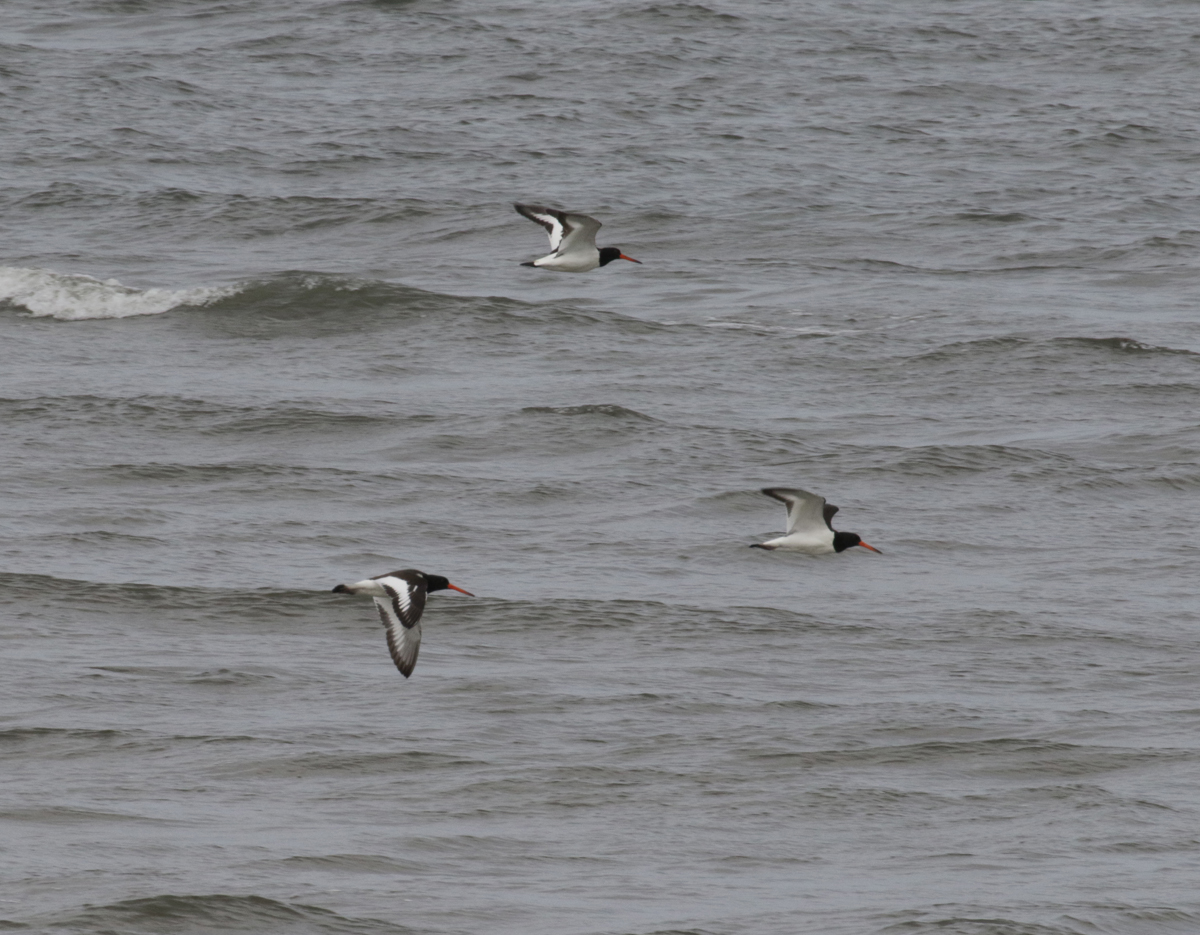
Oystercatchers


Black-winged Stilts


Grey-tailed Tattlers


Grey Plovers


Green Sandpiper


Common Greenshanks


Dunlin


Terek Sandpiper


Wednesday, 16 March 2016

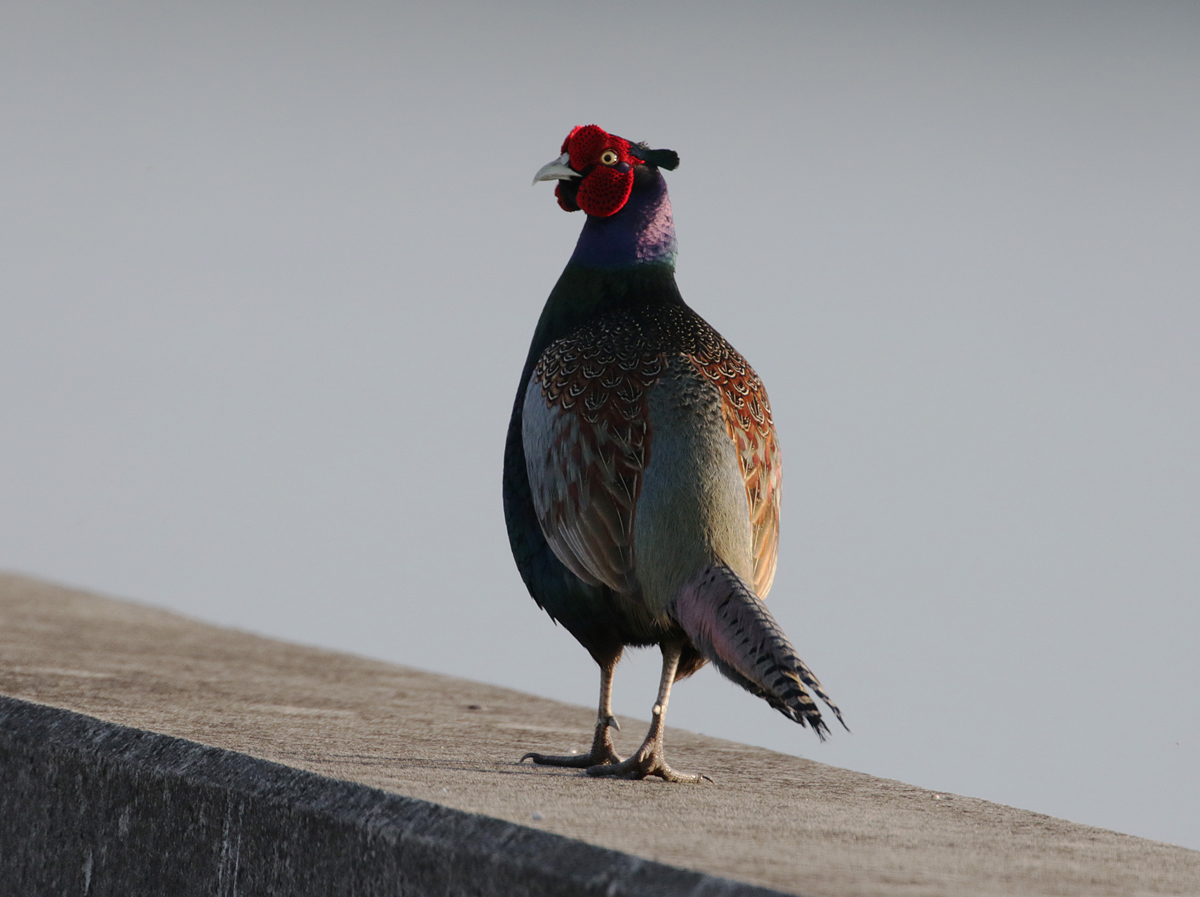
Green Pheasant on the seawall!

After enjoying a successful morning north of Lake Biwa followed by a disappointing afternoon along the lake yesterday, today seemed to follow the same pattern. The morning got off to a cracking start with a singing Siberian Rubythroat but the afternoon fizzled out. A Rubythroat in mid-March in Kansai? It was so out of context that I couldn't put a name to it at first. I suspect it must have spent the winter undiscovered in that area of scrub, it's surely too early for a migrant. They do winter further south in Japan of course and perhaps because this winter has been so mild this bird stopped off here but never felt the urge move further south. In fact I had similar thoughts about the Richard's Pipit I had flying over Kyoto a week ago.


Next up was a stunning Green Pheasant standing on the seawall. It's not unusual to see them out in the open, particularly on duller early mornings but this spot was extreme, standing on the seawall looking out to sea. I couldn't help projecting anthropomorphic feelings of a wistful longing to migrate along with the other departing species.


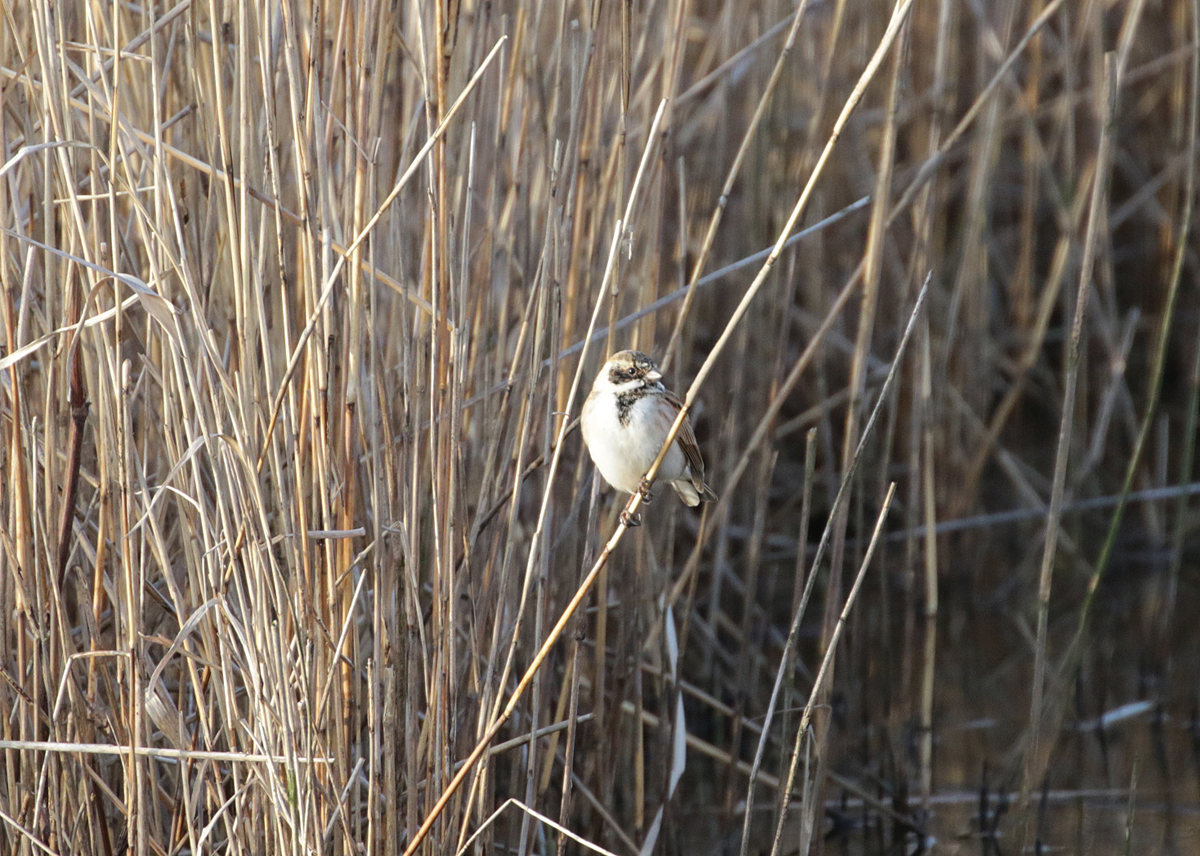
Reed Buntings are still very common and some males are beginning to assume breeding appearance. These are two shots of a strikingly pale-mantled bird, unfortunately I didn't get any clearer shots before it dived into cover. The third image is of another Reed Bunting I saw last week showing the typical browner, less frosty upperparts and covert fringes.


A typical Reed Bunting with an overall brown mantle. Above are two images of a strikingly pale-mantled bird.


Eurasian (Japanese) Skylarks are really common on the fields and their song is a constant backdrop to birding here.


Most other birds I was able to photograph were waders...


Eurasian Oystercatcher.


Spotted Redshank.


Black-winged Stilts and Long-billed Dowitchers.


Kentish Plover.


Sitting on the beach watching gulls always results in excellent views of Sanderlings.


... and Dunlins.


Finally an awful shot of a Slavonian Grebe. Why bother? Well, I rarely see them in Kansai but also because it's the first I've ever seen coming into breeding plumage.


Slavonian Grebe.


A combined list of birds recorded over two days (101 species)

Copper Pheasant   1 heard displaying
Green Pheasant   c8
Tundra Swan   70-80 including one Whistling Swan
Gadwall   common
Falcated Duck   common in Mie but only a few Biwako
Eurasian Wigeon   very numerous still at both locations
Mallard   common but numbers well down
Eastern Spot-billed Duck   common
Northern Shoveler   c100 Biwako, a few Mie
Northern Pintail   very low numbers both locations
Eurasian Teal   c200 Mie, fewer north Biwako, numbers drastically reduced at both locations
Common Pochard   common but numbers well down at both locations
Tufted Duck   low hundreds
Greater Scaup   1 Biwako, 1000s Mie
Common Goldeneye   8 Biwako, 14 Mie
Red-breasted Merganser   100s Mie
Little Grebe   several both locations
Great Crested Grebe   4-5 Biwako, 6 Mie
Slavonian Grebe   1 Mie
Black-necked Grebe   c40 Mie
Black-crowned Night Heron   1 heard between the locations
Grey Heron   sev Biwako, c25 Mie
Great White Egret   3 Biwako, 6 Mie
Little Egret   2 Biwako, 34 Mie
Great Cormorant   several Biwako, 100s Mie
Peregrine   1 Mie
Osprey   1 Biwako, 2 Mie
Black Kite   common Biwako, several Mie
Eastern Marsh Harrier   1 Biwako
Eurasian Sparrowhawk   3 Biwako
Eastern Buzzard   1 Mie
Eastern Water Rail   2 Mie
Common Moorhen   8 Biwako, 1 Mie
Common Coot   common both locations
Eurasian Oystercatcher   8 Mie
Black-winged Stilt   3 Mie 
Northern Lapwing   c30 Biwako, c50 Mie
Grey Plover   c50 Mie
Little Ringed Plover   1-2 heard Mie
Kentish Plover   2 Biwako (a big surprise), 30-40 Mie
Common Snipe   c20 Mie
Long-billed Dowitcher   3 Mie
Spotted Redshank   1 Mie
Common Greenshank   6 Mie
Green Sandpiper   4 Mie
Wood Sandpiper   1 Mie
Common Sandpiper   2 Mie
Sanderling   common Mie
Dunlin   c50 Biwako, common Mie
Black-tailed Gull   1 Mie
Common Gull   1 Biwako, c40 Mie
Vega Gull   c300
Mongolian Gull   1 Mie
Slaty-backed Gull   6 Mie
Taimyr Gull   5-6 Mie
Black-headed Gull   c6 Biwako, 100s Mie
Saunder's Gull   10 Mie
Common Tern   6 Mie
Rock Dove   several Biwako, c50 Mie
Oriental Turtle Dove   several both locations
Common Kingfisher   1 Mie
Japanese Pygmy Woodpecker   several Biwako
White-backed Woodpecker   1 plus 2 drumming Biwako
Great Spotted Woodpecker   1 Biwako
dendrocopos sp   several heard Biwako
Bull-headed Shrike   4-5 Biwako, 2 Mie
Jay   3 Biwako
Carrion Crow   common both locations
Large-billed Crow   common both locations
Great Tit   c20 Biwako
Coal Tit   5-10 Biwako
Varied Tit   c6 Biwako
Willow Tit   4 Biwako
Long-tailed Tit   common Biwako
Skylark   common Mie
Zitting Cisticola   3 Mie
Brown-eared Bulbul   several both locations
Japanese Bush Warbler   3 heard Biwako, 2 heard Mie
Japanese White-eye   common Biwako
Wren   3 heard Biwako
White-cheeked Starling   40-50 Mie
Pale Thrush   common Biwako
Dusky Thrush   several Biwako, common Mie
Siberian Rubythroat   1 heard Mie
Red-flanked Bluetail   1 heard Biwako
Daurian Redstart   2 Biwako, 4 Mie
Blue Rock Thrush   3 Mie
Brown Dipper   2 Biwako
Eurasian Tree Sparrow   common both locations
White Wagtail   several Biwako, 20-30 Mie
Japanese Wagtail   1 Biwako, 2 Mie
Buff-bellied Pipit   c20 Mie
Brambling   c50 Biwako
Oriental Greenfinch   common both locations
Eurasian Siskin   common Biwako
Eurasian Bullfinch   2-3 heard Biwako
Hawfinch   1 Biwako
Meadow Bunting   5-6 Biwako, several Mie
Chestnut-eared Bunting   6-7 Mie
Rustic Bunting   1 Biwako, 2 Mie
Black-faced Bunting   several both locations
Common Reed Bunting   several heard Biwako, common Mie

Friday, 11 April 2014

Tsu/Matsusaka, Mie

I spent all day on the 9th and the morning of the 10th in the Tsu/Matsusaka area of Mie this week hoping to see migrant waders. My enthusiasm was probably getting the better of me, numbers are still fairly low and some common species weren't in yet, no Red-necked Stint or Grey-tailed Tattler for example, but I still managed 20 species.  Eight Spotted Redshank, single Long-billed Dowitcher and Ruff were the pick of the bunch. None are rare but I don't see Spotted Redshank every time I go, Dowitchers are unpredictable and Ruff really is a scarce passage bird.

Because spring passage wasn't in full swing and many wintering species had departed there was something of a 'between seasons' feel to the trip. There weren't any Common Shelduck or even the normally so common Goldeneye but others were still hanging on with a single Black Brant and a couple of Saunder's Gulls. Two Chestnut-cheeked Starlings, which is a reliable early passerine, were the only non-wader migrants I came across.

I'd planned to make it a one-day trip but decided to hang on and spend the night in the van as the tide tables showed a much bigger drop the following day. Counter intuitively waders are often much closer at low tide as birds can gather on distant sandbars and follow the receding waterline towards the coast. As things turned out the views were better on tidal areas but wader numbers were identical except for four new Bar-tailed Godwits.

I left just before midday as I wanted to check out an area in the mountains on the return journey. It always looks promising driving through but in the event the accessible areas, and much of the rest, were monotonous ranks of cedar. Even Large-billed Crows and Brown-eared Bulbuls were thin on the ground.

There were huge rafts of Greater Scaup well off-shore, 200-300 on a large pond and a few, like these in some of the harbours.

The Ruff was a nice surprise.

Long-billed Dowitcher

Spotted Redshanks

This is usually one of the commoner species so in that respect just a single was disappointing but as the moult of most I see isn't as advanced I was happy enough. 

On the 9th there was just a slight dip between high tides and the Oystercatchers were only seen at one location but on the 10th there was a much bigger fall in the water level and birds were dispersed over a wide area and were much easier to find.

Some of the Bar-tailed Godwits were very red and views were quite close on the 10th.

These three Barwits were more distant on the 9th, so was their breeding plumage. One of them was a monster with an amazingly long, thick and straight bill, I was expecting it to be Black-tailed until I got the scope on it.

The Grey Plover must be either late breeders or fast moulters, there wasn't a single black 'n' white amongst them. 

I don't think it's possible to get a shot of Sanderling with two feet on the ground, with two birds there's at least a chance.

First summer Saunder's Gull, one of only two I managed to see. 

 
I was going to say a slightly odd looking Slaty-backed but then what's really odd is to see two that look the same.

The Buff-bellied Pipits are starting to come into breeding plumage but this bird caught my eye more because of its long, hook-tipped upper mandible. 

List of birds seen
Chinese Bamboo Partridge   1 heard
Green Pheasant   3 plus many heard each morning
Gadwall
Falcated Duck
Eurasian Wigeon
Mallard
Eastern Spot-billed Duck
Northern Shoveler
Northern Pintail
Eurasian Teal
Pochard
Tufted Duck
Greater Scaup
Red-breasted Merganser
Little Grebe
Great Crested Grebe
Grey Heron
Great White Egret
Intermediate Egret   1
Little Egret
Great Cormorant
Osprey   1
Black kite
Moorhen   1
Coot
Eurasian Oystercatcher   29
Black-winged Stilt   3
Grey-headed Lapwing   10-15
Grey Plover   16
Little Ringed Plover   fairly common 9th, only 1 10th
Kentish Plover   common
Lesser Sandplover   2
Common Snipe
Long-billed Dowitcher   1
Bar-tailed Godwit   7
Eurasian Curlew   1
Far Eastern Curlew   2
Spotted Redshank   8
Redshank   2
Greenshank   2
Wood Sandpiper   1
Common Sandpiper   4
Sanderling   common on some beaches
Dunlin   c300
Ruff   1
Black-tailed Gull   several
Common Gull   fairly common
Vega Gull   fairly common
Slaty-backed Gull   3
Taimyr Gull   fairly common
Black-headed Gull  
Saunder's Gull   2
Feral Rock Dove
Oriental Turtle Dove
Japanese Pygmy Woodpecker   1
Bull-headed Shrike   several
Carrion Crow
Large-billed Crow
Great Tit   1
Barn Swallow
Zitting Cisticola   3
Brown-eared Bulbul
Japanese Bush Warbler   many heard
Chestnut-cheeked Starling   2
White-cheeked Starling
Dusky Thrush
Blue Rock Thrush   2
Eurasian Tree Sparrow
White Wagtail
Olive-backed Pipit   1
Buff-bellied Pipit   10+
Oriental Greenfinch
Meadow Bunting
Black-faced Bunting   4-8
Reed bunting   several

Additional species driving back
Varied Tit   1
Coal Tit   fairly common
Long-tailed tit   1 party
Japanese White-eye   several
Eurasian Wren   3 heard
Grey Wagtail   1

Mammals on the drive out
Sika Deer   c30
Japanese Marten   1
mouse sp   1