Showing posts with label Bush Warbler Japanese. Show all posts

Monday, 12 November 2018

Hegurajima: November 1st

There have been an amazing four national firsts this autumn, two of them on Hegurajima; Claudia's Leaf Warbler and Amur Paradise Flycatcher. Though no doubt the latter has been overlooked in the pre-split past. The last week of October saw continuous strong north westerlies flowing from the continent, what might they have brought? No boats out to the island of course in those conditions and no birders out there either. Even the more reliable Tobishima service wasn't operating meaning no possibility of anyone chasing the Ruby-crowned Kinglet there, the most recent of the four new birds for Japan.


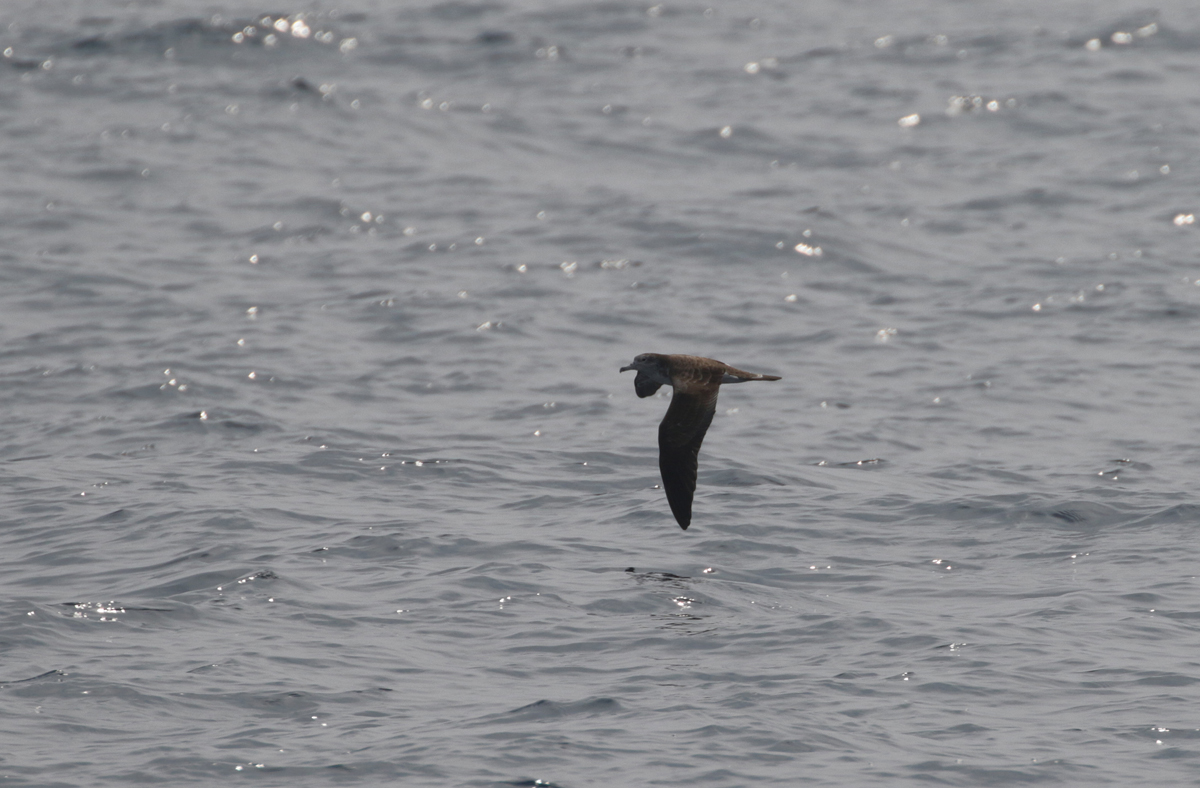
The winds eased on Thursday 31st allowing sailing the following day... and more time for birds to leave. The problem with a day trip to the island from November onwards is that you only get 3.5 hours of birding because of the ferry's earlier winter return timetable. In effect only a little over three hours birding which makes the 404km each way drive seem much further than when I'm staying on the island.


I used to think there must be a good reason why the ferry schedule changes in winter. Now I'm not so sure. Why does it need to leave the island an hour earlier and be back in Wajima at 15:30 back in Wajima 1.5 hours before sunset at this time of year? It's not as if they have a lot to do once back in port and they surely don't require daylight to do it... Wajima is on the grid. Perhaps they don't realise the port has lighting because they've never been there after dark. Strange as it may seem now, when I first went to Hegurajima we drove all round Wajima looking for a convenience store... there were none! For many subsequent visits I had to be prepared and provisioned before getting out into the sticks then there was one, and the following year they were all over the town. A bit like Daurian Redstarts in mid-October. And another thing while I'm at it... did you ever wonder why the ferry leaves Hegura five minutes before the 15:00 (now 14:00) scheduled departure time? It seems departure time is as the ferry leaves the harbour not the quay. Thank goodness other forms of public transport don't follow the same logic, even other ferry services I use for that matter.


What about the birds then? I'm coming to that.


There were enough birds on the island to encourage the thought that a mega was just around the corner. Perhaps there was. Unfortunately you can't turn all the corners in three hours and I obviously didn't choose the right one(s).


Highlights were Eurasian Skylarks, ie not japonica, and a couple of Pine Buntings. Neither are unexpected here but equally they aren't birds I'm going to see staying at home in Kyoto. Red-throated Pipit I might see once in a blue moon in Kyoto while Stejneger's Stonechat, White's Thrush and Eyebrowed Thrush are birds I could see but usually don't. I'd sum it up as a low number of species with a high degree of scarcity from the Kyoto birders perspective.


It's actually worth going for the Pine Buntings alone! I didn't see them until five minutes before boarding the ferry, they were just hopping around on the road in the harbour.


Great birds, great family.


I definitely could have seen Rustic Bunting staying in Kyoto. But not on a rugged rocky headland with red berries!


There were at least 10 Eurasian Skylarks that I flushed from long grass along the west side of the island. This bird at the southern end of the island was the only one that perched briefly in the open allowing an all too distant shot before it dropped back into cover. In flight they looked slightly larger than Japanese even without direct comparison, they were cleaner white below and the flight calls were also sufficiently different to attract attention. 


In the harbour area a couple of people were trying to get good views and photographs of O Hibari (large skylark). Maybe I'm totally wrong on this but I often feel the name O Hibari is used as a catch-all for the various races of Eurasian Skylark that could turn up here in autumn/winter due to the difficulty/impossibility of confirming racial identity; I am told by a friend that O Hibari refers specifically to pekinensis and that lonnbergi is Karafuto Chu Hibari but it's always the former name I seem to hear mentioned. Incidentally, I'm told Chu Hibari intermedia hasn't been recorded in Japan which, again, is presumably is down to the difficulty/impossibility of separating the races of Eurasian Skylark in the field rather than it never reaching these shores.


Female Stejneger's Stonechat, probably a first autumn with the heavy white tips to the primary coverts.


As there wasn't a great deal of interest sufficiently close to photograph on the island, good images of the skylarks would have been very welcome, I'll add some shots of a first autumn Asian Brown Flycatcher taken on Oct 12th during the previous visit. This was quite a strikingly marked bird which I first saw in heavy rain making observation and more particularly photography difficult. I was struck by flashing white about the wings as I first glimpsed it dash away between the trunks of some pines ahead. Ever the optimist, I was excited by the possibility of Pied Flycatcher and in true ficedula-style it vanished. Fortunately I did relocate it some time and though that brought spirits down on a par with the weather it was a relief to sort it out. I found it again the following day in much better weather conditions about 400m from the original site and was able to get a few closer shots. I assume the the discrepancy between this and the Asian Brown Flycatchers I expect to see at this time of year are all due to retained juvenile body feathers. According to Leader (British Birds 2010), juvenile Asian Brown Flycatcher undergoes a complete body moult before migration and only the exceptional bird will retain any juvenile feathers beyond August. Certainly I've found very few online images of Asian Brown showing any of the features of this bird and none with all of them.


The first good view of the bird in the rain on the first day, I was more or less using the camera inside a plastic bag and could hardly see the bird at all through the view finder. The uppertail coverts are contrastingly dark, the longest with bold rounded pale spots, according to Leader the ground colour of retained juvenile feathers is blackish and much darker than the next generation feathers.


The median coverts bar is quite arresting and the dark and white streaks in the crown are just visible here, there's an almost Spotted Flycatcher feel to the head in this view. The pale area in the primaries remains a mystery as it isn't visible on the closed wing but it may have contributed to my initial impression of a very white-winged flycatcher as I glimpsed it in flight. Fortunately I could get better views the following day.


One of the most obviously different to the norm features is the presence of large, round spots longest uppertail coverts, the darker appearance of the lower rump and uppertail coverts is noticeable but not nearly as pronounced as in the wetter conditions of the previous day. Less eye-catching but no less interesting are two lower rear scapulars which also have large pale spots. 


The white markings on the forehead and crown are formed by white tips to some feathers.


This Japanese Bush Warbler shot is also from mid-October when they were very common on the island. I'm uncertain whether they are far less common now or simply less vocal.


Friday, 19 May 2017

Two one-day trips to Hegura... part one

After bad weather has prevented me from getting out to the island on each recent occasion I've had the free time to go, the forecast finally looked promising for a sailing last Friday. After working till 8pm on Thursday I hurried home and prepared for the drive up to Wajima... by all accounts birding had been great on all the Japan Sea islands a few days earlier, but how much would still be there?


I arrived in Wajima later than usual so couldn't get in any local birding before heading for the ticket office, and once there it was pretty obvious the ferry was running. The car park was packed and nearby roads lined with birders' cars. This was the first time I've had to go to one of the big car parks across the river and walk back.


Once on the ferry I took the opportunity to grab some sleep rather than hang on the rail as there's often little more than Streaked Shearwaters to show for the effort. I find it difficult to get excited about this ferry route to be honest. The crossing was calm and the visibility encouragingly poor with the Japanese mainland quickly disappearing from sight, there might even be the odd new arrival.


I wasn't one of the first off the ferry for a change and was a little surprised to see a knot of people hurrying off towards the centre of the island and decided to follow just in case. It turned out they were headed for a Black-naped Oriole vigil so I dropped out of the race about half way but this quick march in that direction turned out for the best. Some way along the central track I heard a singing Rufous-tailed (Swinhoe's) Robin in the undergrowth to my left, a bird often heard but rarely seen on the islands in spring. Not 50 metres further I paused to check a Narcissus Flycatcher (there's always a chance of Yellow-rumped) lurking down a narrow cut into the sassa, where photographers will often display Olympian patience while tempting skulkers into the open with mealworms, and just below the Flycatcher another Rufous-tailed Robin hopped into my field of view! It posed on a stone for about three seconds then flitted into thick cover on the other side of the cutting. Three seconds... what a view! Though I've heard countless over the years this was only the second I've seen. What a great start to the day!


Yellow-browed Warblers were everywhere, fantastic little birds, but they can be tough to photograph. Sakhalin Leaf Warblers weren't far behind in number judging by all the calls but surprisingly I didn't hear a single Japanese Leaf Warbler. There weren't many Eastern Crowned Warblers around either but as they aren't as vocal as the other phylloscs present it's possible to underestimate their number. These are a few of the warbler shots I managed.


Radde's Warbler... one day there'll be a Yellow-streaked.


Radde's again, that bill looks brutal.


Radde's again.


Sakhalin Leaf.


Sakhalin Leaf.


Japanese Bush Warbler with three more shots below.


It might make a mystery photograph challenge but it's actually one of the few Eastern Crowned I saw that day.


Siberian Rubythroat can be hard to see let alone photograph, I had reasonable views of three birds while I was there.


Not everything was skulking in nature, quite a few things were happy to perch up. None more so than this rather out-of-place Cattle Egret...


This Brown Shrike stayed far enough away to prevent a medium-sized lens like mine making much of it, I should have brought my scope.


More heavily cropped and from a different position.

This bird is confusus I'd guess, but that looks like a black tail through the twigs. Perhaps I shouldn't have taken people's word for this being Brown.


A Bull-headed was more obliging, the Tiger Shrike present was far less so... I didn't even see it.


There are often Siskins on the island and they tend to be far more easily photographed than in the forests in Kyoto.


Female Siskin.


Before I knew it my time on the island was up and it was back to a crowded ferry. I was surprised how many of the same faces were heading back after day-tripping.


Originally my plan had been to head up the coast to the end of the peninsula the following day to see what might be about there. However the forecast insisted there would be heavy rain from midnight to well past dawn. I couldn't make up my mind what to do; if there was going to be filthy weather I'd rather be on flat Hegura than slithering on the steep slopes up the coast. The soles of my boots are worn smooth; I've been meaning to get new ones for ages but when there's a choice between birding and shopping there really isn't a choice at all. Because slithering means at least one eye on the terrain rather than looking for birds Hegura was clearly the better option but this only held true if the ferry sailed. Ultimately, after prolonged dithering, there wasn't enough time to get up the coast before first light so I had to hope the ferry was going. Which turned out very well indeed.

Tuesday, 7 June 2016

Hegura: a weekend in Ishikawa part 2

The sky is getting light by 3:30am nowadays and I had plenty of time for birding at Rokkozaki before deciding what to do with the final day of this once-to-be three day trip. There were six singing Kamchatka Leaf Warblers this morning, Pacific Swifts and Red-rumped Swallows were passing through clearly there were birds to be found and with the notion of a lazy Sunday having already gone by the board even Hegura might still be possible. If the ferry were running that is.


Still in two minds I arrived back in Wajima and went to check at the ferry office.The boat was going and I had enough time to reach a convenience store for a coffee before departure. What to do: be sensible and drive towards home or go to the island? I had a busy week coming up and I'd get home very late and with little sleep over the weekend. The coffee hadn't helped me make up my mind but I gravitated back to the ticket office anyway. Compared to yesterday there were few cars in the car park, there might not be many birders out there. There might be some good birds out there. There could be a mega out there... not to mention a Swinhoe's Petrel from the boat. Before common sense prevailed I went and bought a ticket, if the ferry was going then so was I.


I hadn't really expect a Swinhoe's Petrel from the ferry of course, so I wasn't disappointed. The Streaked Shearwaters were good though.


Once on the island it quickly became apparent the Kamchatka Leaf Warblers at Rokkozaki had been no more than a taste of what could be found on the island. There had to be something else out here.


The Kamchatka Leaf Warblers were very vocal and unlike in autumn so many singing birds meant identification was that much easier. I suppose it's slightly surprising then that Rokkozaki provided the only Arctic Warbler when there were so many more warblers out here on the island. Unsurprisingly, total numbers of birds were lower than they would have been during peak migration period, or even just a week earlier. One of only two birders I met was bemoaning the general lack of birds, however the variety of species was quite good.


I found:-
Cattle Egret 1
Great White Egret 1
Northern Hobby 1


Eurasian Sparrowhawk 1
Lesser Cuckoo 1
White-throated Needletail 1
Broad-billed Roller (I hate the name Dollarbird) 1


Red-rumped Swallow 3
Black-browed Reed Warbler 1
Dark-sided Flycatcher 1


Asian Brown Flycatcher 2


Eurasian Siskin 1
Hawfinch 1


There were plenty of presumed local breeders to sift through too, Japanese Bush Warblers were performing everywhere.


This Black-faced Bunting probably wanted to be Yellow-breasted, it couldn't quite pull off the breast band...


And so many Black Woodpigeons! I saw ones or twos regularly at the southern end, the biggest party was four, and heard a couple more at the northern end.


In fact, though numbers of most species were low, there were new birds at every turn and the species tally grew steadily. My 4.5 hours on the island passed all too quickly and I felt certain there was something really exciting on the island. I still am to be honest. Before going out I'd been concerned I might be totally wasting my time but now I'm sure if I'd been able to stay there and put in the time I'd have found something special.