Showing posts with label Buzzard Eastern. Show all posts

Friday, 15 September 2017

Hahajima

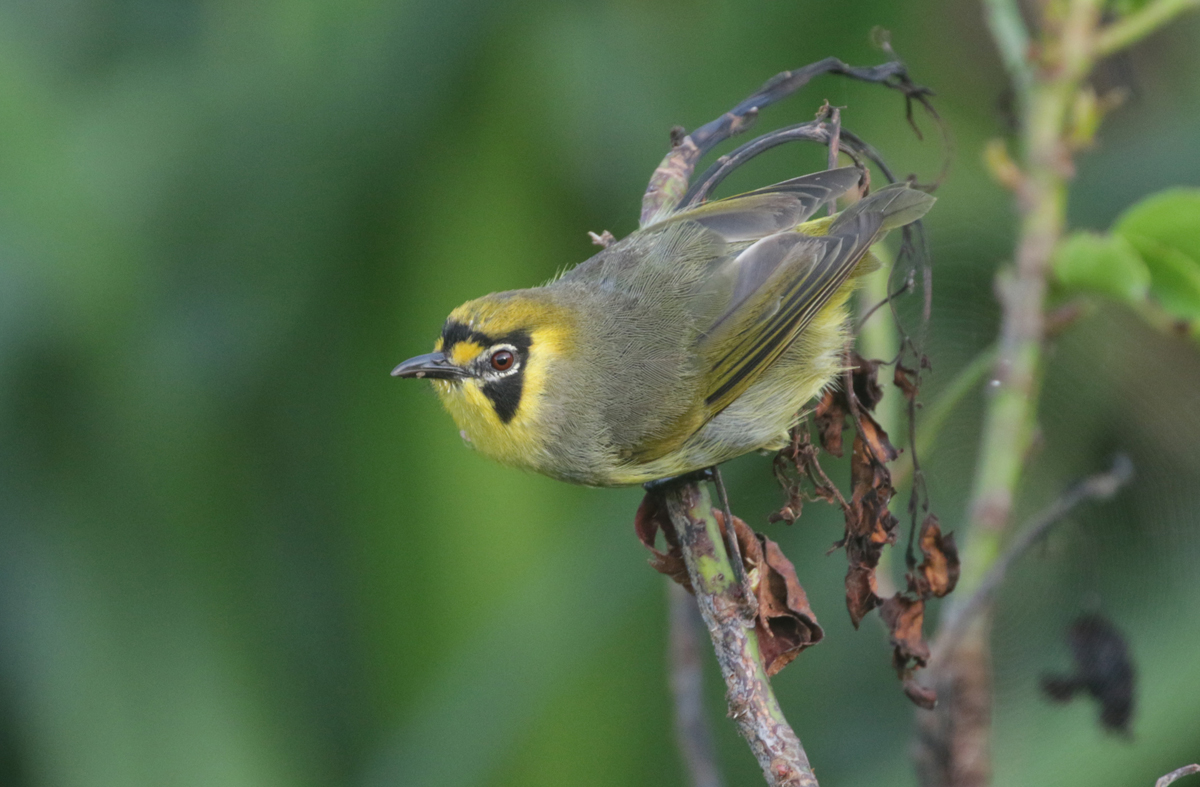
I spent a night on Hahajima over the weekend primarily in the hope of seeing the Ogasawara subspecies Oriental Greenfinch; an armchair tick in the making I hope. On top of that I was looking forward to getting a photo tick of Bonin White-eye. The latter turned out to be pretty straight forward but the Greenfinch was a different story. I tried several likely places but the sports ground was the only spot worth trying. And try I did. I heard Greenfinch several times, it was close, but it was always out of sight over the nearest tree tops. Finally I managed flight views which would normally have been a major frustration but in the limited time I had I was delighted to get any view at all.


So to that photo tick of Bonin White-eye...


Bonin White-eye is a cracking bird and like all good looking birds is that much better for being difficult to see. Difficult because of the time and effort to get to Hahajima that is, once there it's quite common. But then Japanese White-eye and Blue Rock Thrush take common to a whole other level, they can be found almost everywhere. Blue Rock Thrush in woodland...? That was a first.


Blue Rock Thrush over the fruit fields...
Blue Rock Thrush in the park...


Blue Rock Thrush coming to Asahi Super Dry...


Japanese White-eye, are absolutely everywhere. Stejnegeri and alani were both introduced to Ogasawara from the Izu Is and Volcano Is respectively so birds here are probably all hybrids.


The local race of Eastern Buzzard is another species with little or no competition on the islands, it's widespread and also approachable. Both the Buzzards I photographed were ringed and I wouldn't be in the least surprised if the islands have the highest density of ringed birds in the country. I noticed many accessorized birds, large and small, and one of the Buzzards must have been carrying a telemetry device judging by the antenna just visible in the images below.


One of the common Eastern Buzzards photographed late in the day.


A different bird earlier in the day. At first I thought the glazed eye was an artifact but it looks the same in every image. The antenna is visible in both these images.


There were a few migrants around and waiting for the Greenfinch to show itself I was entertained by waders and Eastern Yellow Wagtails on the sports field. The Wagtails were usually at the far side of the field and when one did come closer it would be invisible in a patch of flowers, only popping up intermittently hence the only closer images are flight shots. There were always Ruddy Turnstones and Pacific Golden Plovers on the field as well as a single Ruff. Down in the harbour there were a few other waders too.


Eastern Yellow Wagtail.


Ruddy Turnstones sticking to the shade under a tree.


Ruff.


Pacific Golden Plovers.


Wood Sandpiper.


Whimbrel.


Thursday, 5 January 2017

Isahaya: missed the Black Storks again!

I had intended to post daily during the trip around Kyushu but for one reason or another I never got round to it an I'm now back in Kyoto but most of this post was written at Isahaya.


Day two of my Kyshu trip dawned cold, the fields were white with frost and standing water was iced over. Once the sun got going it was surprisingly warm, plenty of flying insects and even houseflies were buzzing around. But by afternoon Mt Unzen still look as if it were dusted white on the upper slopes.


That steep central cone belching white clouds doesn't seem to be present on photographs I've seen. 


The main aim of going to Isahaya was to look for the Black Storks. I saw them at my first attempt two years ago but failed when I tried again last winter... add this winter to the blank column. I'm told local birders see them maybe once in five visits and if you spent several days in the area you'd have no problem catching up with them, which suggests they move round a large area.


Two years ago I not only saw the two Storks but found a Booted Warbler, this time the warbler wasn't as spectacularly rare, a Dusky. Almost certainly two in fact as I was sure I could hear two calls coming from the same direction, close to each other but consistently a few metres apart. However I only actually saw one bird. I since learnt some other birders have heard Dusky calling at Isahaya this winter. But I'm getting ahead of myself, that was in the evening.


I underestimated how bright the sun was and the resulting photographs were disappointing. Most shots of these two largely white birds, Osprey and a pale Eastern Buzzard, suffered terribly and I've had to adjust the images in order to salvage some of the better ones.


If I were a fish and saw that expression, I'd spend the rest of my life hugging the bottom.

Most of the length of the toes don't even touch the post, the claws are so long.


Pale birds aren't uncommon but this one is paler than many.


It's a beautiful bird.


I always tell myself not to take anymore photographs of Northern Lapwing. A waste of breath, I just can't resist whenever I come across birds close to the road, which is very often in Kyushu.


As I already said, I had originally intended to post each day while travelling round the island but only did so on the first day. I arrived home yesterday and at least now having the luxury of hindsight I can swap images of some birds from a later date to a more appropriate post. One such instance is Russet Sparrow which proved a very common bird throughout the trip, these images are of birds at Yatsushiro. Russet Sparrow isn't uncommon in winter and there were many at Isahaya, but I felt over the whole trip I was seeing more and larger flocks this year.


I spent quite a bit of time checking through wagtails and pipits, as I love to do whenever possible, and I'll combine the birds seen at Isahaya (which included four Eastern Yellow Wagtails) with more interesting examples from Arasaki.


Russet Sparrows were common throughout the trip; unkempt corners of fields, clumps of trees and overhead wires at village edges invariably held flocks.

Tuesday, 8 November 2016

Early November in Mie

The day before I drove to Saitama to see the Wood Warbler I was birding in Mie, the usual Tsu / Matsusaka area. Since my previous visit a couple of weeks earlier duck numbers were up but still well below winter peaks. Perhaps sea ducks are a little slower arriving but this isn't an important area for them and numbers never impressive. I didn't see any Red-breasted Mergansers, Common Goldeneye or scoters, the former is common in winter, Goldeneye is only ever present in low numbers and the scoters aren't even regular. The first Eastern Buzzard had arrived, Northern Goshawk and Eurasian Sparrowhawk both put in an appearance adding to the sense of seasonal change. Daurian Redstarts were common and there were even a few Dusky Thrushes. Dusky Thrush is never occurs in big numbers until later in the winter, presumably they drift in as the real winter weather bites elsewhere. On the wader front wintering Long-billed Dowitchers were in (only three but that's as good as it usually gets), Northern Grenshanks can be seen throughout winter but a Spotted Redshank was the first for a while, likewise three Wood Sandpipers. A couple of lingering Barn Swallows were keeping low as if not wanting to advertise they weren't where they ought to be by now.


The first Eastern Buzzard I've seen in the area this "winter".


Juvenile Northern Goshawk.
Lunchtime; the agony of choice.


Northern Lapwing; part of a flock of 31.


Northern Greenshank; numbers vary winter to winter but their favourite high-water roost site doesn't seem to.


Short- and medium-billed Far Eastern Curlews, no monsters today.


Wood Sandpipers.


Heading out with the tide; the birds too.


Great White Egret numbers seem a little down and Little on the up, more of a balance. Cattle were still present on 8 Oct but none by the 21st, Intermediate are still hanging. I've only ever seen one mid-winter Cattle but Intermediate is more likely.


Great White Egret.


Intermediate Egret.


So often spoonbills either have their bill hidden under their wing or under the water. So it was nice to see this one catching the evening sun as it flew in.


Immature Eurasian Spoonbill.