Showing posts with label Skylark Japanese. Show all posts

Friday, 27 April 2018

Across the fields... an odd Japanese Skylark

While looking for migrant snipe the other day there were a handful of other birds of interest, this lark in particular caught my eye.


The "whoa!" moment was unfortunately all too brief, picking the bird up a couple of fields ahead because of its overall paleness. It's more likely that any skylark will remain unseen until it flies at close range so spotting it that far ahead was noteworthy in itself. I was initially hoping for a Greater shore-toed Lark, this is as good a season as any to find one in Japan and it would have been a Kyoto tick for me. Greater Short-toed always look outstandingly pale compared to skylarks and thus superficially similar to this bird before closer inspection.


Once I got closer it was obviously a Japanese Skylark but a very different looking bird to the norm. This could be just an unusually faded individual, though I don't recall ever seeing one like this, but I suspect some form of colour aberration is the cause of this appearance as fading alone would be unlikely to result in all these features.


First a couple of shots of a typical Japanese Skylark taken a month ago. Here the bird was singing as it walked feeding across the short roadside grass. Unlike 'normal' Eurasian Skylark races the birds here frequently sing from the ground or prominent perches.


These are a few images of the recent odd looking bird.


And here is a spring Greater Short-toed Lark, one of a party I saw two years ago.


Saturday, 17 March 2018

A few recent birds in Mie

During my last few visits to to the Matsusaka and Tsu area there have been a lot of decent birds, or decent shots of ordinary birds, that haven't found there way into blog posts for one reason or another. These are a few of those birds.


Starting off with one that's already featured, the current star bird of the area, Canvasback.


As has Goldeneye.


One Swallow may not make a summer but the first one passed through on March 13 and Japanese Skylarks were singing everywhere, this one as it was walking along the roadside.


There are still a few Buff-bellied Pipits around but I was more surprised to see an Olive-backed on the beach, they're usually under pine trees here.


White-cheeked Starlings seem very variable when it comes to the extent of white about the head. Might this be age related or just individual variation? Could they even be prone to leucism? I saw the first of these bird a couple of weeks ago and the second during the week.


Extensive head markings aren't anything unexpected. The breast band is unusual.


This individual is getting a little carried away.


On the wader front, several Little Ringed Plover were in this week as was a Spotted Redshank and this Temminck's Stint.


Pity this Temminck's was against the light.


Other waders have been around all winter...


Northern Lapwing


Sanderlings


Dunlins


Kentish Plover


This American Wigeon was a month or so ago and is the only seemingly pure bird I saw this winter.


I planned last Wednesday as a gulling day and this was the sight that greeted me on the beach.


The sun hadn't risen but as is often the case when conditions are suitable the fishing boats were as close inshore as they could get.


As the light was broadening.


One of the better gulls was this juvenile Glaucous.


Wednesday, 16 March 2016

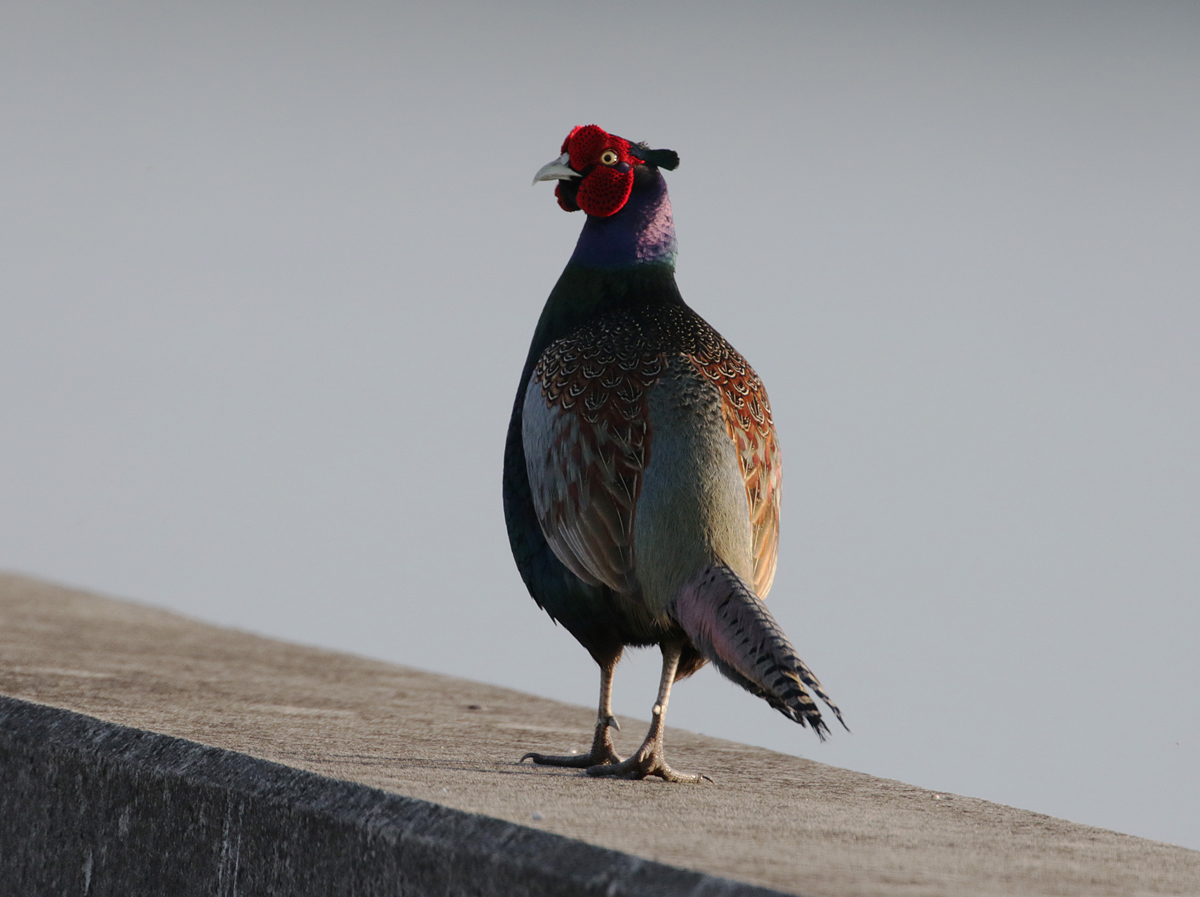
Green Pheasant on the seawall!

After enjoying a successful morning north of Lake Biwa followed by a disappointing afternoon along the lake yesterday, today seemed to follow the same pattern. The morning got off to a cracking start with a singing Siberian Rubythroat but the afternoon fizzled out. A Rubythroat in mid-March in Kansai? It was so out of context that I couldn't put a name to it at first. I suspect it must have spent the winter undiscovered in that area of scrub, it's surely too early for a migrant. They do winter further south in Japan of course and perhaps because this winter has been so mild this bird stopped off here but never felt the urge move further south. In fact I had similar thoughts about the Richard's Pipit I had flying over Kyoto a week ago.


Next up was a stunning Green Pheasant standing on the seawall. It's not unusual to see them out in the open, particularly on duller early mornings but this spot was extreme, standing on the seawall looking out to sea. I couldn't help projecting anthropomorphic feelings of a wistful longing to migrate along with the other departing species.


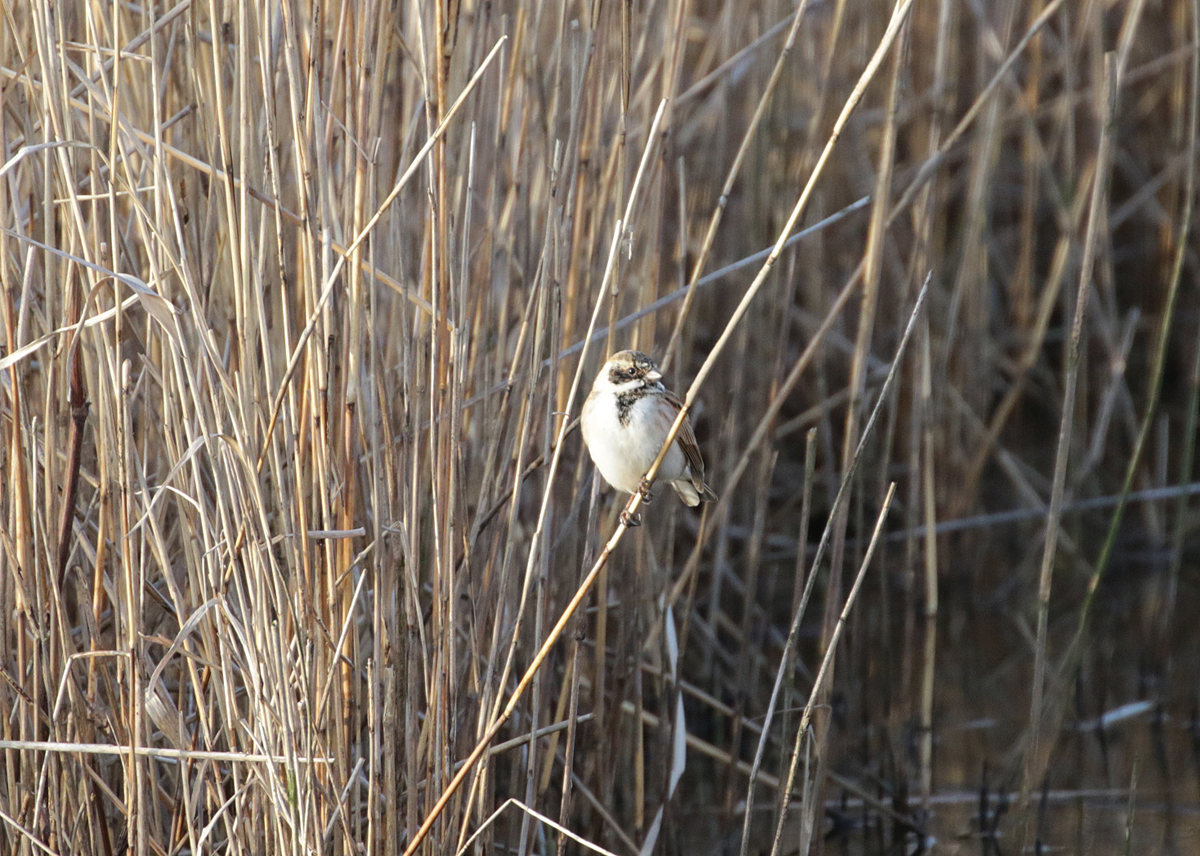
Reed Buntings are still very common and some males are beginning to assume breeding appearance. These are two shots of a strikingly pale-mantled bird, unfortunately I didn't get any clearer shots before it dived into cover. The third image is of another Reed Bunting I saw last week showing the typical browner, less frosty upperparts and covert fringes.


A typical Reed Bunting with an overall brown mantle. Above are two images of a strikingly pale-mantled bird.


Eurasian (Japanese) Skylarks are really common on the fields and their song is a constant backdrop to birding here.


Most other birds I was able to photograph were waders...


Eurasian Oystercatcher.


Spotted Redshank.


Black-winged Stilts and Long-billed Dowitchers.


Kentish Plover.


Sitting on the beach watching gulls always results in excellent views of Sanderlings.


... and Dunlins.


Finally an awful shot of a Slavonian Grebe. Why bother? Well, I rarely see them in Kansai but also because it's the first I've ever seen coming into breeding plumage.


Slavonian Grebe.


A combined list of birds recorded over two days (101 species)

Copper Pheasant   1 heard displaying
Green Pheasant   c8
Tundra Swan   70-80 including one Whistling Swan
Gadwall   common
Falcated Duck   common in Mie but only a few Biwako
Eurasian Wigeon   very numerous still at both locations
Mallard   common but numbers well down
Eastern Spot-billed Duck   common
Northern Shoveler   c100 Biwako, a few Mie
Northern Pintail   very low numbers both locations
Eurasian Teal   c200 Mie, fewer north Biwako, numbers drastically reduced at both locations
Common Pochard   common but numbers well down at both locations
Tufted Duck   low hundreds
Greater Scaup   1 Biwako, 1000s Mie
Common Goldeneye   8 Biwako, 14 Mie
Red-breasted Merganser   100s Mie
Little Grebe   several both locations
Great Crested Grebe   4-5 Biwako, 6 Mie
Slavonian Grebe   1 Mie
Black-necked Grebe   c40 Mie
Black-crowned Night Heron   1 heard between the locations
Grey Heron   sev Biwako, c25 Mie
Great White Egret   3 Biwako, 6 Mie
Little Egret   2 Biwako, 34 Mie
Great Cormorant   several Biwako, 100s Mie
Peregrine   1 Mie
Osprey   1 Biwako, 2 Mie
Black Kite   common Biwako, several Mie
Eastern Marsh Harrier   1 Biwako
Eurasian Sparrowhawk   3 Biwako
Eastern Buzzard   1 Mie
Eastern Water Rail   2 Mie
Common Moorhen   8 Biwako, 1 Mie
Common Coot   common both locations
Eurasian Oystercatcher   8 Mie
Black-winged Stilt   3 Mie 
Northern Lapwing   c30 Biwako, c50 Mie
Grey Plover   c50 Mie
Little Ringed Plover   1-2 heard Mie
Kentish Plover   2 Biwako (a big surprise), 30-40 Mie
Common Snipe   c20 Mie
Long-billed Dowitcher   3 Mie
Spotted Redshank   1 Mie
Common Greenshank   6 Mie
Green Sandpiper   4 Mie
Wood Sandpiper   1 Mie
Common Sandpiper   2 Mie
Sanderling   common Mie
Dunlin   c50 Biwako, common Mie
Black-tailed Gull   1 Mie
Common Gull   1 Biwako, c40 Mie
Vega Gull   c300
Mongolian Gull   1 Mie
Slaty-backed Gull   6 Mie
Taimyr Gull   5-6 Mie
Black-headed Gull   c6 Biwako, 100s Mie
Saunder's Gull   10 Mie
Common Tern   6 Mie
Rock Dove   several Biwako, c50 Mie
Oriental Turtle Dove   several both locations
Common Kingfisher   1 Mie
Japanese Pygmy Woodpecker   several Biwako
White-backed Woodpecker   1 plus 2 drumming Biwako
Great Spotted Woodpecker   1 Biwako
dendrocopos sp   several heard Biwako
Bull-headed Shrike   4-5 Biwako, 2 Mie
Jay   3 Biwako
Carrion Crow   common both locations
Large-billed Crow   common both locations
Great Tit   c20 Biwako
Coal Tit   5-10 Biwako
Varied Tit   c6 Biwako
Willow Tit   4 Biwako
Long-tailed Tit   common Biwako
Skylark   common Mie
Zitting Cisticola   3 Mie
Brown-eared Bulbul   several both locations
Japanese Bush Warbler   3 heard Biwako, 2 heard Mie
Japanese White-eye   common Biwako
Wren   3 heard Biwako
White-cheeked Starling   40-50 Mie
Pale Thrush   common Biwako
Dusky Thrush   several Biwako, common Mie
Siberian Rubythroat   1 heard Mie
Red-flanked Bluetail   1 heard Biwako
Daurian Redstart   2 Biwako, 4 Mie
Blue Rock Thrush   3 Mie
Brown Dipper   2 Biwako
Eurasian Tree Sparrow   common both locations
White Wagtail   several Biwako, 20-30 Mie
Japanese Wagtail   1 Biwako, 2 Mie
Buff-bellied Pipit   c20 Mie
Brambling   c50 Biwako
Oriental Greenfinch   common both locations
Eurasian Siskin   common Biwako
Eurasian Bullfinch   2-3 heard Biwako
Hawfinch   1 Biwako
Meadow Bunting   5-6 Biwako, several Mie
Chestnut-eared Bunting   6-7 Mie
Rustic Bunting   1 Biwako, 2 Mie
Black-faced Bunting   several both locations
Common Reed Bunting   several heard Biwako, common Mie