Showing posts with label Thrush Blue Rock. Show all posts

Friday, 18 January 2019

Blue Concrete Thrushes

The status of Blue Rock Thrush has changed markedly during my time in Japan; when I first arrived it was an almost exclusively coastal breeder as implied by its Japanese name of Iso Hyodori. Inland records were limited to the occasional bird that wintered on tall or prominent buildings, usually meaning in city centres or rural/suburban train stations. I'm unsure when the change began in earnest because they tended, then as they do now, to frequent sites birds wouldn't normally be looked for: not unlike Black Redstarts in the UK. Singing birds in several factory complexes I visited from 2000 were still a novelty but the surprise of finding an inland breeding Rock Thrush quickly changed to one of surprise at finding so many inland breeding Rock Thrushes!


Though quite common inland nowadays, they aren't necessarily obvious and many are probably overlooked. Factories are still a favourite location, one large manufacturing complex I visit in Shiga has two pairs which never seem to leave the confines of the plant. These birds will be quite unknown to the average birder who wouldn't have access to such places, likewise birds way up on roof tops above busy city streets are almost sure to be overlooked unless they are singing. There's a bird that sometimes sings from the roof of my house but its infrequent appearances there, or in the car park to the rear, are no doubt due to a preference for the much taller buildings near by.


Despite their inland spread it remains coastal areas where they are most easily seen. They're common along beaches (with tetrapods), seawalls, canalised river mouths, in other words anywhere with concrete. The more concrete the better it seems. Their affinity to concrete structures is so pronounced as to be off-putting and I rarely bother to stop and photograph them unless I come across an irresistibly posed bird. Consequently I have a lot of random Rock Thrush images disconnected to anything else I might have been looking for at the time which never make it onto the blog. This post starts off with some of the recent ones...


It wasn't really light enough so early in the morning last weekend to take advantage of the opportunity. This bird continued along the roadside until it disappeared behind a truck parked across the street.


Same day, different concrete. A classic bird-on-tetrapod shot. A Dusky Thrush just out of view was naive enough to think it could blithely hop past carrying a corner of rice cracker!

Even sans the reappropriated cracker, the Dusky Thrush wasn't allowed to pass this tetrapod. Time and again, without putting down the cracker, the Rock Thrush would fly at the Dusky until the latter determined there was probably nothing along the beach to the south that couldn't be found with far less effort to the north.


A September male in the same general area. The moth is possibly identifiable but not by me.


Another view of the same bird, the concrete nicely out of focus. Below are two more strongly marked, fresh-plumaged September males.


This is probably my favourite Blue Rock Thrush shot, simply because it's the only one I've taken locally without even a hint of concrete. I was surprised to discover some small island populations (eg on Hahajima, Ogasawara)  are at home in wooded situations completely removed from human structures.  


APRIL on Yonaguni. A worn uniformly blue and red male, compare with the fresh September males above.
And yes, it is on concrete.


MAY on Mishima. A smart looking spring female this time. 

JUNE Wajima. I suppose I don't see as many June birds but I've never seen any other that looks as brown in colouration or has such abraded primaries.


Note to self: look out for Rock Thrushes in June.


Friday, 15 September 2017

Hahajima

I spent a night on Hahajima over the weekend primarily in the hope of seeing the Ogasawara subspecies Oriental Greenfinch; an armchair tick in the making I hope. On top of that I was looking forward to getting a photo tick of Bonin White-eye. The latter turned out to be pretty straight forward but the Greenfinch was a different story. I tried several likely places but the sports ground was the only spot worth trying. And try I did. I heard Greenfinch several times, it was close, but it was always out of sight over the nearest tree tops. Finally I managed flight views which would normally have been a major frustration but in the limited time I had I was delighted to get any view at all.


So to that photo tick of Bonin White-eye...


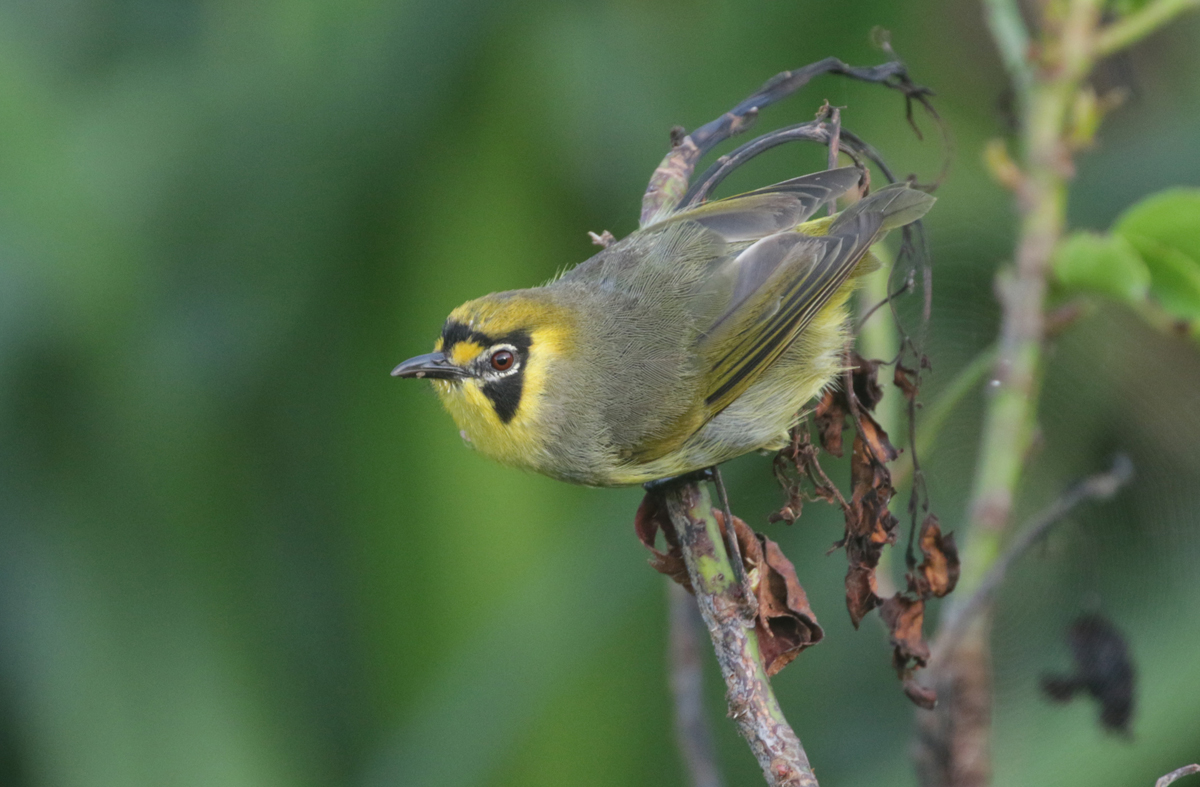
Bonin White-eye is a cracking bird and like all good looking birds is that much better for being difficult to see. Difficult because of the time and effort to get to Hahajima that is, once there it's quite common. But then Japanese White-eye and Blue Rock Thrush take common to a whole other level, they can be found almost everywhere. Blue Rock Thrush in woodland...? That was a first.


Blue Rock Thrush over the fruit fields...
Blue Rock Thrush in the park...


Blue Rock Thrush coming to Asahi Super Dry...


Japanese White-eye, are absolutely everywhere. Stejnegeri and alani were both introduced to Ogasawara from the Izu Is and Volcano Is respectively so birds here are probably all hybrids.


The local race of Eastern Buzzard is another species with little or no competition on the islands, it's widespread and also approachable. Both the Buzzards I photographed were ringed and I wouldn't be in the least surprised if the islands have the highest density of ringed birds in the country. I noticed many accessorized birds, large and small, and one of the Buzzards must have been carrying a telemetry device judging by the antenna just visible in the images below.


One of the common Eastern Buzzards photographed late in the day.


A different bird earlier in the day. At first I thought the glazed eye was an artifact but it looks the same in every image. The antenna is visible in both these images.


There were a few migrants around and waiting for the Greenfinch to show itself I was entertained by waders and Eastern Yellow Wagtails on the sports field. The Wagtails were usually at the far side of the field and when one did come closer it would be invisible in a patch of flowers, only popping up intermittently hence the only closer images are flight shots. There were always Ruddy Turnstones and Pacific Golden Plovers on the field as well as a single Ruff. Down in the harbour there were a few other waders too.


Eastern Yellow Wagtail.


Ruddy Turnstones sticking to the shade under a tree.


Ruff.


Pacific Golden Plovers.


Wood Sandpiper.


Whimbrel.


Thursday, 4 May 2017

Eye-browed Thrush

We've probably all heard of rogue grouse or pheasants, even if we haven't been lucky enough to see one, but who's ever heard of a rogue Eyebrowed Thrush?!


Last weekend I had great views of four species of thrush out in the open on a mown lawn just after dawn; Brown-headed, Japanese, Pale and Dusky. Well of course Dusky, when aren't they out in the open? There were plenty more skulking turdus in the dense understorey as the morning progressed but not a single Eyebrowed. But then almost back at the car, passing that lawn again, the evaporation of thrushes long since complete, I noticed an Eyebrowed lurking on the woodland edge. At first it remained largely hidden as you might expect, a tail tip visible from this perch, lower belly from another. Playing by thrush rules in essence. Then it began to deviate and before long ripped up the Eyebrowed manual altogether. It got bolder sitting on exposed branches then dropped down onto the grass to perform Dusky-style.


There were a few other cooperative birds, a pair of Blue Rock Thrushes and a few Black-faced Buntings...


Sunday, 12 June 2016

Waiting for the Hegura ferry

I arrived early in Wajima early, with enough time to do some birding before the ferry left, otherwise it's such a waste of a bird-filled dawn when sunrise is at 4:30. The sun may rise then but you'd have been forgiven for thinking it simply hadn't bothered that particular morning. Dense fog, or more accurately a blanket of low cloud, kept light to a minimum and gave everything a drippy grey uniformity.


Funnily a female Blue Rock Thrush, which would normally be no more than variations on a grey theme anyway, managed to transform itself into this fetching brown...


There were several singing Kamchatka Leaf Warblers that remained invisible in the foggy tree tops and a Narcissus Flycatcher that brightened the gloom of the understorey. When the clouds eventually began to rise a small number of Pacific Swifts were circling the light house on the hill top. So there were migrants around. Hegura might still produce something at this late date.


Both Japanese Pygmy and Japanese Woodpeckers were easy to see in the early morning murk.


The other highlight while waiting for the ferry was this Pacific Reef Egret. They are often too far out on the rocks to allow photography but high tide didn't leave this bird too many options.


One other pleasant surprise was a bedraggled Japanese Marten but it made off before I could get a decent shot of it.