Showing posts with label Shearwater Streaked. Show all posts

Friday, 26 May 2017

Isabelline Wheatear plus odds and ends

I've already had exceptionally good views of Isabelline Wheatear in Japan and didn't immediately rush off when I first heard about this bird on the beach towards the southern end of Hegurajima Sunday. It was in the exact spot I saw my first wheatear species in Japan, a Desert, a few years ago. When I did roll up there was a small crowd who obviously had it in view so it didn't take any locating. But I was sorry to see the poor condition the bird seemed in. Poor in terms of plumage at least, it was actually very active and didn't suggest it was sick.


There was one knot of people who gave the impression they were happy to wait and let the bird come to them and a larger group that followed it's every move. Inevitably this meant from one end of the beach to the other and back again. I only spent a few minutes with the bird as I didn't think it was getting any peace and walked the length of the beach-side path slightly behind the crowd as I was already going that way and took the central track away from the beach repeat the pointless back and forth. I must say I was rather impressed with the group not pushing the bird, all the more so as they looked a younger crowd which bodes well I suppose.


So here are the best of a bad bunch of very messy Isabelline Wheatear shots. The plumage looks to have been contaminated by something but as the bird was very active it will hopefully be fine.


Not terribly pretty, I'm sure you'll agree. Compare with the autumn bird in Osaka five years ago...


Before sailing out to the island I saw and heard, especially heard, Japanese Martens crashing around in the trees and 'barking' at each other on the hill next to Wajima harbour. I've seen Marten there before but that morning there was definitely something out of the ordinary going on. I think there were at least three animals involved in the commotion that went on for about 40 minutes as they moved noisily around the hill top. The second time I saw one of them it seemed to have had enough and be on its way, crossing the road via over-arching branches which allowed me to get this shot.


Other shots were better exposed but were blurred because of low shutter speed, luckily it paused at this point allowing a sharper image, either blurred or substantially obscured behind foliage.


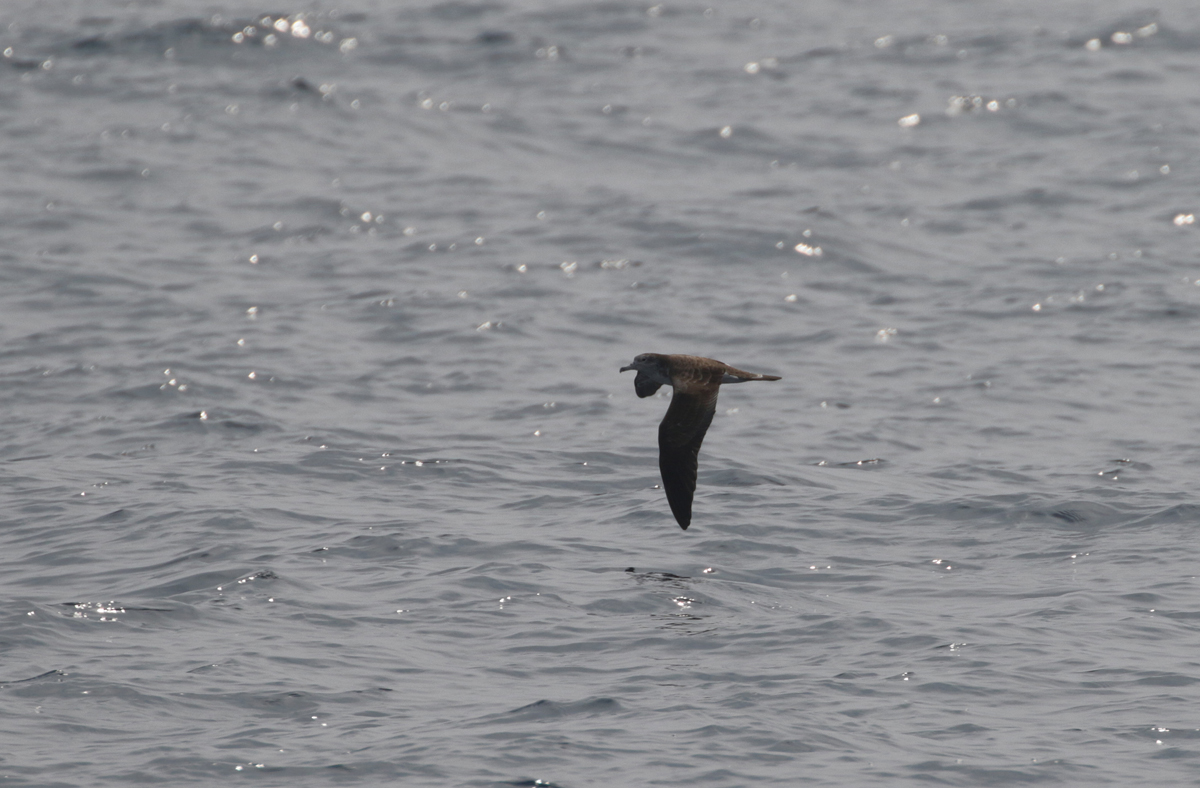
Coming back from the island the crossing was quite, much as usual, but a sudden raft of Streaked Shearwaters just off Wajima allowed me what are probably my best shots of this species.


Because the ferry hadn't run the day before I had time on the Noto Peninsula and ran into this unexpected Green Pheasant. Unexpected because I don't usually seem them in such an exposed position, walking along a berm between paddies, in the midday sun. The shots of Kentish Plover chicks were if anything even more of a surprise.


And for a trio of unexpected, this Japanese grass lizard was not only quite happy to share the concrete bench with me but didn't even mind when I pointed the camera at it... it's usually at that point they dash of at incredible speed.


Monday, 13 June 2016

Island alive with Kamchatka Leaf Warblers

Last Sunday I visited Hegurajima and was surprised by how many Kamchatka Leaf Warblers were on the island. I went back to the island this week (10 June) and found there were even more, far more in fact. They really were everywhere; from sprigs of emergent vegetation amongst the harbourside pebbles, through dense, nigh impenetrable hip-high coastal vegetation to the island's woodland spine. I posted Quite a few images of examinandus in the the last post so just a single bird this time.


It seems that this may be peak time for these north-bound birds. They're also late going the other way in autumn, passing after the vast majority of locally breeding Japanese Leaf and Eastern Crowned Warblers are long gone. Incidentally, I don't see much difference in plumage between autumn migrants and these, presumably more worn, birds in June.


Black Woodpigeons were still prominent and if I'd had the luxury of time, I think it would've been possible to get some good images of these birds that were sitting up far more often than autumn birds seem to do. As it is I'll have to make do with this.


I did get some shots of the Pigeons flashing iridescence in the sun but never a whole bird; a neck here, a belly there, perhaps a crown peeking over some foliage. Four hours on the island isn't long enough to worry about the prefect Pigeon picture.


A female Japanese Paradise Flycatcher was an altogether different challenge. It wasn't afraid to show itself but there weren't two consecutive seconds that bird wasn't on the move.


Everyone's due a little luck sometime and this male (it was singing) Lesser Cuckoo sat up nicely for me.


A 2CY male perhaps? It has a striking rufous hind collar and brownish pale-tipped coverts.


As usual the ferry journey was disappointing, lots of Streaked Shearwaters but nothing else to speak of. Not even a cormorant. Nevertheless, it's always good to see any details of any shearwater plumage.


Tuesday, 7 June 2016

Hegura: a weekend in Ishikawa part 2

The sky is getting light by 3:30am nowadays and I had plenty of time for birding at Rokkozaki before deciding what to do with the final day of this once-to-be three day trip. There were six singing Kamchatka Leaf Warblers this morning, Pacific Swifts and Red-rumped Swallows were passing through clearly there were birds to be found and with the notion of a lazy Sunday having already gone by the board even Hegura might still be possible. If the ferry were running that is.


Still in two minds I arrived back in Wajima and went to check at the ferry office.The boat was going and I had enough time to reach a convenience store for a coffee before departure. What to do: be sensible and drive towards home or go to the island? I had a busy week coming up and I'd get home very late and with little sleep over the weekend. The coffee hadn't helped me make up my mind but I gravitated back to the ticket office anyway. Compared to yesterday there were few cars in the car park, there might not be many birders out there. There might be some good birds out there. There could be a mega out there... not to mention a Swinhoe's Petrel from the boat. Before common sense prevailed I went and bought a ticket, if the ferry was going then so was I.


I hadn't really expect a Swinhoe's Petrel from the ferry of course, so I wasn't disappointed. The Streaked Shearwaters were good though.


Once on the island it quickly became apparent the Kamchatka Leaf Warblers at Rokkozaki had been no more than a taste of what could be found on the island. There had to be something else out here.


The Kamchatka Leaf Warblers were very vocal and unlike in autumn so many singing birds meant identification was that much easier. I suppose it's slightly surprising then that Rokkozaki provided the only Arctic Warbler when there were so many more warblers out here on the island. Unsurprisingly, total numbers of birds were lower than they would have been during peak migration period, or even just a week earlier. One of only two birders I met was bemoaning the general lack of birds, however the variety of species was quite good.


I found:-
Cattle Egret 1
Great White Egret 1
Northern Hobby 1


Eurasian Sparrowhawk 1
Lesser Cuckoo 1
White-throated Needletail 1
Broad-billed Roller (I hate the name Dollarbird) 1


Red-rumped Swallow 3
Black-browed Reed Warbler 1
Dark-sided Flycatcher 1


Asian Brown Flycatcher 2


Eurasian Siskin 1
Hawfinch 1


There were plenty of presumed local breeders to sift through too, Japanese Bush Warblers were performing everywhere.


This Black-faced Bunting probably wanted to be Yellow-breasted, it couldn't quite pull off the breast band...


And so many Black Woodpigeons! I saw ones or twos regularly at the southern end, the biggest party was four, and heard a couple more at the northern end.


In fact, though numbers of most species were low, there were new birds at every turn and the species tally grew steadily. My 4.5 hours on the island passed all too quickly and I felt certain there was something really exciting on the island. I still am to be honest. Before going out I'd been concerned I might be totally wasting my time but now I'm sure if I'd been able to stay there and put in the time I'd have found something special.