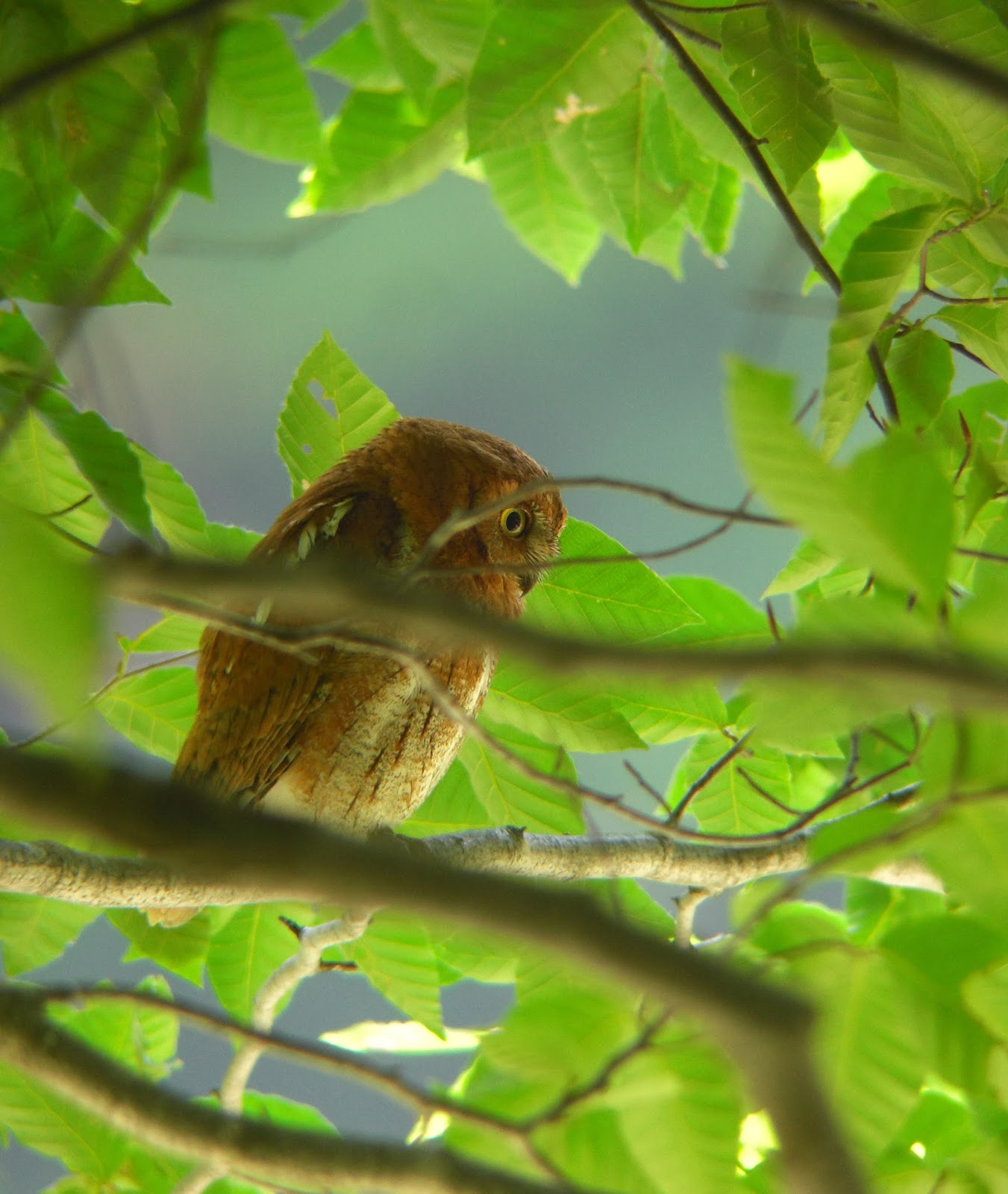
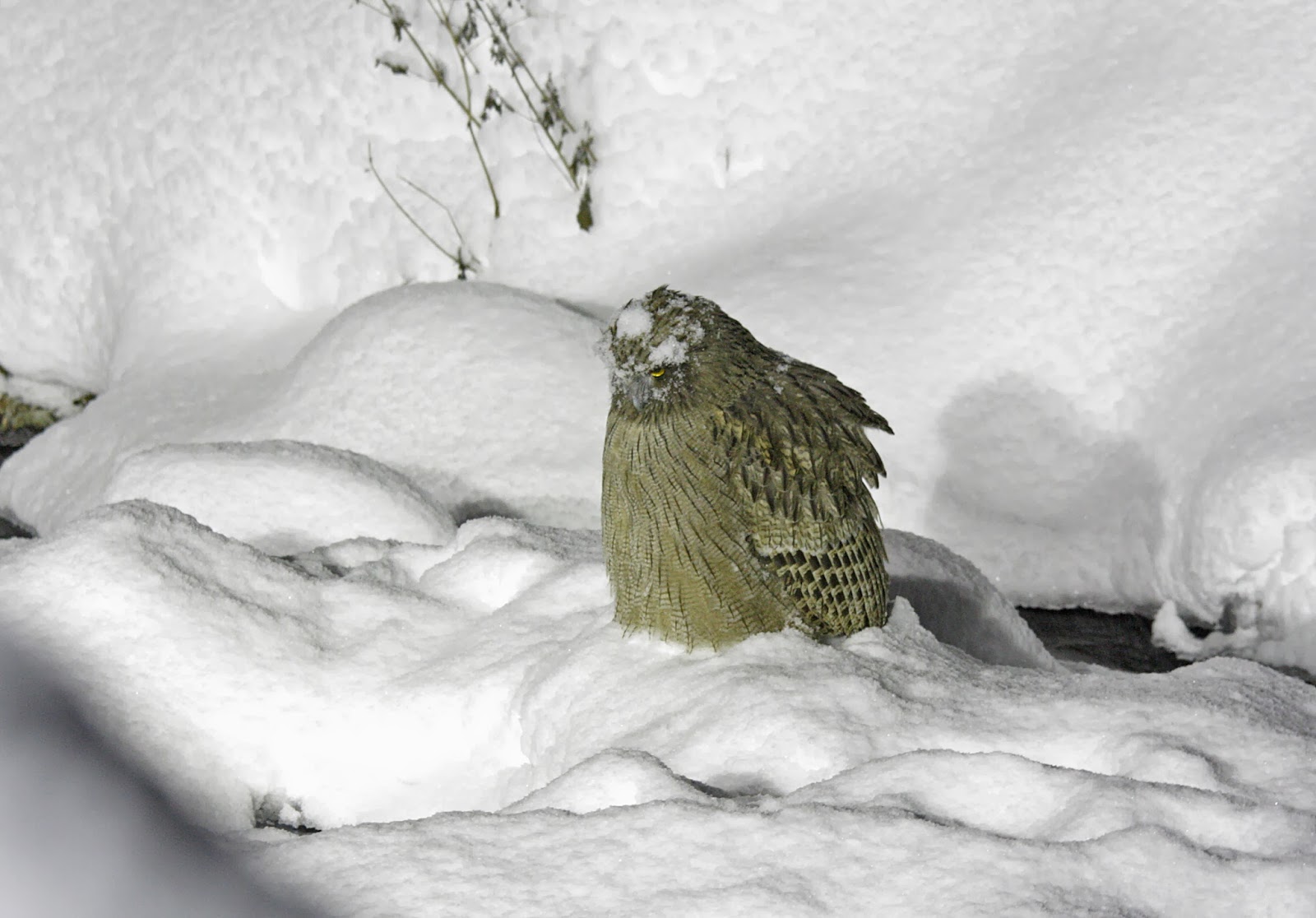
A bird just catching the sun in dark woodland on Mishima 30 April 2009.
A digiscoped image of one of three or four birds on Hegurajima 16 September 2006.
Oriental Turtle Dove is not only very common throughout the region but also very tame in the city streets and parks.

 Extensive black on the outer web of T6.
Presumably stimpsoni on Iriomote 4 April 2013.
There was a Red Turtle Dove in neighbouring Ishikawa in 2012 so it could occur in the region but it would be a major rarity. The only one I've seen was a bird I came across on my first trip to see the cranes at Arasaki in Kyushu many years ago.
Eurasian Collared Dove exits as an introduced but I believe now dwindling population. Otherwise it is a vagrant to Japan. The only one I've seen was a bird that spent a few days at Nanko in Osaka in April 2011, though there was some discussion as to whether it could have been an escape.
 Nanko, Osaka 7 April 2011.
Emerald Dove and Ryukyu Green Pigeon are both southern specialities and won't be seen here but White-bellied Green Pigeon is a different matter. It's quite common and frequently heard in the forested hills of the region though getting good views can be a challenge. In winter it sometimes comes into the Imperial Palace Park in Kyoto, I once saw a flock of about 20 from the window of a city bus, but its appearances are irregular.
 A typically rather distant view, 5 August 2009.
 Ryukyu Green Pigeons were surprisingly easy to see on Iriomote, birds would sit on the wires after rain and seemed more approachable along woodland edge.
Common Cuckoo is the "rare" cuckoo here, I hear a few in spring but it's the only breeding cuckoo that can't be found throughout summer. Oriental and Lesser are both reasonably common in forests even if they are more often heard than seen. I even hear Lesser singing in flight over the city on summer nights. Northern Hawk Cuckoo is also common and frequently heard at night singing over forests. Shortly after dawn is the best time to see them as they often sing from prominent perches before melting away.

 A juvenile Northern Hawk Cuckoo on Hegurajima 18 October 2011. Most have already left by this date.
 Oriental Cuckoo on Hegurajima October 2007.
  Lesser Cuckoo Hegurajima, 1 October 2007