Showing posts with label Thrush Pale. Show all posts

Thursday, 26 January 2017

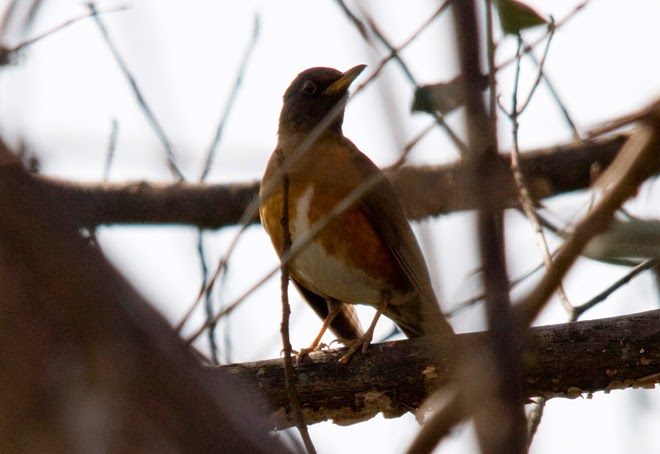
Grey-backed and White's, thrushes in the park

During migration, particularly in spring, it might not be exceptional to see five species of thrush in city parks here. Winter is a different matter, and a Grey-backed certainly wasn't on the radar!


The bird has been in one of the larger Osaka parks for a couple of weeks as far as I'm aware and though I wasn't in a hurry to get down there the number of great images circulating finally gave me the push I needed... apart from being a great bird it was also a photograph tick for me! The park, Oizumi Ryokuchi in the south of Osaka, is a great place for city birding but too far to visit casually from Kyoto. I've seen my only Golden-crowned Sparrow and Pheasant-tailed Jacana in Japan there.


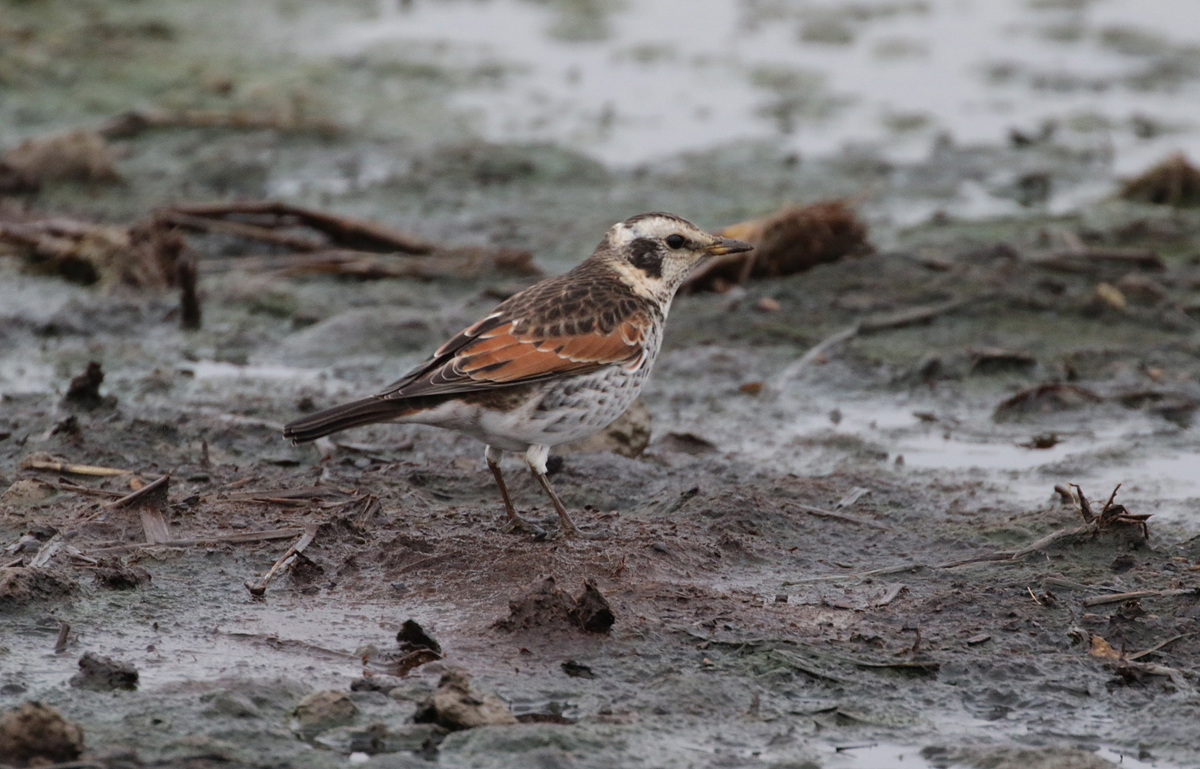
The expected winter thrushes in the parks (and elsewhere) are Dusky and Pale, and the latter is always far easier to see well in parks than in forests.


One of many approachable Pale Thrushes in the park.


The Grey-backed turned out not to be the only thrush of interest, there was a White's at the other end of the park. I managed to get a few satisfactory shots of both birds.


Saturday, 16 January 2016

Chinese Penduline Tits and Red-billed Starlings

A quick drive round the fields on my final morning at Arasaki produced the usual birds; the two Whooper Swans in winter residence, a few Common Shelducks, many Dusky and Pale Thrushes and plenty of Russet Sparrows.


Large flocks of Russet Sparrows are a common sight on the wires.


Less often seen are Hawfinches and, surprisingly, Kestrel. They were far more common at Isahaya Bay.


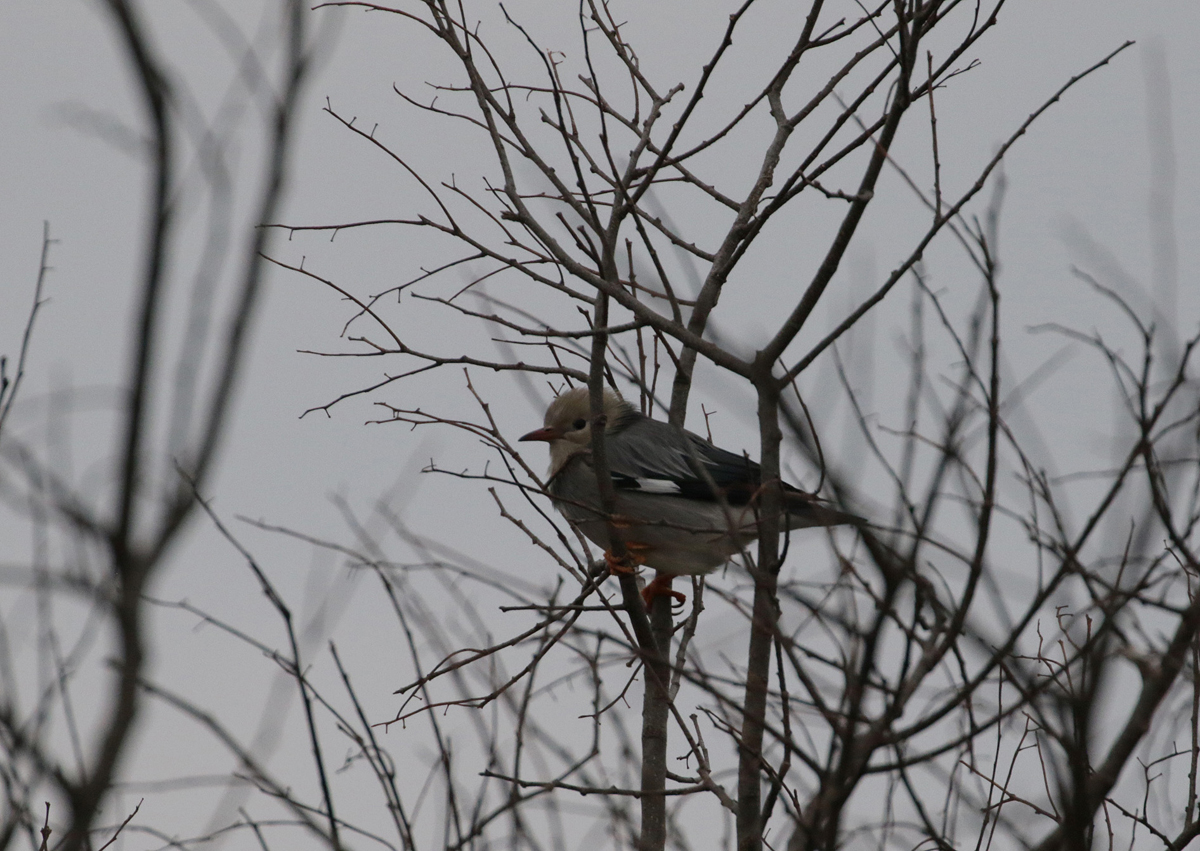
The best encounter of the morning was a party of Red-billed Starlings with the Common and White-cheeked by the pig farm.


Common Starling.


The first two Red-billed Starlings were a surprise but as I walked into the pig farm I found many more. 


A single Commom (top) with Red-billed.


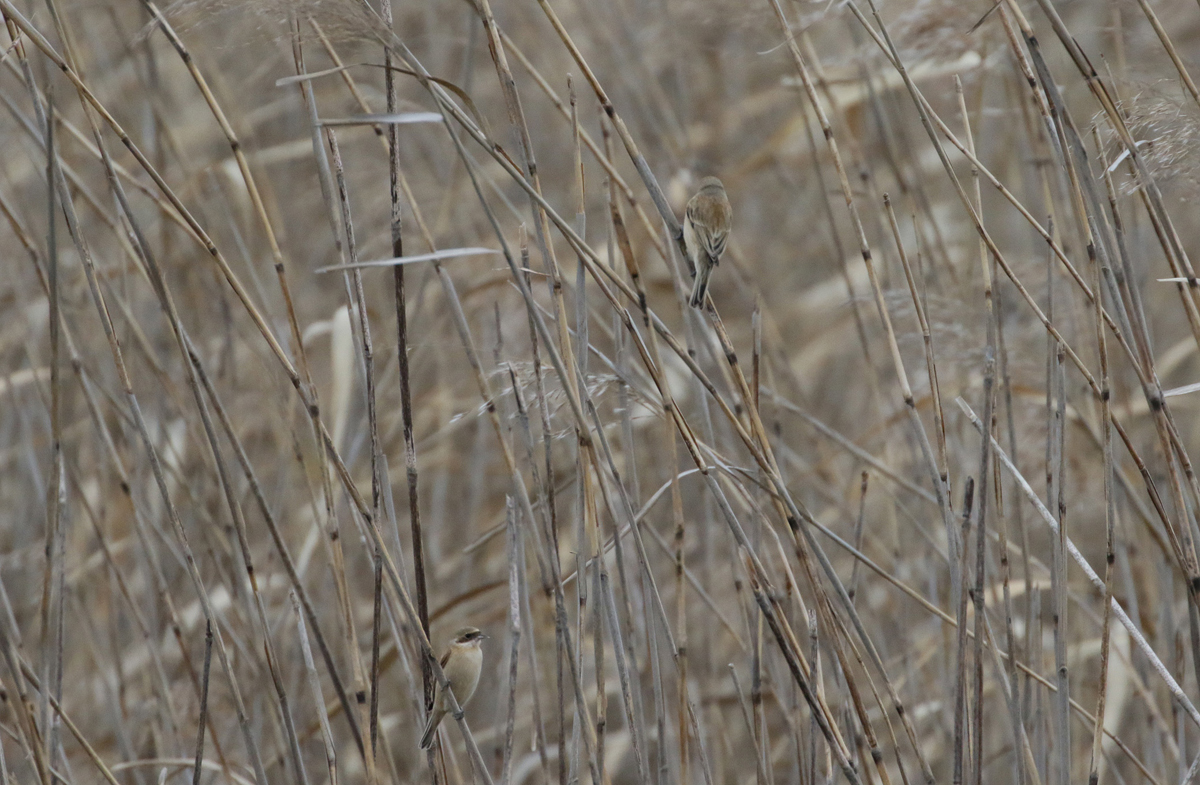
With some time left before having to start the long drive back to Kyoto I decided to have one last try for Penduline Tit. I'd heard them several times, both here and at Isahaya Bay but so far one brief flight view was all I'd managed. Fortunately conditions were very calm this morning and it didn't take long to find small groups flying this way and that across the reeds. about 40 birds was the biggest group I saw in flight but there were obviously a lot more birds present judging by the calls in both directions along the river.


They sometimes came quite close but were hidden, low in thick reeds. The only photographic opportunity was slightly further away where there was a break in the reeds and I could get these more distant shots.


On one of the occasions a party crashed into the reeds close by they flushed a Dusky Warbler! It flew up and called dropping back into the reeds four or five metres on but continued to call for a short time. I've no idea how many Duskys may winter in this part of Japan but this is my second at Arasaki, after one seen well with Sean Minns and Mark Carmody in 2008.


And one other bird along the river... spot the Hen Harrier.


The list of 119 species recorded during the week-long Kyushu trip:-


Whooper Swan
Common Shelduck
Mandarin Duck
Gadwall
Falcated Duck
Eurasian Wigeon
Mallard
Eastern Spot-billed Duck
Northern Shoveler
Northern Pintail
Eurasian Teal
Common Pochard
Tufted Duck
Little Grebe
Great Crested Grebe
Eurasian Spoonbill
Black-faced Spoonbill
Black-crowned Night Heron
Grey Heron
Great White Egret
Little Egret
Great Cormorant
Eurasian Kestrel
Merlin
Peregrine
Osprey
Black Kite
Eastern Marsh Harrier
Hen Harrier
Eurasian Sparrowhawk
Northern Goshawk
Eastern Water Rail
Ruddy-breasted Crake
Common Moorhen
Common Coot
Sandhill Crane
White-naped Crane
Common Crane
Hooded Crane
Eurasian Oystercatcher
Northern Lapwing
Grey plover
Long-billed Plover
Little Ringed Plover
Kentish Plover
Common Snipe
Eurasian Curlew
Common Greenshank
Green Sandpiper
Terek Sandpiper
Common Sandpiper
Dunlin
Black-tailed Gull
Common Gull
Vega Gull
Mongolian Gull
Slaty-backed Gull
Taimyr Gull
Black-headed Gull
Saunder's Gull
Caspian Tern
Rock Dove
Oriental Turtle Dove
Ural Owl
Long-eared Owl
Short-eared Owl
Common Kingfisher
Crested Kingfisher
Japanese Pygmy Woodpecker
Great Spotted Woodpecker
Japanese Woodpecker
Ryukyu Minivet
Bull-headed Shrike
Daurian Jackdaw
Rook
Carrion Crow
Large-billed Crow
Eastern Great Tit
Varied Tit
Chinese Penduline Tit
Barn Swallow
Long-tailed Tit
Japanese Skylark
Zitting Cisticola
Brown-eared Bulbul
Japanese Bush Warbler
Dusky Warbler
Japanese White-eye
Eurasian Nuthatch
Red-billed Starling
White-cheeked Starling
Common Starling
Pale Thrush
Dusky Thrush
Red-flanked Buletail
Daurian Redstart
Blue Rock Thrush
Brown Dipper
Russet Sparrow
Eurasian Tree Sparrow
Forest Wagtail
Eastern Yellow Wagtail
Grey Wagtail
White wagtail
Japanese Wagtail
Olive-backed Pipit
Red-throated Pipit
Buff-bellied Pipit
Brambling
Oriental Greenfinch
Long-tailed Rosefinch
Hawfinch
Japanese Grosbeak
Meadow Bunting
Chestnut-eared Bunting
Rustic Bunting
Elegant Bunting
Black-faced Bunting
Common Reed Bunting


Thursday, 3 April 2014

Ogura


The cherry blossom is almost in full bloom, spring is in the air and it's time for migrant snipe. I headed down to Ogura today as much to find likely spots to look for them as in hope to find many and as it turned out I did find a nice looking area but no snipe, well, three Common but they don't count.

A large area of reedbed at Ogura is harvested each winter then burnt off to promote spring growth. Last winter they cut a section normally left untouched and at its heart there's a great marshy stretch that looks as though it could pull in a number of wader species not just snipe so I have high hopes for this spring.

Though the snipe hunt was a bust a clump of nearby trees proved excellent for migrant thrushes. The strip of woodland that had grown up along the river over the last 20 years was clear-felled this winter, I suspect the exceptional floods last autumn created a problem with branches and even whole trees being swept downstream. The upshot is that instead of thrushes, and no doubt other migrants later in the season, melting away as I approach they are nicely concentrated and with patience will sit up. The flock consisted of about 40 Eyebrowed and a few each of Brown-headed and Pale while good numbers of Dusky were also flying up into the same trees from the nearby sports fields.


The Eyebrowed were the highlight, though they aren't unusual passing through the area, I don't normally get good views along the river. Brown-headed and Pale on the other hand are often more confiding. Which is why I spent all my time waiting for Eyebrowed to come out of the undergrowth and perch up. The above shots were the best I managed.


The rest of the trip was uneventful with fewer winter birds around but most summer stuff not in yet though I was surprised there were still lingering Rooks on the fields near the station.

I didn't try to get shots of Pale Thrush or Dusky Thrush so just for completeness I'll tack on a couple of old shots before giving the list of species seen.


Green Pheasant   1 plus 1 heard
Eastern Spot-billed Duck   2
Eurasian Teal   60-70
Tufted Duck   3
Grey Heron   8
Great White Egret   1
Little Egret   3
Great Cormorant   3-4
Eurasian Kestrel   1
Black Kite   2
Grey-headed Lapwing   3
Common Snipe   3
Green Sandpiper   1
Feral Rock Dove   c100
Oriental Turtle Dove   several
Common Kingfisher   1
Japanese Pygmy Woodpecker   1 heard
Bull-headed Shrike   7-10
Rook   10-15
Carrion Crow   common
Large-billed Crow   common
Barn Swallow   6
Skylark   many singing
Brown-eared Bulbul   very common
Japanese Bush Warbler   common
White-cheeked Starling   common
Eyebrowed Thrush   c40
Pale Thrush   3+
Brown-headed Thrush   2+
Dusky Thrush   common
Eurasian Tree Sparrow   common
White Wagtail   7
Japanese Wagtail   1
Oriental Greenfinch   several
Long-tailed Rosefinch   1 heard
Meadow Bunting   several
Rustic Bunting   3
Black-faced Bunting   10-15
Common Reed Bunting   1

Tuesday, 7 January 2014

thrushes


Siberian Thrush is a skulking migrant through the area, I come across them on the hills around Kyoto in late September and October but in lower numbers than the other migrant species. I can't recall ever seeing one in the city parks but they certainly turn up in the larger Osaka parks. Eye-browed is usually the first autumn migrant to arrive and can be quite common in September, as can Japanese and Brown-headed. These turdus migrants are common in the hills but can be quite easy to find in Kyoto parks too. Fruiting trees next to a pond at the northern end of the Imperial palace Park is a good place to try. Japanese is also a common breeder in the mountains of Kansai. Pale Thrush arrives in autumn too and remains a common feature of the winter birding landscape in Kyoto parks and the surrounding hills. Dusky Thrush is another winter visitor though it doesn't usually become common until mid-winter. The first birds tend to stay in the mountains, later becoming common in open country as the weather forces them down. Naumann's occurs in winter but it's very uncommon and hybrids are just as likely, if not more so. Hegura in October is a good bet for Naumann's. Coming back to zoothera, White's is widespread in low numbers in winter and can be found on hills surrounding Kyoto, sometimes they even winter in the Imperial Palace Park but tend not to linger so long in the botanical gardens. When weather is hard they can become fairly common in the open along roadsides around northern Lake Biwa. Other species are vagrants in the region, Red-throated, Black-throated and Fieldfare have all occured in Kyoto or Osaka the last 20 years. Still waiting for Redwing!

Spring passage is more urgent and though the same places are good to check more luck is required to be in the right place at the right time. Brown-headed Thrush (along with Pale and Dusky) can be particularly common in trees along the Uji River and is the only migrant I see more commonly at this time of year compared to autumn.

One of several White's Thrushes seen on this date around northern Lake Biwa, 18 February 2008.

This bird was in Kyoto botanical gardens, 3 February 2013.

Spring migrant female Japanese Thrush on Mishima.

An interesting bird which seems to be a 2CY female-type male Japanese Thrush on Mishima, 2 May 2010.

Male Eye-browed on Hegurajima, October 2007.

Eye-browed Thrush Ogura, Kyoto 3 April 2014.

Pale Thrush is common in winter and they can be very confiding in parks. This one in Kyoto botanical gardens, 7 March 2012.

Male Brown-headed Thrush on the Uji River at Ogura, April 2014.

Female Brown Thrush in the Palace Park, Kyoto. Dog walkers and joggers start early and birds soon disappear into off-limits areas.

Female Izu Thrush, 17 May 2013.

Black-throated Thrush very briefly in the botanical gardens Kyoto, 5 December 2012. I must have been the sole observer for this one.

A Naumann's Thrush on Iriomote 3 April 2013.

Naumann's Thrush, Hegurajima October 2014.

Spring male Duskys are stunning birds, this one on the Yamato River, Osaka.

Dusky Thrush Matsusaka, Mie 20 April 2014.

A more typical mid-winter bird, 17 January 2011.

Dusky (rear) and Dusky x Naumann's hybrid, Ogura 13 April 2011.

The same Dusky x Naumann's hybrid.

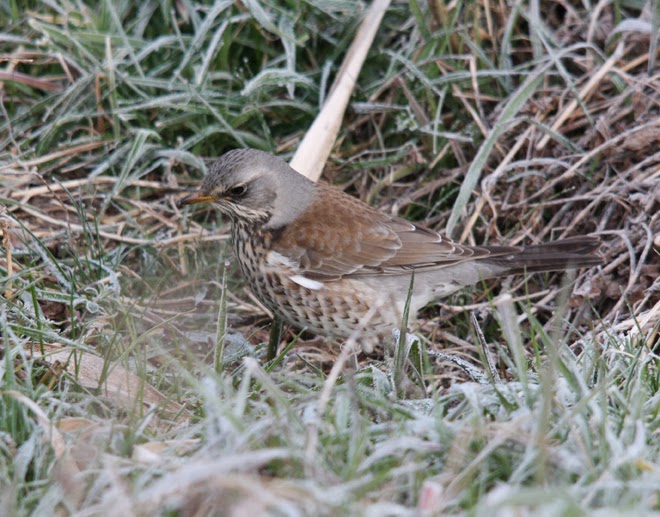
Fieldfare on the Uji River 18 February 2009. Very obvious moult contrast in the coverts. 

Song Thrush in Kanagawa 7 March 2014.

Mistle Thrush, 21 February 2014.