Showing posts with label Owl Short-eared. Show all posts

Thursday, 7 January 2016

A couple of days at Isahaya Bay 2

I'm getting seriously behind with posts but between birding and driving I don't have much time for sleep let alone posting. I'll continue this one started three days ago...


Yesterday didn't dawn until 10:40 when it finally became possible to see the far side of the field only 100m away. I hadn't seen either the two Lesser White-fronted Geese or the Black Stork yesterday and had hoped to have another crack in the morning before heading off to the next location but the weather had other plans and by the time I was ready to leave I realised I couldn't get to the next place with any meaningful daylight left so rather than squander what there was driving I decided to stay till evening and leave after dark. Giving me another crack at the Lesser White-fronts in the evening.


There's no way to know how a change of plan might affect birding fortune, no way to know what might have been seen if things proceeded as originally intended. Probably just as well.


Even with the additional time I saw neither Geese nor Stork even though I must have covered every inch of those fields. Fortunately I don't need them for my Japan list otherwise I have been pulling my hair out. As only one Stork returned this winter time must be running out for anyone still needing this for their Japan list; who knows when there'll be another.


Was it worth staying? I have to say yes as without the change in schedule I wouldn't have had a Japan tick today. More of that in the next post. Certainly I got a slightly better shot of an Eastern Marsh Harrier than in the last post, at least this one is recognisable.


Immature Eastern Marsh Harrier.


As well as very good numbers of harriers, Kestrels are quite often seen with at least six birds dotted around the area.


Once the fog began to thin around midday I went to check out the local cranes as I heard there was a Common with them.


In the early afternoon things really did brighten up and for a couple of hours there was beautiful sunshine and totally unexpected was a Short-eared Owl beside the track. Not nearly such good views as of the Long-eared yesterday but Short-eared have become very scare nowadays so any view is welcome.


It seemed it wasn't just me enjoying the burst of sunshine, this Chestnut-eared Bunting sat up nicely. And the Northern Lapwings which were being very skittish on the fields seemed transformed coming to the river to bathe.


Green Sandpipers can be difficult to approach too as they love long, straight drainage ditches and always like to stay well ahead of anyone coming along. This bird was on a wider channel and therefore less nervous.


All too soon mist rolled in again from Isahaya Bay. The light faded quickly in the afternoon and this Buff-bellied Pipit was one of the last things I got to see before settling down to wait for the Lesser White-fronted Geese that never arrived.


Saturday, 14 December 2013

owls

Running into an owl by chance is a far less frequent than in the UK and in Kyoto the only species that is more or less guaranteed is Brown Hawk Owl. They're summer visitors of course but, for anyone visiting at that time, pairs in the Imperial Palace Park are straight forward. There's a softball area in the north east corner and just to the south across a broad gravel drive there's a roped-off area where you'll see several owl nest boxes and you should be able to find the male near by during the breeding season or even the young birds once they've fledged.
Ural Owl can be found on the hills surrounding the city but they require more work. Perhaps it might be easier to try for birds at the International Conference Center, I've never looked for them there but I have heard them when picking up visiting birders from the hotel there at night. They're quite widespread throughout the region.
Two scops owls Japanese/Collared and Oriental breed in the region. Japanese is quite common in forests in Kyoto prefecture, and no doubt elsewhere, though that doesn't mean they are easily seen, and in the city I've only seen a single singing migrant at Fushimi Inari Shrine. Oriental is far less common, in fact I haven't heard one in my usual nocturnal haunts for several years. Many local photographers head across to Tottori which certainly suggests they're difficult to get here.
Going back a few years Short-eared Owl used to be a common wintering bird at Ogura but they went into rapid decline and have totally disappeared. This seems to have been the case throughout the region as a whole and Short-eared has become quite a rare winter visitor.
Migrant Long-eared sometimes turn up in riverside trees along the Uji River near Ogura but the only regular winter roost I know of is in Osaka.

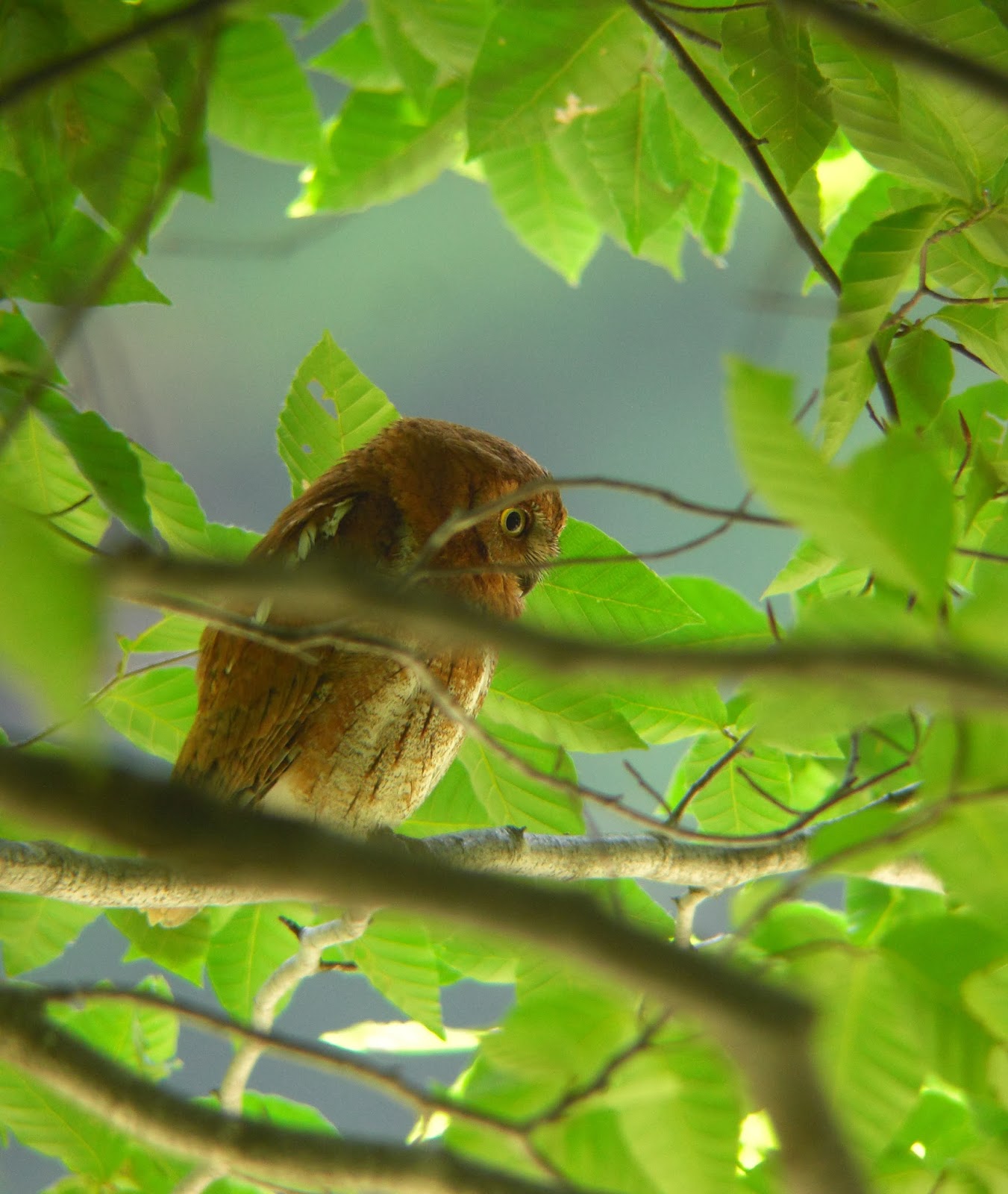
Oriental Scops rufous form male, Tottori 24 July 2011.

Female rufous form, Tottori 24 July 2011.

Oriental Scops male grey form 24 July 2011.

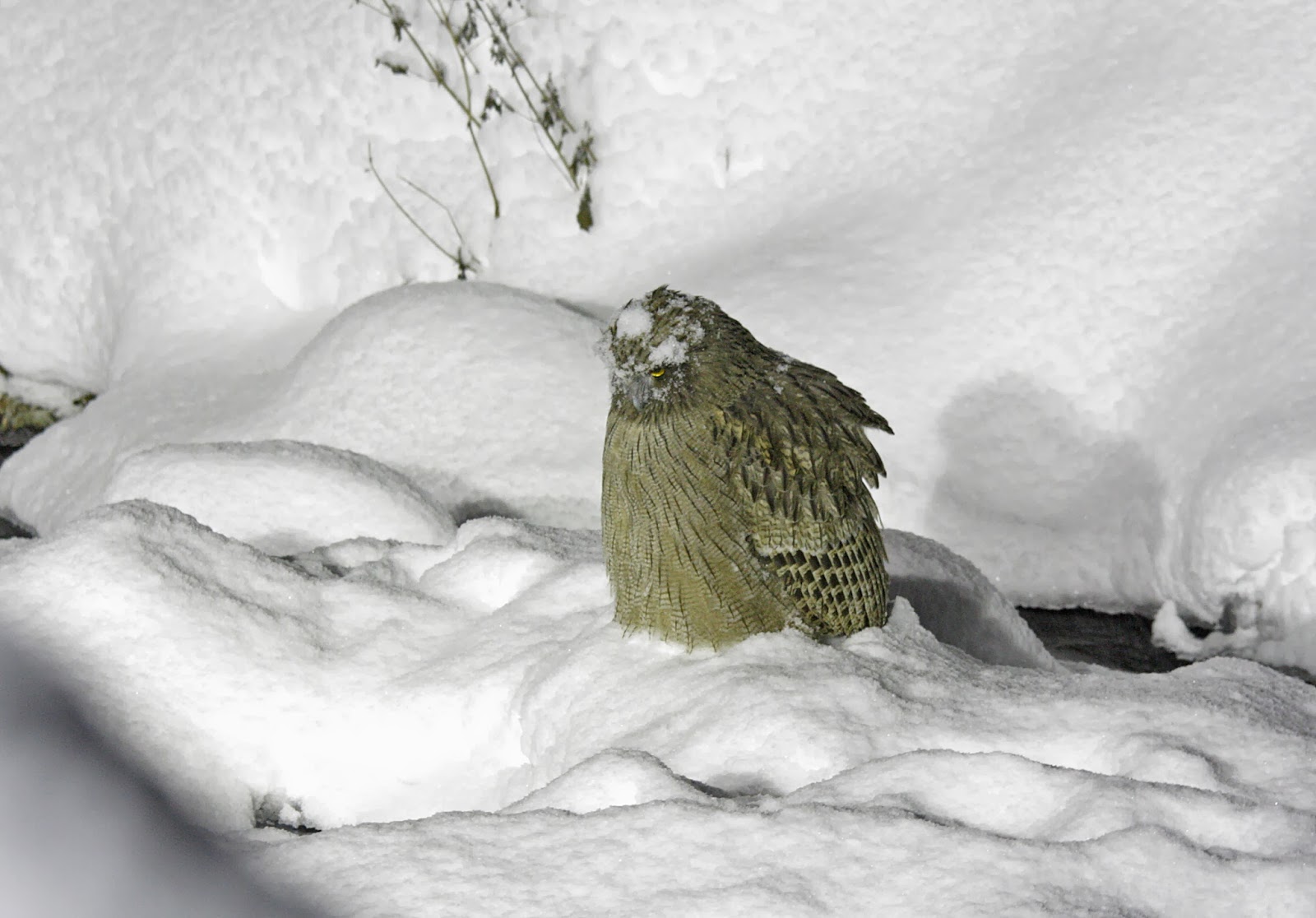
Blakiston's Fish Owl Washi no Yado, Hokkaido 4 January 2013. Finding a nest with a fledged young many years ago was a thrill but quite honestly the views at this famous location take some beating.

Brown Hawk Owl Hegurajima 10 October 2007.

(Ryukyu) Brown Hawk Owl Ishigaki 10 April 2013.

Migrant Long-eared, Hegurajima 11 October 2009.

A good sighting of Long-eared at Nosappu, Hokkaido 27 December 2012.

Short-eared Owl hunting along Cape Nosappu, Hokkaido 27 December 2012.