Showing posts with label Sparrow Russet. Show all posts

Saturday, 16 January 2016

Chinese Penduline Tits and Red-billed Starlings

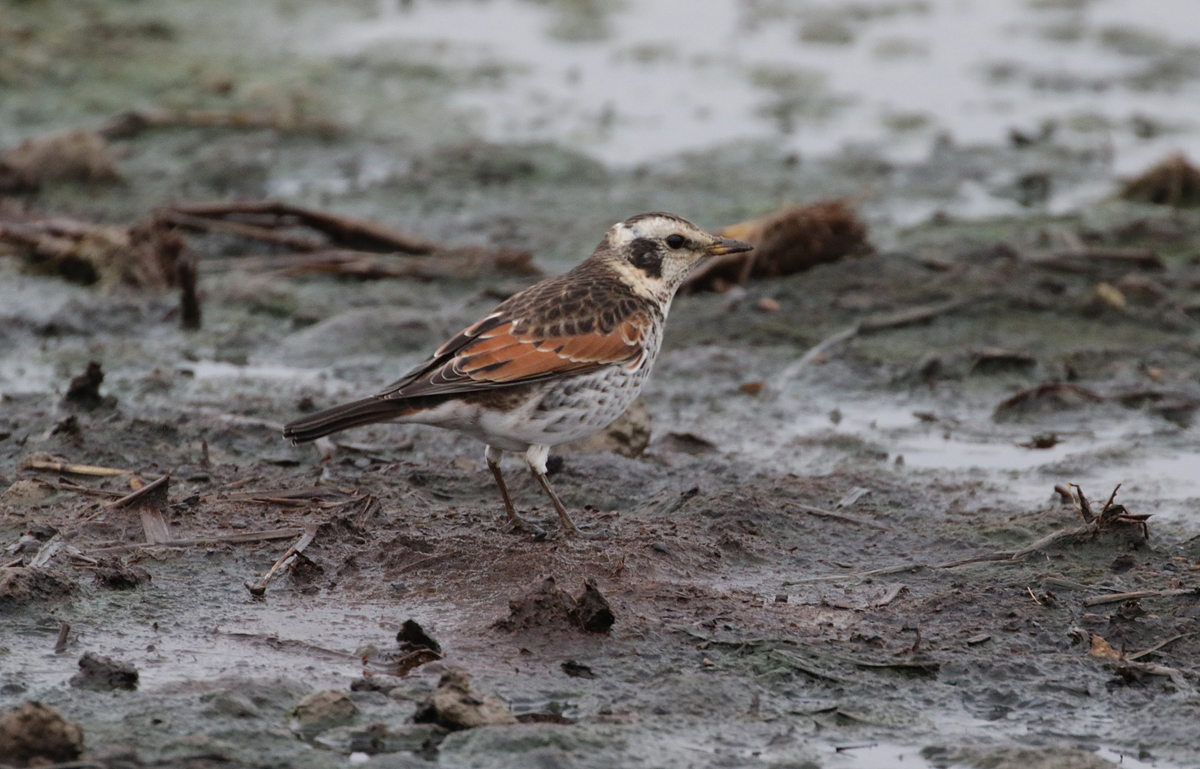
A quick drive round the fields on my final morning at Arasaki produced the usual birds; the two Whooper Swans in winter residence, a few Common Shelducks, many Dusky and Pale Thrushes and plenty of Russet Sparrows.


Large flocks of Russet Sparrows are a common sight on the wires.


Less often seen are Hawfinches and, surprisingly, Kestrel. They were far more common at Isahaya Bay.


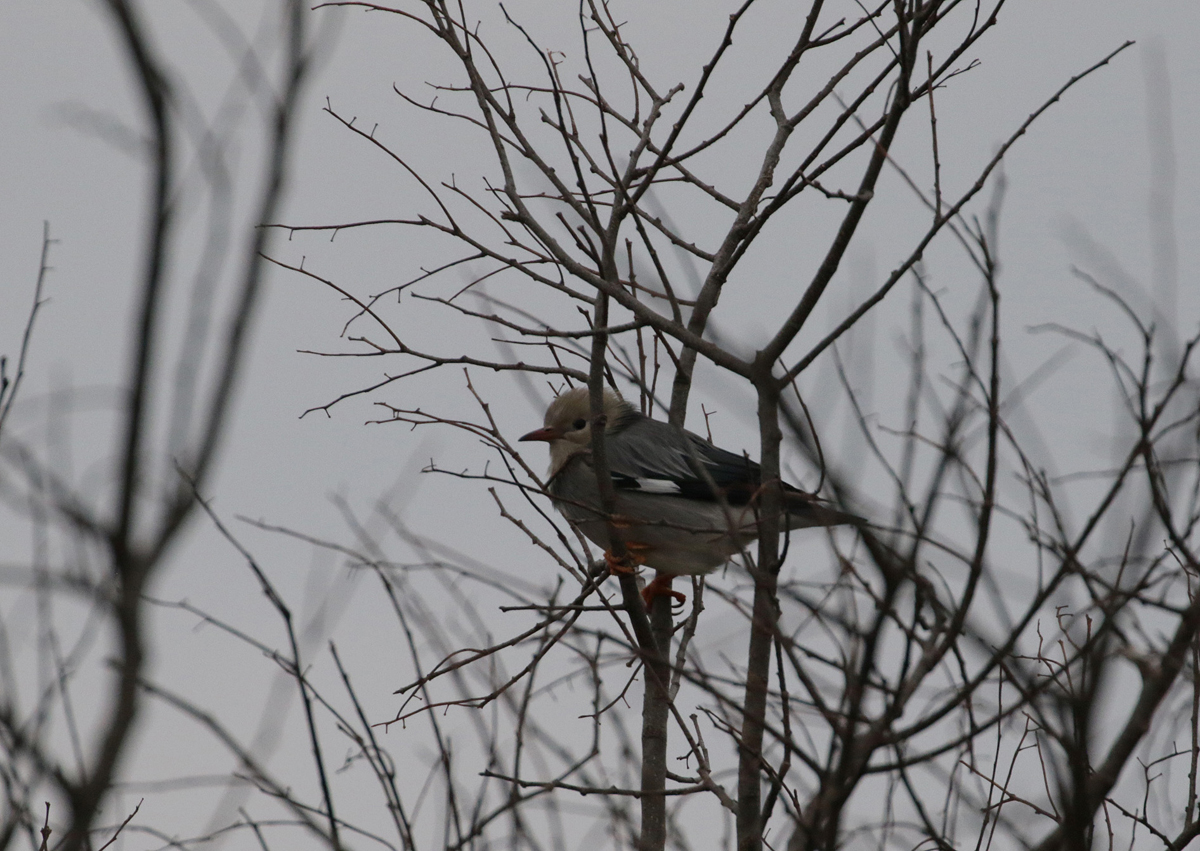
The best encounter of the morning was a party of Red-billed Starlings with the Common and White-cheeked by the pig farm.


Common Starling.


The first two Red-billed Starlings were a surprise but as I walked into the pig farm I found many more. 


A single Commom (top) with Red-billed.


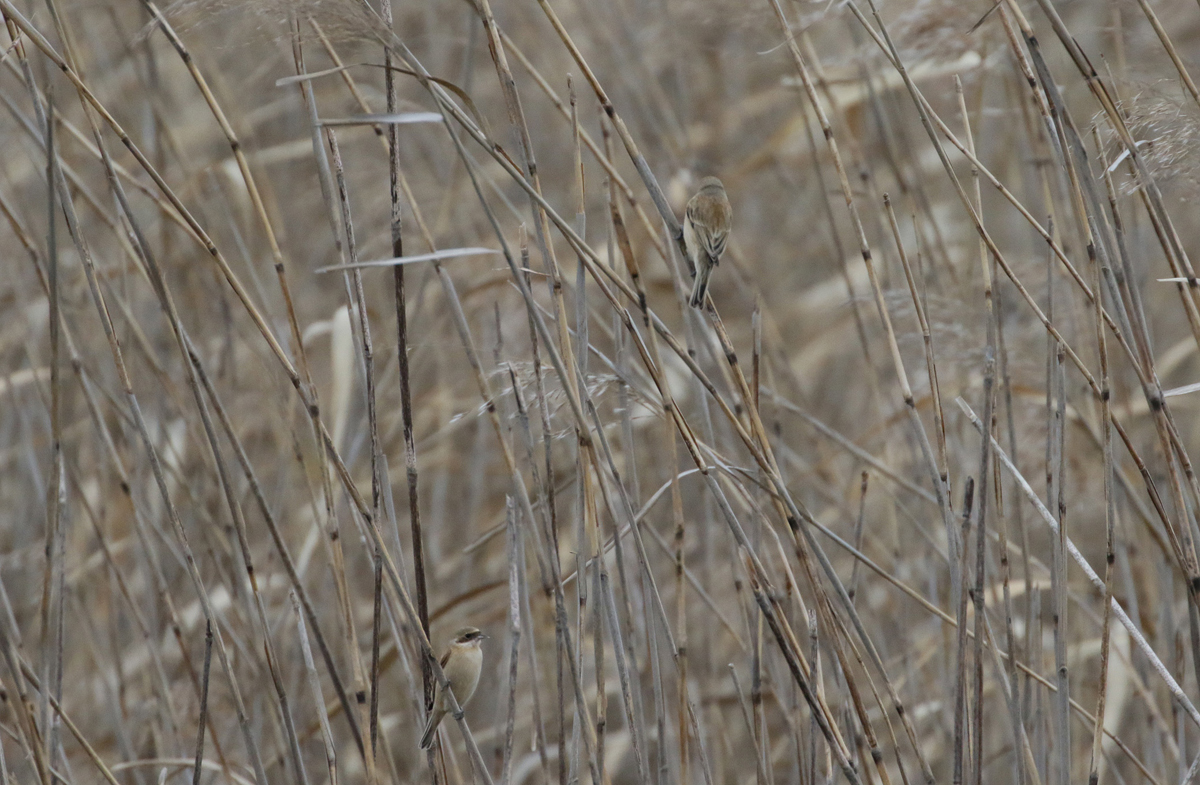
With some time left before having to start the long drive back to Kyoto I decided to have one last try for Penduline Tit. I'd heard them several times, both here and at Isahaya Bay but so far one brief flight view was all I'd managed. Fortunately conditions were very calm this morning and it didn't take long to find small groups flying this way and that across the reeds. about 40 birds was the biggest group I saw in flight but there were obviously a lot more birds present judging by the calls in both directions along the river.


They sometimes came quite close but were hidden, low in thick reeds. The only photographic opportunity was slightly further away where there was a break in the reeds and I could get these more distant shots.


On one of the occasions a party crashed into the reeds close by they flushed a Dusky Warbler! It flew up and called dropping back into the reeds four or five metres on but continued to call for a short time. I've no idea how many Duskys may winter in this part of Japan but this is my second at Arasaki, after one seen well with Sean Minns and Mark Carmody in 2008.


And one other bird along the river... spot the Hen Harrier.


The list of 119 species recorded during the week-long Kyushu trip:-


Whooper Swan
Common Shelduck
Mandarin Duck
Gadwall
Falcated Duck
Eurasian Wigeon
Mallard
Eastern Spot-billed Duck
Northern Shoveler
Northern Pintail
Eurasian Teal
Common Pochard
Tufted Duck
Little Grebe
Great Crested Grebe
Eurasian Spoonbill
Black-faced Spoonbill
Black-crowned Night Heron
Grey Heron
Great White Egret
Little Egret
Great Cormorant
Eurasian Kestrel
Merlin
Peregrine
Osprey
Black Kite
Eastern Marsh Harrier
Hen Harrier
Eurasian Sparrowhawk
Northern Goshawk
Eastern Water Rail
Ruddy-breasted Crake
Common Moorhen
Common Coot
Sandhill Crane
White-naped Crane
Common Crane
Hooded Crane
Eurasian Oystercatcher
Northern Lapwing
Grey plover
Long-billed Plover
Little Ringed Plover
Kentish Plover
Common Snipe
Eurasian Curlew
Common Greenshank
Green Sandpiper
Terek Sandpiper
Common Sandpiper
Dunlin
Black-tailed Gull
Common Gull
Vega Gull
Mongolian Gull
Slaty-backed Gull
Taimyr Gull
Black-headed Gull
Saunder's Gull
Caspian Tern
Rock Dove
Oriental Turtle Dove
Ural Owl
Long-eared Owl
Short-eared Owl
Common Kingfisher
Crested Kingfisher
Japanese Pygmy Woodpecker
Great Spotted Woodpecker
Japanese Woodpecker
Ryukyu Minivet
Bull-headed Shrike
Daurian Jackdaw
Rook
Carrion Crow
Large-billed Crow
Eastern Great Tit
Varied Tit
Chinese Penduline Tit
Barn Swallow
Long-tailed Tit
Japanese Skylark
Zitting Cisticola
Brown-eared Bulbul
Japanese Bush Warbler
Dusky Warbler
Japanese White-eye
Eurasian Nuthatch
Red-billed Starling
White-cheeked Starling
Common Starling
Pale Thrush
Dusky Thrush
Red-flanked Buletail
Daurian Redstart
Blue Rock Thrush
Brown Dipper
Russet Sparrow
Eurasian Tree Sparrow
Forest Wagtail
Eastern Yellow Wagtail
Grey Wagtail
White wagtail
Japanese Wagtail
Olive-backed Pipit
Red-throated Pipit
Buff-bellied Pipit
Brambling
Oriental Greenfinch
Long-tailed Rosefinch
Hawfinch
Japanese Grosbeak
Meadow Bunting
Chestnut-eared Bunting
Rustic Bunting
Elegant Bunting
Black-faced Bunting
Common Reed Bunting


Tuesday, 30 December 2014

Greater Spotted Eagle in Kyushu


I started the 29th at Yatsushiro where I've seen Great Black-headed Gull in the past. The estuary was teamimg with birds but all were at such a great distance it wasn't possible to identify most waders and there didn't seem to be any Great Black-headed Gulls in the large flocks gathered on different mud banks dotted off-shore.


The fields were a better option as far as viewing conditions were concerned and flocks of Saunder's Gulls were doing their best marsh tern impersonations over flooded fields, their high pitched k'yip calls quite un-gull like.


The wet fields provided my only Little Ringed Plover of the trip too. In the dry areas a flock of 200+ Russet Sparrows was good and regular sightings of Chestnut-eared Bunting, rather scarce around Kyoto, only went to emphasise how odd it was not to see any Rustic Buntings anywhere.


Chestnut-eared Bunting is quite easy to find.


Two of many Russet Sparrows in a huge flock.


My wife is worried about the car problem and forecast snow for the area and is pushing me to come home for New Year; and her January 1st birthday would have nothing to do with that I'm sure. So rather than head down to Izumi to see the the great clouds of cranes filling the morning sky I decided to cut across the island to Sadowara on the Miyazaki coast instead. Fantastic a spectacle as the morning crane flight is I can see that again another time, the Greater Spotted Eagle I'm not so sure about. Even though the last one in nearby Kagoshima Prefecture came back every winter year after year. Thought it was a pity to lose birding time driving across, I much prefer to do my driving at night, I didn't think I had much choice if I wanted to see the Eagle.


I arrived on the outskirts of Sadowara, dropping down from the mountains, mid-afternoon and a few hirundines caught my eye. Usually they'd be Asian House Martins in winter of course but these looked like Barn Swallows and sure enough when I was able to stop the only bird still in view was a Barn. An excellent introduction to the area but as time was pressing I didn't make the effort to check if they might have been tytleri. I've been told winter Barn Swallows can be this race.


The next good bird was also a subspecies, an albus Great White Egret. As I was approaching the Eagle site I noticed two egrets standing next to each other at the side of a ditch and was struck by the very obvious size difference. Again I didn't stop to check wanting to hurry on but as it turned out my first stop at the Eagle site was only 100 metres further on and soon after parking the Egret appeared. It was clearly much bigger than the several modestus present and extensive yellow in the legs and feet were also indicators. I'm not sure what the problem was but both feet were deformed.


Great White Egret E.a.albus, there's something unpleasant happening to its.


Unfortunately I was never able to get a shot of them next to each other for direct size comparison, but this is the usual modestus. With very nice feet.


...and continuing with the white theme, there were half a dozen Black-faced Spoonbills present too.


By far the best bird I didn't get a shot of was a Baikal Teal. Unlike the birds I usually see it was really close, unfortunately the battery for my camera wasn't anywhere near close. I'd forgotten to take it off the charger when I arrived and when I'd retreived it the duck had slunk back into the reeds where it spent most (I'm tempted to say all) of its time. It never did come back into the open after that brief lapse of skulk mastery.


The Greater Spotted Eagle had been sitting motionless in a bush all this time but it finally got airborne. If I see an eagle in Kansai it's more often than not a Steller's Sea Eagle and by comparison there really isn't anything 'great' about this Eagle other than its spots, it's strikingly small.


It really lacked the wow factor you get with Steller's. Nevertheless it was a very attractive bird and the aquila eagles look rather classy even if they don't have such impressive size.


The rest of the shots (apart from the first) are more heavily cropped despite eventually getting closer views from a better vantage point.


List of species seen at Yatsushiro(Y) and Sadowara(S):-
Common Shelduck   c10(Y), c20(S)
Gadwall   c15(Y)
Eurasian Wigeon   common(Y), c30(S)
Mallard   common (Y/S)
Eastern Spot-billed Duck   common(Y/S)
Northern Shoveler   c25(S)
Northern Pintail   several(Y/S)
Baikal Teal   1(S)
Eurasian Teal   c10(Y), common(S)
Common Pochard   c40(S)
Tufted Duck   c20(S)
Red-breasted Merganser   2(Y)
Little Grebe   1(Y), 2(S)
Great Crested Grebe   4(Y)
Black-necked Grebe   1(Y)
Black-faced Spoonbill   5(Y), 6(S)
Black-crowned Night Heron   5(S)
Grey Heron   common(Y), several(S)
Great White Egret   4-6 modestus and 1 albus (S)
Little Egret   1(Y), 2-3(S)
Pacific Reef Egret   1(S)
Great Cormorant   several(Y/S)
Eurasian Kestrel   1(S)
Merlin   1 (S)
Osprey   3(Y), fairly common(S)
Black Kite   fairly common(Y/S)
Greater Spotted Eagle   1 juv(S)
Common Coot   common(Y), several(S)
Northern Lapwing   5(Y), 1(S)
Grey Plover   5(Y)
Little Ringed Plover   1(Y)
Kentish Plover   fairly common(Y)
Common Greenshank   6(Y)
Green Sandpiper   1(Y)
Common Sandpiper   4(Y)
Dunlin   100+(Y), c30(S)
Common Gull   c300(Y)
Vega Gull   250+(Y), c20(S)
Slaty-backed Gull   1(Y)
Taimyr Gull   4-5(Y)
Black-headed Gull   several(Y)
Saunder's Gull   50+(Y)
Rock Dove
Oriental Turtle Dove   fairly common(Y/S)
Common Kingfisher   1 heard(S)
Bull-headed Shrike   2-3(Y)
Carrion Crow   several(Y)
Large-billed Crow   several(S)
Varied Tit   1 heard coming through the mountains
Barn Swallow   6-7(S)
Japanese Skylark   several(S)
Brown-eared Bulbul   common(Y/S)
Japanese White-eye   several(Y/S)
White-cheeked Starling   common(Y)
Pale Thrush   1(Y), common in the mountains
Dusky Thrush   fairly common(Y)
Daurian Redstart   fairly common(Y), several(S)
Russet Sparrow   c300(Y)
Eurasian Tree Sparrow   fairly common(Y/S)
White Wagtail   fairly common(Y/S)
Buff-bellied Pipit   fairly common(Y)
Oriental Greenfinch   common(Y)
Meadow Bunting   common(Y)
Chestnut-eared Bunting   3(Y)
Reed Bunting   fairly common(Y/S)

Friday, 17 January 2014

Brown Dipper to accentors

Brown Dipper is very common on the region's mountain rivers and streams, from broad valley bottoms with many channels meandering through boulder-strewn beds to narrow forested streams you can jump across. Even in the centre of villages in the hills. Some move downstream closer to the city in winter but most stay on the breeding rivers year round as they rarely freeze here. A site isn't required, any mountain waterway will do, but I never fail to see them on the river alongside the road when heading north out of the city on route 367, then on any of the tributaries heading towards Ashyu Forest.

An impersonation of juvenile Thayer's Gull?


Another Ashyu bird. 

This one in Hokkaido.

There are three species of sparrow on the Japan list but House Sparrow is a vagrant. Russet Sparrow is a winter visitor to Kansai and it's one of those species which, though far from rare, isn't easy to find on demand. I most regularly see them on the fields at Ogura but any open arable land with clumps of bushes or trees could attract them. Eurasian Tree Sparrow is extremely common in urban and rural areas and will be seen everywhere except forests and mountain tops.

There have only been a handful of records of House Sparrow in Japan so I was delighted to see this male on Mishima (Yamaguchi) in early May 2008.

Russet Sparrows were regular in winter in these riverside trees at Ogura but the trees have been felled and I still need a new favourite spot.

Male Russet.

Female Russet.

Eurasian Tree Sparrow, impossible to miss in Kansai.

Alpine Accentor only just makes it into Kansai by the skin of its teeth, they occur on the summit of Mt.Ibuki which is just inside Shiga though the drive to the top begins in Gifu Prefecture. Siberian Accentor does occur in winter on the Japan Sea side of the region but it's by no means regular. However it could easily go unnoticed. Japanese Accentor breeds in the mountains of the Kii Peninsular and on Mt.Ibuki. In winter it's more widespread and can be found in lower wooded hills but they are unobtrusive and can be overlooked.

A winter Japanese Accentor on Mt.Katsuragi south of Osaka.