Showing posts with label Tit Varied. Show all posts

Friday, 10 August 2018

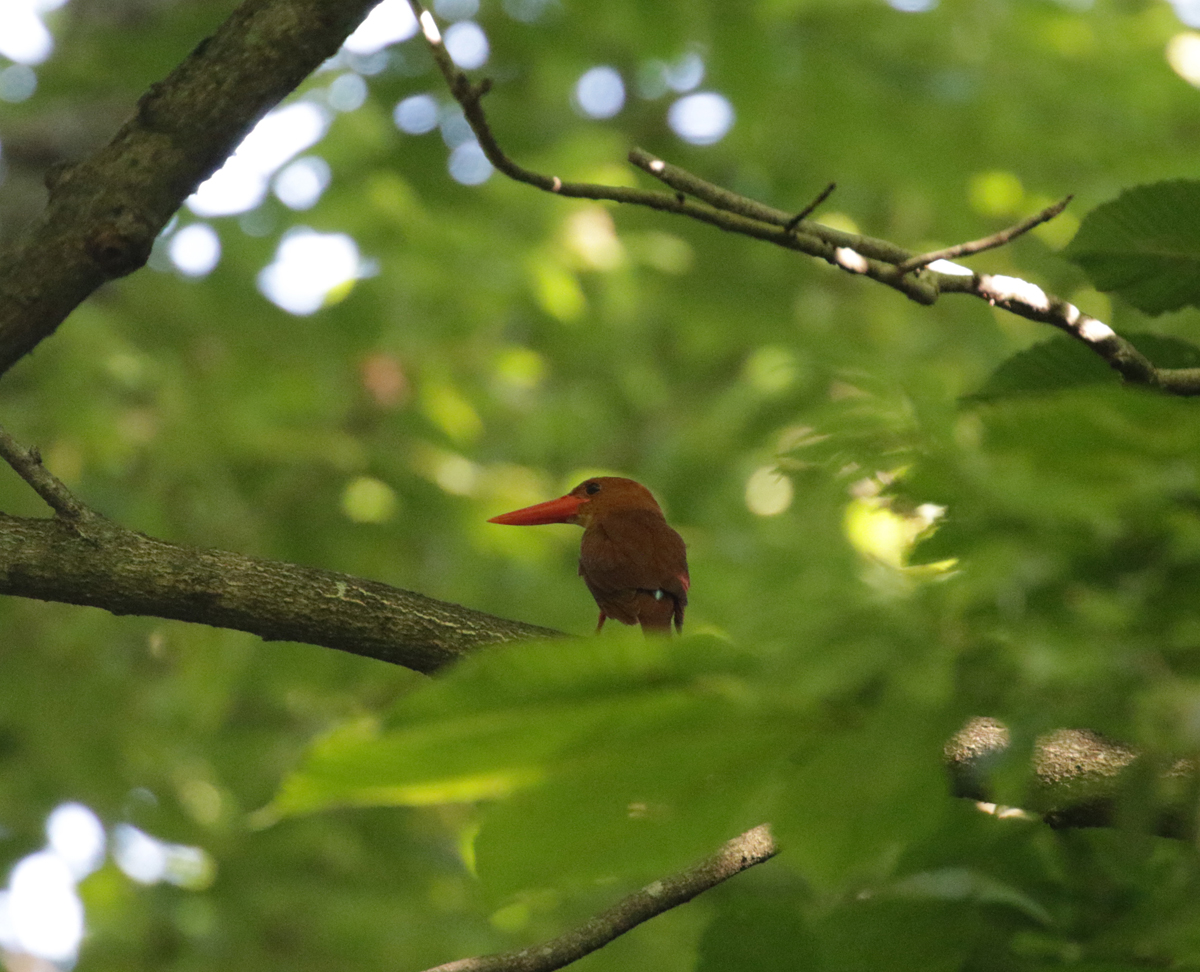
Ruddy Kingfisher... the invisible voice of summer

A couple of weeks ago I took visiting ABA Young Birder of the Year Adam Dhalla (and his dad) out to find some local forest specialities. As the locally famous breeding Fairy Pitta has been a no show this year Copper Pheasant and Ruddy Kingfisher were the main targets.


Dad's primary role was encouragement, support and most importantly... carrying the tripod. Rent-a-Dad could be the next big thing in birding.  


Well that wasn't too difficult, was it? Plus it came with a bonus pair of Japanese Paradise Flycatcher in the same group of trees.


Ruddy Kingfishers are quite common in the forests here, they're singing everywhere first thing in the morning, throughout the day in fact if the weather is wet and miserable, but they are notoriously difficult to see well. Make that to see at all. I never seem to have any problems with the resident bangsi in the far south of Japan but this race, major, seems a different matter altogether.


Copper Pheasant was less cooperative but it's rare if not impossible to see all the forest birds in a single visit. I did actually glimpse a female slip off the roadside and disappear down the steep slope on a recce a few days prior to our visit (I needed to check whether the narrow mountain road was passable after recent heavy rain) and then subsequently heard a frustratingly close displaying male.


My three recent visits to this area were all brief for one reason or another but nevertheless produced some good birds such as White-backed Woodpecker which doesn't occur in Kyoto city and Japanese Woodpecker which does but is far more common in the hills. In addition to the birds I also saw Japanese hare (twice), red fox, boar, sika deer, masked palm civet, Japanese marten and Japanese serow.


As this post is otherwise brief it seems an opportune moment to post some old images from the same site which never made it into previous posts. Both Eurasian Nuthatch and Eurasian Treecreeper are widespread in the hills to the north and west of Kyoto city but can be difficult to see. Also Varied Tit which is common everywhere and Willow Tit which is common in the hills but only winter visitor to immediate surrounds of the city.


Eurasian Treecreeper


Eurasian Nuthatch


Willow Tit


Varied Tit

Wednesday, 21 June 2017

2017... how many new birds at the half way point (passerines)

I decided to split this six-month review into two sections to prevent it being overly long and this is effectively becomes the passerine section. If the non-passerines had a wintery feel, all the big stuff seems so long ago, then the passerine post is more up to date. Very up to date considering I saw the Fairy Pitta on June 20.


I already posted about the Pitta but I have so many shots of it I have to post a few more.


Another spectacular June bird, a 2CY Black-naped Oriole in Kanazawa.


The earliest bird to make it into my first half favourites was a Grey-backed Thrush. On the same day I had great views of a White's Thrush which isn't rare but can be difficult to get good views of, that bird was a bonus.


Grey-backed Thrush in an Osaka park.


White's Thrush in the same park.


Staying with thrushes, migrants can be difficult to get good views of but this Eyebrowed was great.


Flycatchers, warblers and buntings are always top of the list when it comes to less common species. I didn't see any Yellow-rumped Flycatchers this spring but I managed to catch up with a few of the commoner Mugimaki passing through. Dusky and Radde's are the most frequent of the scarce warblers and Tristram's, Yellow-browed and Black-faced spodocephala are the regular buntings that usually require a trip to one of the islands to see, to date Tristram's is the only one I sometimes see at coastal sites.


A 2CY male Mugimaki, apart from the hint of a white flare behind the eye the bird also had white flashes in the base of the tail.


Believe it or not this is a Dusky Warbler, I first got onto it by call and tracked it through the undergrowth. I like this shot because the upperparts (apart from the tail) look distinctly greenish and light shining from above appears to give it a bold crown stripe. 


Radde's Warbler a week earlier in the same clump of undergrowth. There can't be any doubts about the identity of this one.


Manchurian Bush Warbler may not be rare but its scarcity combined with secretive nature means I see far fewer than the two phylloscs. Larger males can be obvious when seen but females won't stand out on size alone and I wouldn't be surprised if I've overlooked some silent females assuming they were Japanese.


Female Tristram's Bunting, the males were more camera shy. When I first came to Japan I expected Tristram's and Yellow-browed to be on a numerical par as scarce migrants, because they were often mentioned in the same breath, but over the years Yellow-browed has proved far more difficult to see. However this spring both were fairly well represented on Hegurajima and matched my original expectations. I've seen a few Tristram's on the mainland, as many as three birds together, but I've yet to see a Yellow-browed away from islands.


Yellow-browed Bunting, for me at least this was a good year for this species.


Black-faced Bunting spodocephala. Another reasonably frequent bird off shore that I don't see on the mainland. 


Chestnut-flanked White-eye is maybe more frequent on islands further north (?), I seem to hear of fewer reports from islands off western Honshu.


I saw my first Tiger Shrike in Japan as recently as last summer. There were several on Hegurajima during my later visits this spring.


Finally I want to add two birds which in a sense are the antithesis of highlights in so much as they are so common that they don't make it into other posts. Both Oriental Greenfinch and Varied Tit are good looking birds that that suffer from being too common as far as making it onto this blog is concerned so now is as good an opportunity as they are going to get.


A bright male Oriental Greenfinch.


Varied Tit.


So, half way through 2017 and Bonaparte's Gull is the only new bird of the year. Fingers crossed there will be more on the way and that this year won't set an unwanted record of fewest new birds ever.

Tuesday, 5 April 2016

Spring is really here

Yesterday I went up into the Shiga prefecture forest then down to Lake Biwa just to see how the season is changing; and it is.


My first frogs were singing in both forest and fields, Barn Swallows have even reached northern Shiga and evening bats are out in force. On the down side, Lake Biwa is looking relatively birdless and big finch flocks have all but disappeared from the forest.


I didn't arrive until after daybreak and unsurprisingly I was too late for the pre-dawn scops owl chorus so I was amazed to hear one briefly at 08:05. Equally unexpected I didn't hear my first displaying Copper Pheasant until 08:25. I had already seen a female by then but a bird flushed unseen against the low sun through thick vegetation was my only other encounter.


Another very close Japanese serow was impossible to photograph as it bolted down hill (how do they do that?) and a White's Thrush also managed to thwart my best efforts to get a single shot of it. White's is a species I come across from time to time around Lake Biwa in winter but this is the first I can recall finding in the hills in spring. This Varied Tit on the other hand was far more confiding...


Once down from the hills another thrush was the first bird of interest, a female Dusky x Naumann's intergrade. This was an obvious intergrade and the first I've seen for some time, years in fact, so it was unfortunate that a farmer chose that moment to drive up behind me on a single track road and by the time I got back to the spot the bird had gone. Another good bird with no photographic evidence!


The narrow valley between the hills did provide a few good opportunities though. Two flocks of Rooks were grubbing around on the fields and an Eastern Buzzards was reasonably approachable.


Unlike in Kyoto where it's often necessary to stake out your cherry blossom picknick spot from first thing in the morning this family had it all to themselves. My Copper Pheasant hills are in the background and the fields in the foreground were full of buntings, Common Snipe and popular with fly-over Eastern Marsh Harriers and another Eastern Buzzard. There were also a couple of Green Pheasants - it's always nice to see both species in a day.


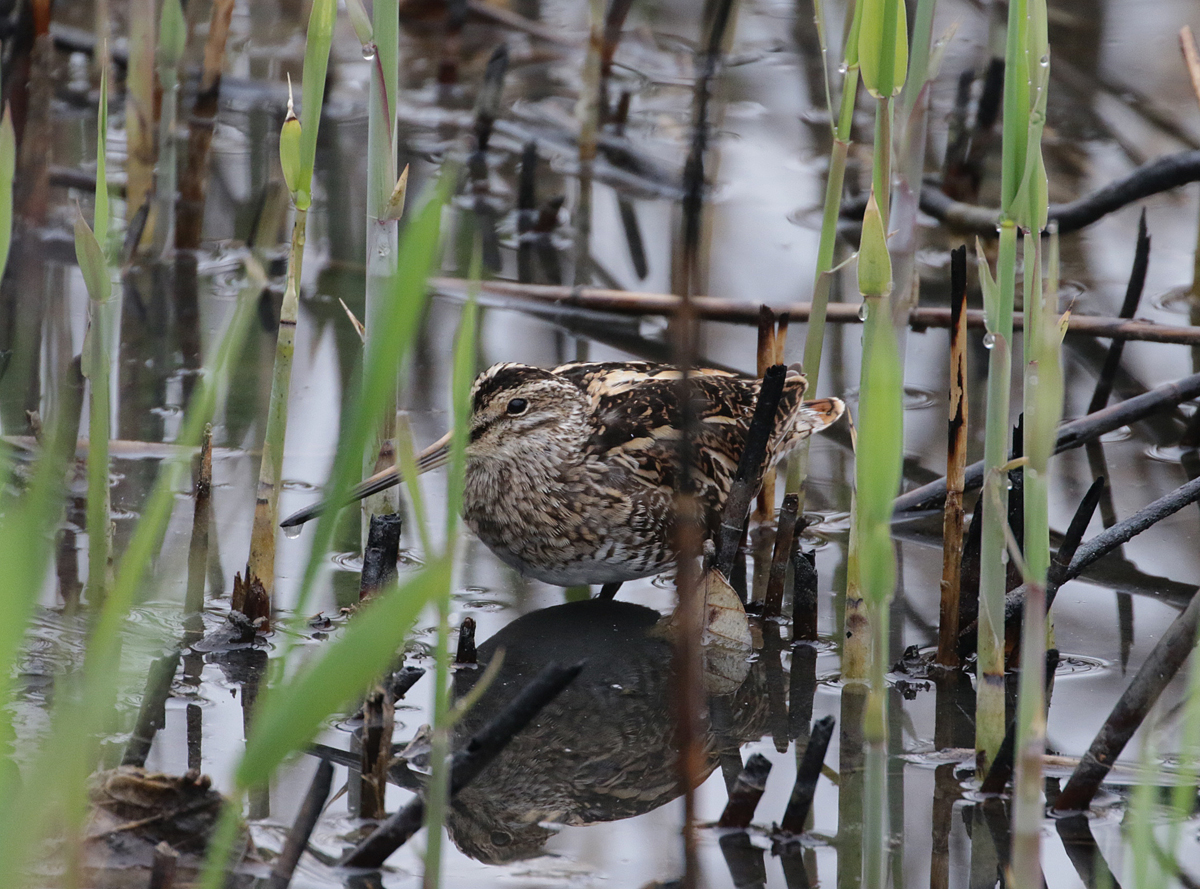
Common Snipe: I'm cheating here, I got this shot a few days ago in Mie.


Rustic Buntings.


I spent a lot of time looking at Reed Buntings here, the variation intrigued me when I came to Japan many years ago and it was good to see a number of birds feeding in the open. But more of that another time. Further south along the lake I spotted a tractor ploughing a field. This is usually a good chance to sift through wagtails and pipits but on this occasion the field was full of Black Kites.


Black Kites following the plough.


Before heading home, or rather before joining an endless queue of traffic heading for Kyoto, I couldn't resist this Little Grebe bathing in the late afternoon sunshine.


List of species recorded:-
Copper Pheasant   1 female, a male heard and another bird flushed
Green Pheasant   1 plus 1 heard
Eurasian Wigeon   100s
Mallard   widespread in low numbers
Eastern Spot-billed Duck   common
Northern Shoveler   30-40
Eurasian Teal   c20
Tufted Duck   20-30
Little Grebe   2-3
Great Crested Grebe   several displaying pairs
Grey Heron   common
Great White Egret   c20
Little Egret   3
Great Cormorant   c10
Black Kite   common
Eastern Marsh Harrier   3
Hen Harrier   1
Eastern Buzzard   2
Common Coot   1000s
Grey-headed Lapwing   4
Common Snipe   c25
Common Gull   7
Black-headed Gull   c15
Rock Dove   several
Oriental Turtle Dove   widespread
Japanese Scops Owl   1 heard
Japanese Pygmy Woodpecker   2 heard
dendrocopos sp   2-3 heard
Japanese Woodpecker   1 plus 2 drumming and 2 calling
Jay   c10
Rook   2 flocks totalling c80
Carrion Crow   common
Large-billed Crow   common
Great Tit   fairly common in the forest
Coal Tit   several, numbers way down compared to previous trip
Varied Tit   common in the forest
Willow Tit   surprisingly none!
Barn Swallow   several
Long-tailed Tit   common
Skylark   common
Brown-eared Bulbul   common
Japanese Bush Warbler   several singing
Japanese White-eye   common in the forest whereas it has been scarce recently, the reverse of Coal and Willow Tits.
Wren   3 heard
White-cheeked Starling   several
White's Thrush   1
Pale Thrush   8
Dusky Thrush   common
Dusky x Naumann's intergrade   1
Red-flanked Bluetail   1
Daurian Redstart   1 heard
Eurasian Tree Sparrow   common
White Wagtail   several
Japanese Wagtail   1 heard
Buff-bellied Pipit   1 heard
Oriental Greenfinch   common
Eurasian Siskin   2 flocks heard
Eurasian Bullfinch   2-3 heard
Japanese Grosbeak   c150 plus smaller numbers here and there overhead
Meadow Bunting   common
Rustic Bunting   c10
Reed Bunting   common


Japanese serow   1
sika deer   1 plus c8 heard