Showing posts with label Snipe Common. Show all posts

Thursday, 24 November 2022

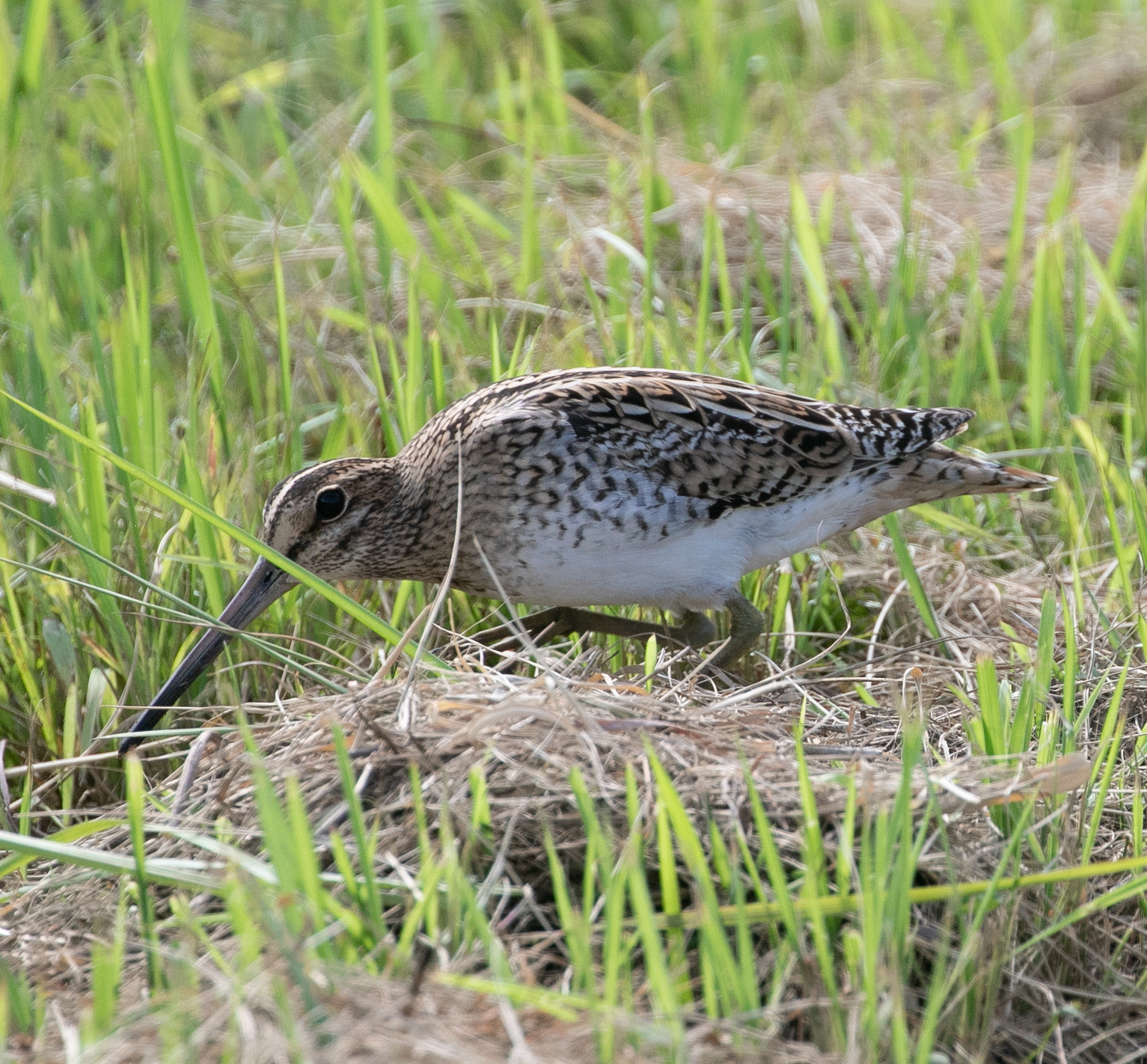
Latham's, Swinhoe's and Pintail... a good month for snipe.

September was very much a staying local month, covering a small stretch of my old patch at Ogura. Mainly because I didn't have the time to do otherwise, and not seeing that much for my efforts if truth be told. I've seen some quite spectacular wader passages here over the years but 2022 won't be going down as one to remember.

I covered a relatively small part of the overall area on nine dates through the month, seeing snipe other than Common on eight of them; this after making several visits throughout August when no migrant snipe were recorded. Actually, my first non-Common snipe were two birds (probably Swinhoe's) in Mie on 2 Sept though I had already seen a party of three Latham's there in August.

As far as confirming ID was concerned, all the following birds were 'tail-checked'. I saw a total of six Latham's, four Swinhoe's, one probable Pintail and a few swintail. As I only covered a relatively small area, it's reasonable to infer numbers passing through would have been much greater. There were also many Common, up to 10 per visit but even these disappeared in October suggesting all were migrants rather than birds that will winter here.

LATHAM'S SNIPE

(5 Aug - three adults together)


(8 Sept - two adults together)


(20 Sept - single adult)


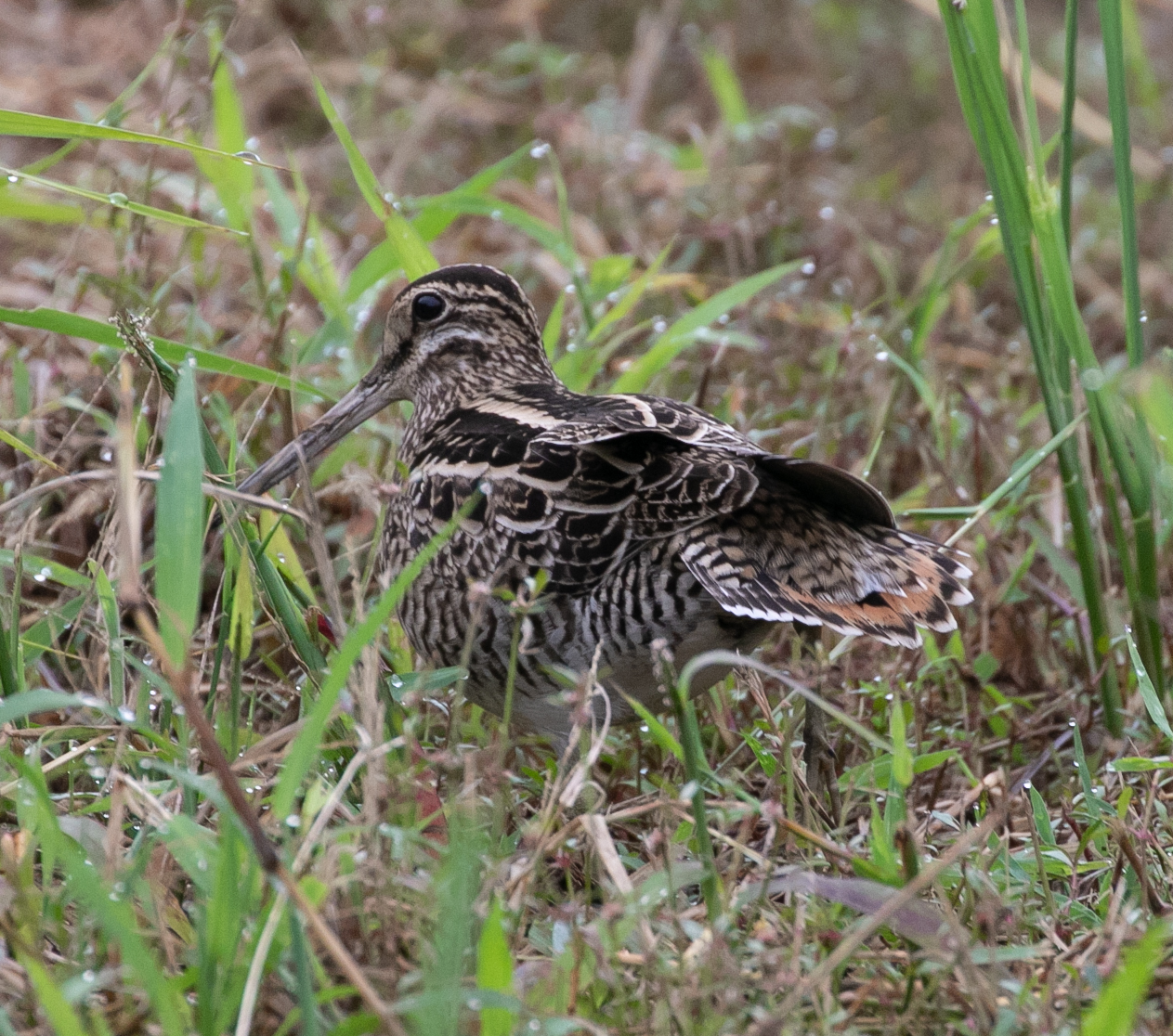
PINTAIL SNIPE

(21 Sept) Flushed by a Siberian weasel soon after I found it. I already suspected this could prove to be a Pintail and this image taken just before it takes flight appears to show pins in the spread tail. The weasel's ears are visible in the grass just to the left of the tail.


SWINHOE'S SNIPE

(22 Sept)


(28 Sept) The only juvenile/first winter.


(28 Sept) Adult


(30 Sept)


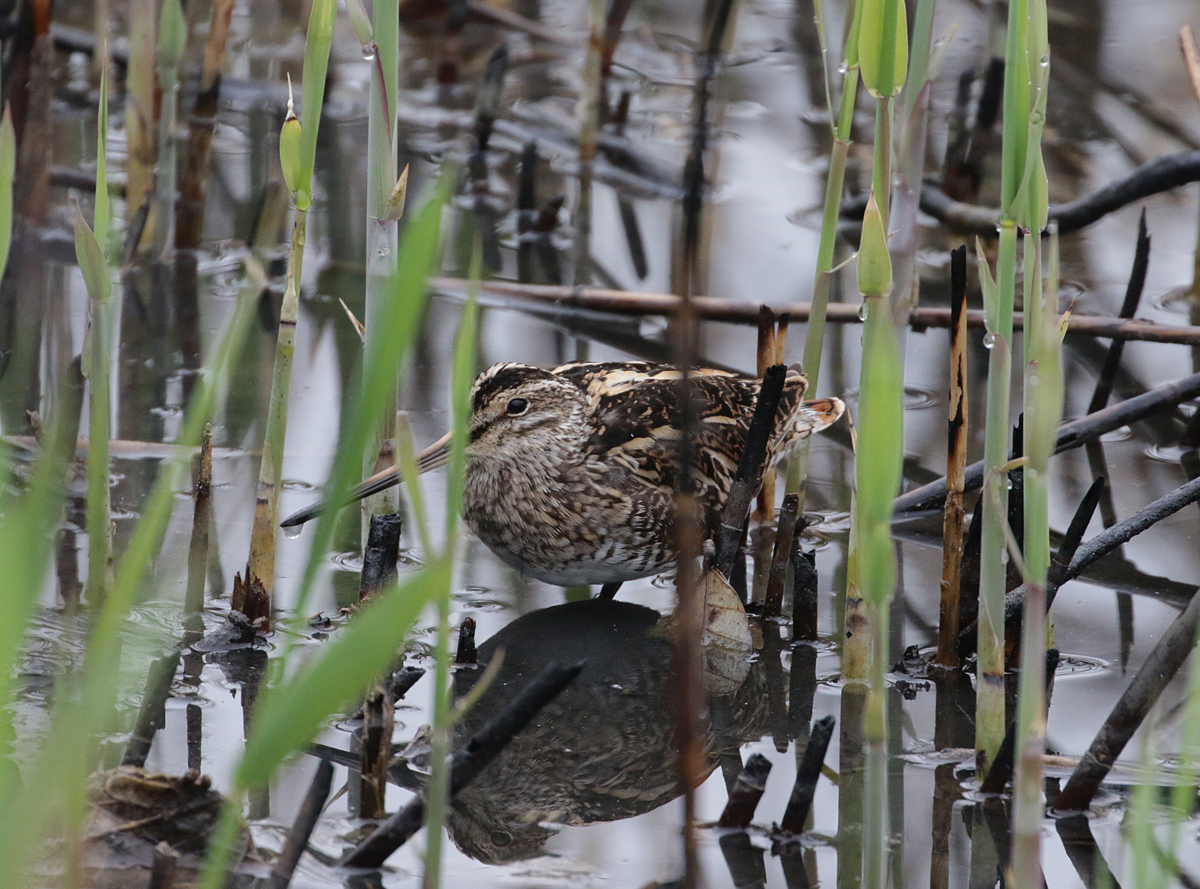
COMMON SNIPE

(20 Sept) They did exist!


Finally, I can't resist throwing this in just because it has 'snipe' in the name. These are local breeders and there were males with tiny chicks running round in September.

Greater Painted Snipe


Tuesday, 17 January 2017

First trip to Mie 2017

I haven't had so much time to get out birding since the Kyushu trip but I managed a short visit to Mie last week, just before winter finally arrived.


Early in the day, in fact for most of it, the wind was strong which made checking the sea difficult and the stubble and overgrown fields next to impossible. Coupled with very bright sun and not quite catching the tides as I'd like birding was anticlimactic by the area's very high standards. It wasn't until late afternoon that the wind dropped and some clouds gathered making looking at the gull flocks worth a punt. The most notable thing being not a single Taimyr Gull was to be found.


The day will stick in the memory for two things though. Firstly I finally got good flight views of our local Turkey Vulture and secondly the very un-Japanese scene of a dead bull lying in a dusty unmetalled company parking area! This was so jarring that I had to stop and take a photo.


Not something you see everyday in Japan, not something I've ever seen in Japan actually. It doesn't look freshly dead either and the crows seem to have been at the eyes.


With wintering Steller's Sea Eagle in the region we're no strangers to the spectacular but this bird definitely adds to the Mie experience.


On the wader front, I saw a single Ruddy Turnstone, a couple of Eurasian Curlews and a handful of Common Greenshank, as well as the more numerous Kentish Plover, Sanderling and Dunlin. On the landward side of the seawall were Common (3), Wood (2) and Green (4) sandpipers. With so many waterlogged fields it isn't surprising there weren't any concentrations of Common Snipe and I only saw four.


Wood Sandpiper


Green Sandpiper


Common Snipe


Early in the morning a white-winged gull flew over the car and directly away from me along the seawall. Whether this was an immature Glaucous or a leucistic Vega I wasn't able to tell, though I later learnt a first winter has turned up in the area. Later in the day the adult Glaucous that's taken up seasonal residence here was out on a distant sandbar off one of the estuaries. As well as the absence of Taimyr Gulls I already mentioned there were no Black-tailed either, perhaps they have already returned to their breeding colonies, certainly numbers dwindle to almost zero at this time after having been common till about the turn of the year. On the other hand Common Gull numbers have begun to increase, I don't know why they are relatively scarce in early winter as there are always good numbers through the latter part of the year in Osaka, just across the peninsula.


The small flocks of gulls scattered along the beach north of Tsu were Vega almost to a bird, there was one probable Mongolian which disappeared before I could get confirmation and what appeared to be a Vega x Slaty-backed hybrid. Adult gulls that show obvious signs of hybrid origin, particularly the Vega x Slaty-backed combination, aren't common. Hybridization seems far less frequent on this side of the Pacific, or at least so I gather, I don't have first-hand experience.


The dark-saddled gull stood out among the Vegas on the beach but only because of the shade, structurally it was a good fit with the others so I wanted a better view.


Coming at it from the other side it was no less eye-catching. In fact I might have taken it for a Slaty-backed on this view alone.


Dark-eyed Slaty-backs do occur but they're very thin on the ground, this bird has heavily peppered irids. The primary projection gives the impression of being on the long and narrow side for a Slaty-backed too. While the saddle is too dark for Vega, a typical Slaty-backed would look a little darker in this light. 


This typical Slaty-backed just off the beach didn't come ashore with the other gulls so there was no chance of direct comparison.


Tuesday, 5 April 2016

Spring is really here

Yesterday I went up into the Shiga prefecture forest then down to Lake Biwa just to see how the season is changing; and it is.


My first frogs were singing in both forest and fields, Barn Swallows have even reached northern Shiga and evening bats are out in force. On the down side, Lake Biwa is looking relatively birdless and big finch flocks have all but disappeared from the forest.


I didn't arrive until after daybreak and unsurprisingly I was too late for the pre-dawn scops owl chorus so I was amazed to hear one briefly at 08:05. Equally unexpected I didn't hear my first displaying Copper Pheasant until 08:25. I had already seen a female by then but a bird flushed unseen against the low sun through thick vegetation was my only other encounter.


Another very close Japanese serow was impossible to photograph as it bolted down hill (how do they do that?) and a White's Thrush also managed to thwart my best efforts to get a single shot of it. White's is a species I come across from time to time around Lake Biwa in winter but this is the first I can recall finding in the hills in spring. This Varied Tit on the other hand was far more confiding...


Once down from the hills another thrush was the first bird of interest, a female Dusky x Naumann's intergrade. This was an obvious intergrade and the first I've seen for some time, years in fact, so it was unfortunate that a farmer chose that moment to drive up behind me on a single track road and by the time I got back to the spot the bird had gone. Another good bird with no photographic evidence!


The narrow valley between the hills did provide a few good opportunities though. Two flocks of Rooks were grubbing around on the fields and an Eastern Buzzards was reasonably approachable.


Unlike in Kyoto where it's often necessary to stake out your cherry blossom picknick spot from first thing in the morning this family had it all to themselves. My Copper Pheasant hills are in the background and the fields in the foreground were full of buntings, Common Snipe and popular with fly-over Eastern Marsh Harriers and another Eastern Buzzard. There were also a couple of Green Pheasants - it's always nice to see both species in a day.


Common Snipe: I'm cheating here, I got this shot a few days ago in Mie.


Rustic Buntings.


I spent a lot of time looking at Reed Buntings here, the variation intrigued me when I came to Japan many years ago and it was good to see a number of birds feeding in the open. But more of that another time. Further south along the lake I spotted a tractor ploughing a field. This is usually a good chance to sift through wagtails and pipits but on this occasion the field was full of Black Kites.


Black Kites following the plough.


Before heading home, or rather before joining an endless queue of traffic heading for Kyoto, I couldn't resist this Little Grebe bathing in the late afternoon sunshine.


List of species recorded:-
Copper Pheasant   1 female, a male heard and another bird flushed
Green Pheasant   1 plus 1 heard
Eurasian Wigeon   100s
Mallard   widespread in low numbers
Eastern Spot-billed Duck   common
Northern Shoveler   30-40
Eurasian Teal   c20
Tufted Duck   20-30
Little Grebe   2-3
Great Crested Grebe   several displaying pairs
Grey Heron   common
Great White Egret   c20
Little Egret   3
Great Cormorant   c10
Black Kite   common
Eastern Marsh Harrier   3
Hen Harrier   1
Eastern Buzzard   2
Common Coot   1000s
Grey-headed Lapwing   4
Common Snipe   c25
Common Gull   7
Black-headed Gull   c15
Rock Dove   several
Oriental Turtle Dove   widespread
Japanese Scops Owl   1 heard
Japanese Pygmy Woodpecker   2 heard
dendrocopos sp   2-3 heard
Japanese Woodpecker   1 plus 2 drumming and 2 calling
Jay   c10
Rook   2 flocks totalling c80
Carrion Crow   common
Large-billed Crow   common
Great Tit   fairly common in the forest
Coal Tit   several, numbers way down compared to previous trip
Varied Tit   common in the forest
Willow Tit   surprisingly none!
Barn Swallow   several
Long-tailed Tit   common
Skylark   common
Brown-eared Bulbul   common
Japanese Bush Warbler   several singing
Japanese White-eye   common in the forest whereas it has been scarce recently, the reverse of Coal and Willow Tits.
Wren   3 heard
White-cheeked Starling   several
White's Thrush   1
Pale Thrush   8
Dusky Thrush   common
Dusky x Naumann's intergrade   1
Red-flanked Bluetail   1
Daurian Redstart   1 heard
Eurasian Tree Sparrow   common
White Wagtail   several
Japanese Wagtail   1 heard
Buff-bellied Pipit   1 heard
Oriental Greenfinch   common
Eurasian Siskin   2 flocks heard
Eurasian Bullfinch   2-3 heard
Japanese Grosbeak   c150 plus smaller numbers here and there overhead
Meadow Bunting   common
Rustic Bunting   c10
Reed Bunting   common


Japanese serow   1
sika deer   1 plus c8 heard