Showing posts with label Whimbrel. Show all posts

Monday, 14 May 2018

A few breeding plumage waders

I've only managed to get out to Heurajima once this spring; an uneventful trip before better weather brought some decent birds. Since then I've either been too busy or the ferry hasn't sailed so last weekend I decided to content myself with a trip to Mie to check out the wader passage.


The forecast predicted a 90% chance of rain from about 6am onwards but as luck would have it the rain held off till 1pm and didn't come down in road flooding torrents until 2pm. One benefit of dull, heavily overcast weather is Green Pheasants are suddenly everywhere, I stopped counting at 10 roadside birds. They can be next to impossible to find on clear days and trying to find them for visitors can prove a real time waster.


The downside of being easy to find to wet weather is they lack the vivid iridescence that makes them so striking.


But this post is supposed to be about breeding plumage waders, isn't it? There were about 300 red Red-necked Stints on the mudflats but you can't be everywhere at the right time and none of the Stints were close when I was at any of the three estuaries holding large numbers. Ponds and beaches were better for reasonable views of birds and for me a couple of Spotted Redshanks were the most attractive waders of the day.


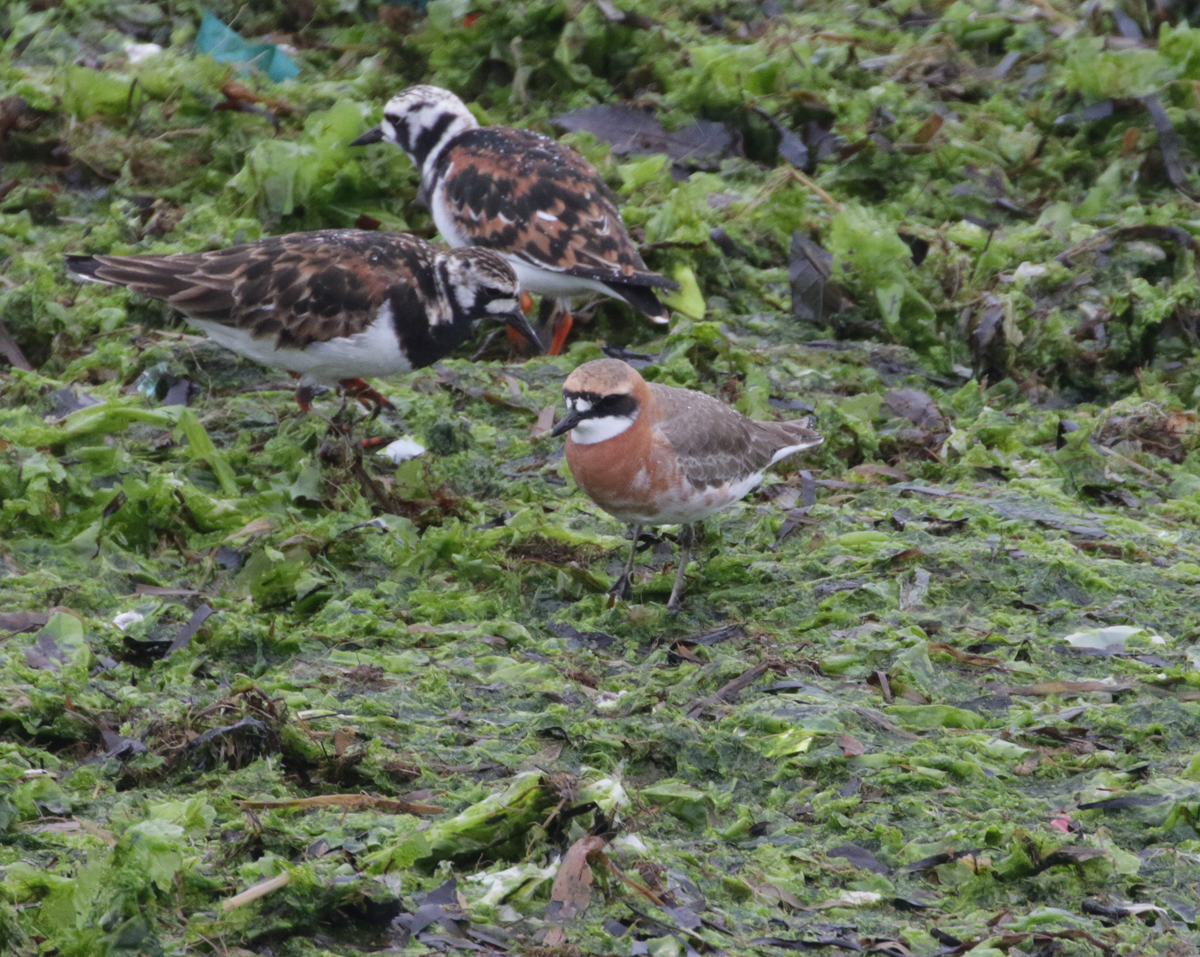
Ruddy Turnstones were looking pretty good too, 66 birds was the largest group I came across. Again the light wasn't very helpful and it was difficult to get good shots of them.


There weren't many Lesser Sand Plovers around and most were on distant sand bars, this bird with the Turnstones was the only close bird of the day. I don't see many in full breeding plumage and rarely see birds with such extensive red on the flanks and lower breast.


Not the 'best' of the Common Greenshanks but the only one that came close.


Whimbrel were very common along the shoreline and in the fields. In my pre-camera days I'd have IDed them and moved on but one of the great things about taking pictures of common birds is I notice things I would otherwise have seen. In this case I was surprised by the difference in primary projection, which presumably has nothing to do with age; the first bird has three visible tips well beyond relatively fresh looking tertials whereas the second has only two just showing beyond more worn tertials.


Friday, 15 September 2017

Hahajima

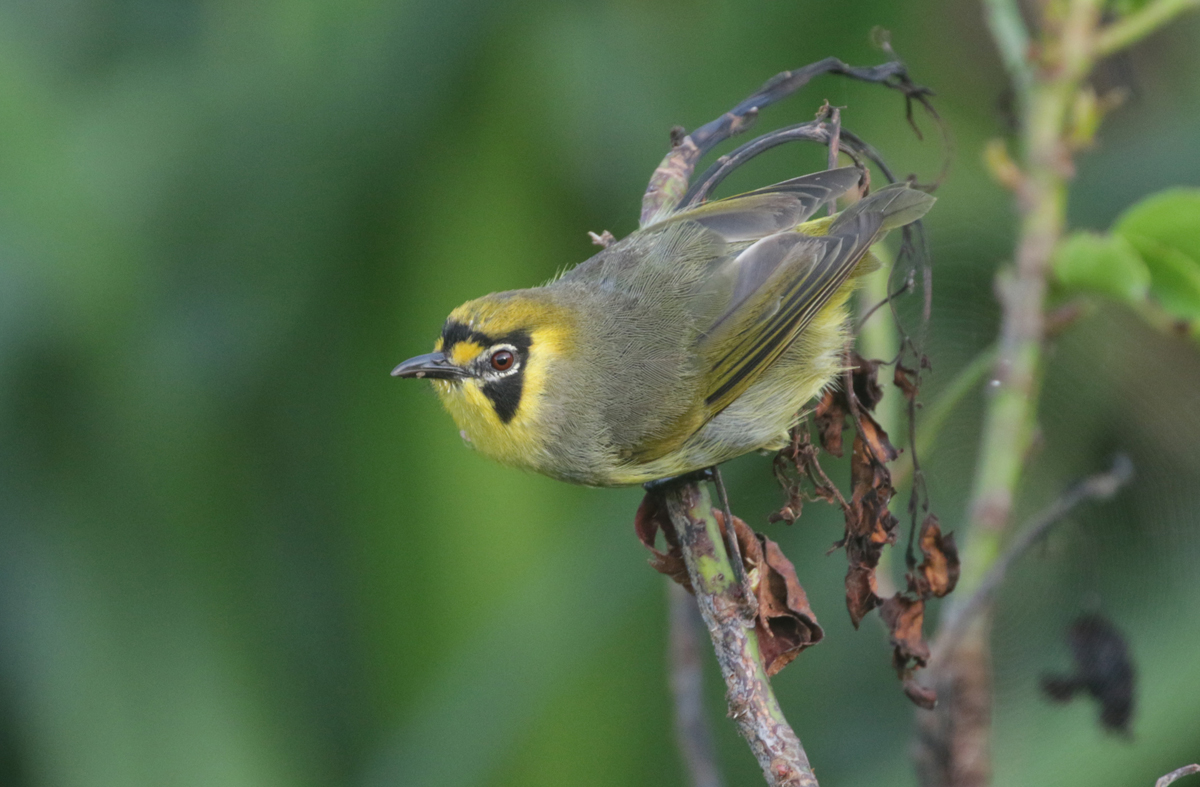
I spent a night on Hahajima over the weekend primarily in the hope of seeing the Ogasawara subspecies Oriental Greenfinch; an armchair tick in the making I hope. On top of that I was looking forward to getting a photo tick of Bonin White-eye. The latter turned out to be pretty straight forward but the Greenfinch was a different story. I tried several likely places but the sports ground was the only spot worth trying. And try I did. I heard Greenfinch several times, it was close, but it was always out of sight over the nearest tree tops. Finally I managed flight views which would normally have been a major frustration but in the limited time I had I was delighted to get any view at all.


So to that photo tick of Bonin White-eye...


Bonin White-eye is a cracking bird and like all good looking birds is that much better for being difficult to see. Difficult because of the time and effort to get to Hahajima that is, once there it's quite common. But then Japanese White-eye and Blue Rock Thrush take common to a whole other level, they can be found almost everywhere. Blue Rock Thrush in woodland...? That was a first.


Blue Rock Thrush over the fruit fields...
Blue Rock Thrush in the park...


Blue Rock Thrush coming to Asahi Super Dry...


Japanese White-eye, are absolutely everywhere. Stejnegeri and alani were both introduced to Ogasawara from the Izu Is and Volcano Is respectively so birds here are probably all hybrids.


The local race of Eastern Buzzard is another species with little or no competition on the islands, it's widespread and also approachable. Both the Buzzards I photographed were ringed and I wouldn't be in the least surprised if the islands have the highest density of ringed birds in the country. I noticed many accessorized birds, large and small, and one of the Buzzards must have been carrying a telemetry device judging by the antenna just visible in the images below.


One of the common Eastern Buzzards photographed late in the day.


A different bird earlier in the day. At first I thought the glazed eye was an artifact but it looks the same in every image. The antenna is visible in both these images.


There were a few migrants around and waiting for the Greenfinch to show itself I was entertained by waders and Eastern Yellow Wagtails on the sports field. The Wagtails were usually at the far side of the field and when one did come closer it would be invisible in a patch of flowers, only popping up intermittently hence the only closer images are flight shots. There were always Ruddy Turnstones and Pacific Golden Plovers on the field as well as a single Ruff. Down in the harbour there were a few other waders too.


Eastern Yellow Wagtail.


Ruddy Turnstones sticking to the shade under a tree.


Ruff.


Pacific Golden Plovers.


Wood Sandpiper.


Whimbrel.


Tuesday, 5 September 2017

A few left over images of Mie birds from last week

Grey Plover at sunrise.


Garganey; a regular migrant at this time of year.


Little Grebe; this nest is bigger and stronger every time I see it.


Juvenile Little Ringed Plover.


Adult Little Ringed Plover.


Whimbrel.


Wednesday, 28 September 2016

A few waders in Mie and Kyushu

I hinted in the previous post Nordmann's Greenshank post that some waders have been more cooperative recently and here are a few shots of a few of those birds.


LRP


LRP


Greater Sand Plover


Whimbrel


Far Eastern Curlew


Far Eastern Curlew. You might be forgiven for thinking this is a Whimbrel at first glance because of the short bill and what appears to be a latteral crown stripe.


Common Redshank


Wood Sandpiper


Wood Sandpiper


Grey-tailed Tattler


Grey-tailed Tattler


Terek Sandpiper


Terek Sandpiper


Common Sandpiper


Ruddy Turnstone


Ruddy Turnstone


Red-necked Stint


Broad-billed Sandpiper


Broad-billed Sandpiper