Showing posts with label Pheasant Green. Show all posts

Monday, 14 May 2018

A few breeding plumage waders

I've only managed to get out to Heurajima once this spring; an uneventful trip before better weather brought some decent birds. Since then I've either been too busy or the ferry hasn't sailed so last weekend I decided to content myself with a trip to Mie to check out the wader passage.


The forecast predicted a 90% chance of rain from about 6am onwards but as luck would have it the rain held off till 1pm and didn't come down in road flooding torrents until 2pm. One benefit of dull, heavily overcast weather is Green Pheasants are suddenly everywhere, I stopped counting at 10 roadside birds. They can be next to impossible to find on clear days and trying to find them for visitors can prove a real time waster.


The downside of being easy to find to wet weather is they lack the vivid iridescence that makes them so striking.


But this post is supposed to be about breeding plumage waders, isn't it? There were about 300 red Red-necked Stints on the mudflats but you can't be everywhere at the right time and none of the Stints were close when I was at any of the three estuaries holding large numbers. Ponds and beaches were better for reasonable views of birds and for me a couple of Spotted Redshanks were the most attractive waders of the day.


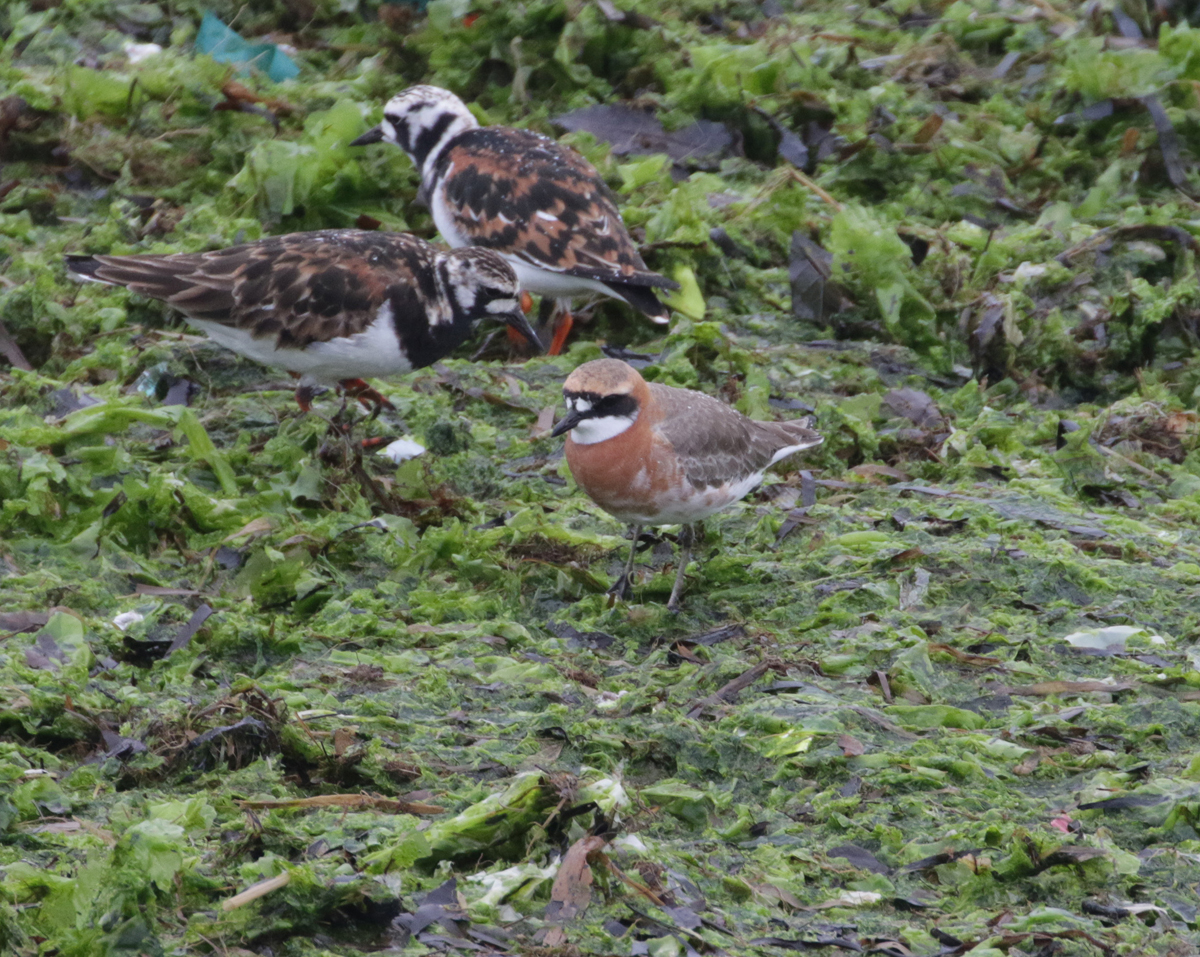
Ruddy Turnstones were looking pretty good too, 66 birds was the largest group I came across. Again the light wasn't very helpful and it was difficult to get good shots of them.


There weren't many Lesser Sand Plovers around and most were on distant sand bars, this bird with the Turnstones was the only close bird of the day. I don't see many in full breeding plumage and rarely see birds with such extensive red on the flanks and lower breast.


Not the 'best' of the Common Greenshanks but the only one that came close.


Whimbrel were very common along the shoreline and in the fields. In my pre-camera days I'd have IDed them and moved on but one of the great things about taking pictures of common birds is I notice things I would otherwise have seen. In this case I was surprised by the difference in primary projection, which presumably has nothing to do with age; the first bird has three visible tips well beyond relatively fresh looking tertials whereas the second has only two just showing beyond more worn tertials.


Friday, 26 May 2017

Isabelline Wheatear plus odds and ends

I've already had exceptionally good views of Isabelline Wheatear in Japan and didn't immediately rush off when I first heard about this bird on the beach towards the southern end of Hegurajima Sunday. It was in the exact spot I saw my first wheatear species in Japan, a Desert, a few years ago. When I did roll up there was a small crowd who obviously had it in view so it didn't take any locating. But I was sorry to see the poor condition the bird seemed in. Poor in terms of plumage at least, it was actually very active and didn't suggest it was sick.


There was one knot of people who gave the impression they were happy to wait and let the bird come to them and a larger group that followed it's every move. Inevitably this meant from one end of the beach to the other and back again. I only spent a few minutes with the bird as I didn't think it was getting any peace and walked the length of the beach-side path slightly behind the crowd as I was already going that way and took the central track away from the beach repeat the pointless back and forth. I must say I was rather impressed with the group not pushing the bird, all the more so as they looked a younger crowd which bodes well I suppose.


So here are the best of a bad bunch of very messy Isabelline Wheatear shots. The plumage looks to have been contaminated by something but as the bird was very active it will hopefully be fine.


Not terribly pretty, I'm sure you'll agree. Compare with the autumn bird in Osaka five years ago...


Before sailing out to the island I saw and heard, especially heard, Japanese Martens crashing around in the trees and 'barking' at each other on the hill next to Wajima harbour. I've seen Marten there before but that morning there was definitely something out of the ordinary going on. I think there were at least three animals involved in the commotion that went on for about 40 minutes as they moved noisily around the hill top. The second time I saw one of them it seemed to have had enough and be on its way, crossing the road via over-arching branches which allowed me to get this shot.


Other shots were better exposed but were blurred because of low shutter speed, luckily it paused at this point allowing a sharper image, either blurred or substantially obscured behind foliage.


Coming back from the island the crossing was quite, much as usual, but a sudden raft of Streaked Shearwaters just off Wajima allowed me what are probably my best shots of this species.


Because the ferry hadn't run the day before I had time on the Noto Peninsula and ran into this unexpected Green Pheasant. Unexpected because I don't usually seem them in such an exposed position, walking along a berm between paddies, in the midday sun. The shots of Kentish Plover chicks were if anything even more of a surprise.


And for a trio of unexpected, this Japanese grass lizard was not only quite happy to share the concrete bench with me but didn't even mind when I pointed the camera at it... it's usually at that point they dash of at incredible speed.


Wednesday, 16 March 2016

Green Pheasant on the seawall!

After enjoying a successful morning north of Lake Biwa followed by a disappointing afternoon along the lake yesterday, today seemed to follow the same pattern. The morning got off to a cracking start with a singing Siberian Rubythroat but the afternoon fizzled out. A Rubythroat in mid-March in Kansai? It was so out of context that I couldn't put a name to it at first. I suspect it must have spent the winter undiscovered in that area of scrub, it's surely too early for a migrant. They do winter further south in Japan of course and perhaps because this winter has been so mild this bird stopped off here but never felt the urge move further south. In fact I had similar thoughts about the Richard's Pipit I had flying over Kyoto a week ago.


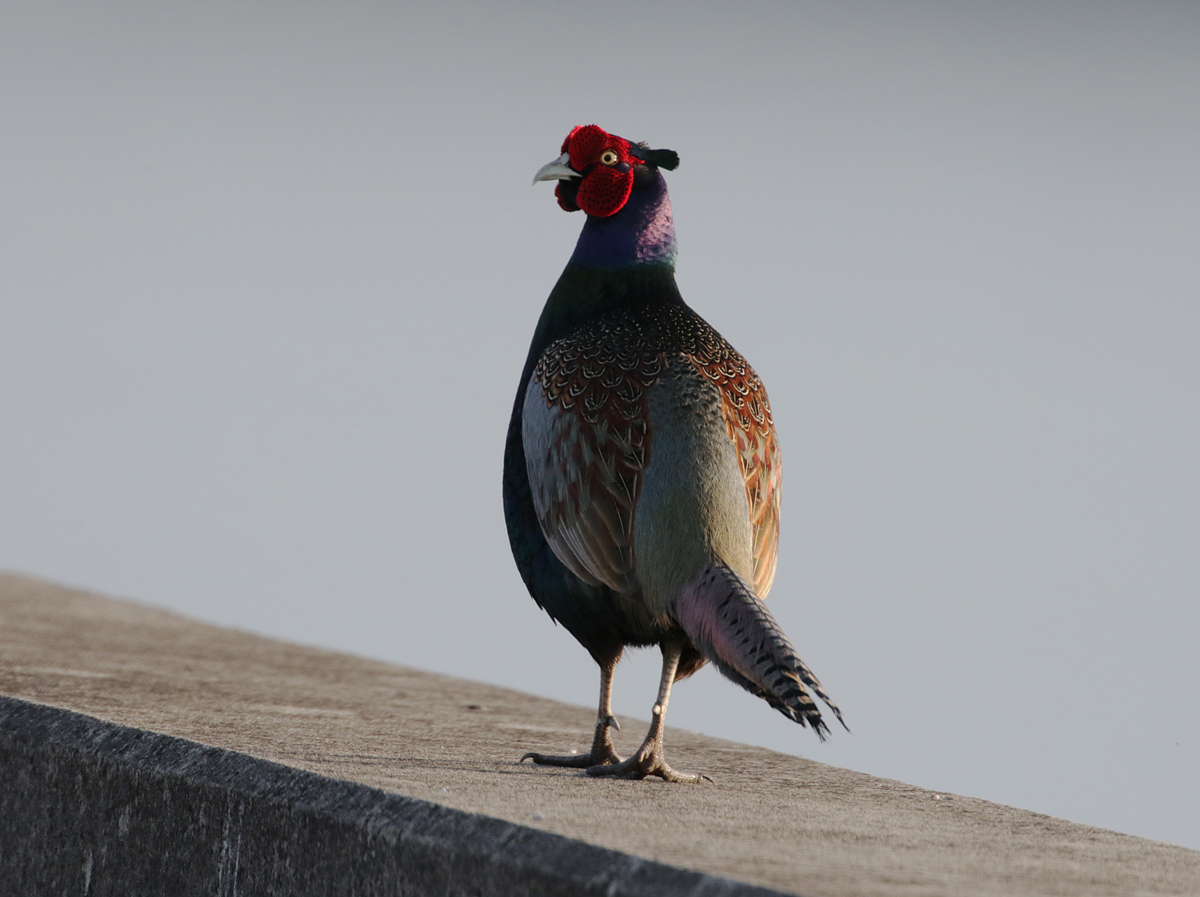
Next up was a stunning Green Pheasant standing on the seawall. It's not unusual to see them out in the open, particularly on duller early mornings but this spot was extreme, standing on the seawall looking out to sea. I couldn't help projecting anthropomorphic feelings of a wistful longing to migrate along with the other departing species.


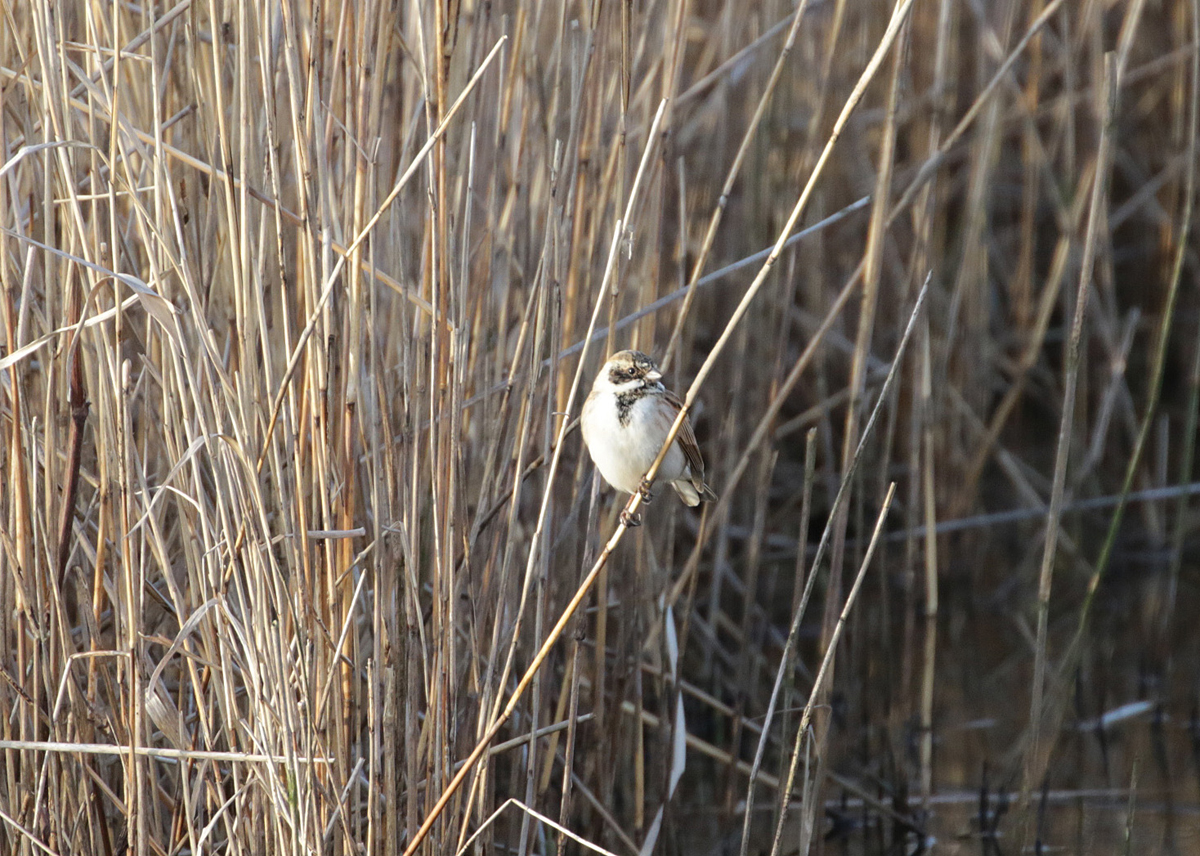
Reed Buntings are still very common and some males are beginning to assume breeding appearance. These are two shots of a strikingly pale-mantled bird, unfortunately I didn't get any clearer shots before it dived into cover. The third image is of another Reed Bunting I saw last week showing the typical browner, less frosty upperparts and covert fringes.


A typical Reed Bunting with an overall brown mantle. Above are two images of a strikingly pale-mantled bird.


Eurasian (Japanese) Skylarks are really common on the fields and their song is a constant backdrop to birding here.


Most other birds I was able to photograph were waders...


Eurasian Oystercatcher.


Spotted Redshank.


Black-winged Stilts and Long-billed Dowitchers.


Kentish Plover.


Sitting on the beach watching gulls always results in excellent views of Sanderlings.


... and Dunlins.


Finally an awful shot of a Slavonian Grebe. Why bother? Well, I rarely see them in Kansai but also because it's the first I've ever seen coming into breeding plumage.


Slavonian Grebe.


A combined list of birds recorded over two days (101 species)

Copper Pheasant   1 heard displaying
Green Pheasant   c8
Tundra Swan   70-80 including one Whistling Swan
Gadwall   common
Falcated Duck   common in Mie but only a few Biwako
Eurasian Wigeon   very numerous still at both locations
Mallard   common but numbers well down
Eastern Spot-billed Duck   common
Northern Shoveler   c100 Biwako, a few Mie
Northern Pintail   very low numbers both locations
Eurasian Teal   c200 Mie, fewer north Biwako, numbers drastically reduced at both locations
Common Pochard   common but numbers well down at both locations
Tufted Duck   low hundreds
Greater Scaup   1 Biwako, 1000s Mie
Common Goldeneye   8 Biwako, 14 Mie
Red-breasted Merganser   100s Mie
Little Grebe   several both locations
Great Crested Grebe   4-5 Biwako, 6 Mie
Slavonian Grebe   1 Mie
Black-necked Grebe   c40 Mie
Black-crowned Night Heron   1 heard between the locations
Grey Heron   sev Biwako, c25 Mie
Great White Egret   3 Biwako, 6 Mie
Little Egret   2 Biwako, 34 Mie
Great Cormorant   several Biwako, 100s Mie
Peregrine   1 Mie
Osprey   1 Biwako, 2 Mie
Black Kite   common Biwako, several Mie
Eastern Marsh Harrier   1 Biwako
Eurasian Sparrowhawk   3 Biwako
Eastern Buzzard   1 Mie
Eastern Water Rail   2 Mie
Common Moorhen   8 Biwako, 1 Mie
Common Coot   common both locations
Eurasian Oystercatcher   8 Mie
Black-winged Stilt   3 Mie 
Northern Lapwing   c30 Biwako, c50 Mie
Grey Plover   c50 Mie
Little Ringed Plover   1-2 heard Mie
Kentish Plover   2 Biwako (a big surprise), 30-40 Mie
Common Snipe   c20 Mie
Long-billed Dowitcher   3 Mie
Spotted Redshank   1 Mie
Common Greenshank   6 Mie
Green Sandpiper   4 Mie
Wood Sandpiper   1 Mie
Common Sandpiper   2 Mie
Sanderling   common Mie
Dunlin   c50 Biwako, common Mie
Black-tailed Gull   1 Mie
Common Gull   1 Biwako, c40 Mie
Vega Gull   c300
Mongolian Gull   1 Mie
Slaty-backed Gull   6 Mie
Taimyr Gull   5-6 Mie
Black-headed Gull   c6 Biwako, 100s Mie
Saunder's Gull   10 Mie
Common Tern   6 Mie
Rock Dove   several Biwako, c50 Mie
Oriental Turtle Dove   several both locations
Common Kingfisher   1 Mie
Japanese Pygmy Woodpecker   several Biwako
White-backed Woodpecker   1 plus 2 drumming Biwako
Great Spotted Woodpecker   1 Biwako
dendrocopos sp   several heard Biwako
Bull-headed Shrike   4-5 Biwako, 2 Mie
Jay   3 Biwako
Carrion Crow   common both locations
Large-billed Crow   common both locations
Great Tit   c20 Biwako
Coal Tit   5-10 Biwako
Varied Tit   c6 Biwako
Willow Tit   4 Biwako
Long-tailed Tit   common Biwako
Skylark   common Mie
Zitting Cisticola   3 Mie
Brown-eared Bulbul   several both locations
Japanese Bush Warbler   3 heard Biwako, 2 heard Mie
Japanese White-eye   common Biwako
Wren   3 heard Biwako
White-cheeked Starling   40-50 Mie
Pale Thrush   common Biwako
Dusky Thrush   several Biwako, common Mie
Siberian Rubythroat   1 heard Mie
Red-flanked Bluetail   1 heard Biwako
Daurian Redstart   2 Biwako, 4 Mie
Blue Rock Thrush   3 Mie
Brown Dipper   2 Biwako
Eurasian Tree Sparrow   common both locations
White Wagtail   several Biwako, 20-30 Mie
Japanese Wagtail   1 Biwako, 2 Mie
Buff-bellied Pipit   c20 Mie
Brambling   c50 Biwako
Oriental Greenfinch   common both locations
Eurasian Siskin   common Biwako
Eurasian Bullfinch   2-3 heard Biwako
Hawfinch   1 Biwako
Meadow Bunting   5-6 Biwako, several Mie
Chestnut-eared Bunting   6-7 Mie
Rustic Bunting   1 Biwako, 2 Mie
Black-faced Bunting   several both locations
Common Reed Bunting   several heard Biwako, common Mie